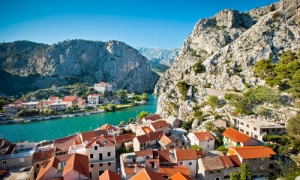
Croatia was first put on the list of candidate countries nine years ago and officially joined the EU little more than a week ago. Croatia is the 28th EU member and the bloc's first addition since Bulgaria and Romania joined in 2007. Many Croatians believe that Croatia's EU membership will be a shot in the arm to investor confidence as well as the country's long-term financial wellbeing, resulting in inward investment to economy. Furthermore, it is believed that membership in the EU will invariably help Croatia deal with a swollen public sector, increasing unemployment, an unfavourable climate for business, a lack of diversification of the economy, corruption and organised crime, and an inflexible labour market.
New legislation
Regardless of domestic affairs, from a legislative perspective, in 2010 the Croatian Parliament amended the country’s Constitution enabling it to finalise its EU accession negotiations. The new section is entitled “European Union” and it governs the status of EU law and its relationship with domestic law. European Union law implements the provisions of EU treaties and initiatives. It establishes a series of rights and demands that must now be recognised by Croatia’s national judiciary. EU law is governed by the European Court of Justice. This court has a special role in developing European rule of law and has a large influence on the governments of EU member states.The Constitution of the Republic of Croatia implicitly prescribes direct effect and supremacy of EU law over Croatian law. This means that Croatian courts have an obligation to protect subjective rights that are based on EU acquis communautaire (EU law). Administrative authorities, including municipal authorities and all other legal persons with public authority have an obligation, like the national court, to apply the direct effect doctrine.
Monism system
The Croatian constitution accepts the system of legal monism. Under the Constitution, international treaties which have been concluded and ratified and which have entered into force are part of the domestic legal order of Croatia and have primacy over domestic law. International law can be directly applied by a national judge, and can be directly invoked by citizens, just as if it were national law. Ordinary courts are to enforce EU law, recognise its supremacy, and when necessary they must set aside inconsistent national law. However as Croatian judges are not accustomed to disregarding national laws that are incompatible with EU law, this could lead to some difficulties in practice. Regardless, as an EU member state, judges have the duty to understand and apply the EU law as well as their national law. This is not helped by the fact that the harmonization of Croatian law with that of the EU was rushed and EU legislation was translated in a rushed manner, sometimes with some translation errors, and much of it was essentially copy-pasted’.
The recession
Aside from the legislative issues, and amidst all of the pomp and the diplomatic platitudes, Croatia, a country of 4.4 million people, is bogged down in the middle of a painful recession. EU membership, once seen as a dazzling prize, is now viewed with more than a hint of scepticism. Croatia's GDP has declined by 0.7 per cent this year, and its debt-to-GDP ratio is expected to reach 6 per cent by 2016. This will drag the ratio above the 60 per cent limit that has been put in place by the EU. In comparison, the debt-to-GDP ratios in neighbouring countries range from 42 per cent in Montenegro to 35 per cent in Serbia and Macedonia. Meanwhile in Bosnia and Herzegovina the ratio is 28 per cent. Others point at Greece or neighbouring Slovenia, which, after eight years in the European Union, are still suffering from severe financial problems and dysfunctional banking systems. Indeed for many festivities were tempered by the knowledge that EU membership would not immediately cure Croatia’s most pressing problems which include a stagnant economy, unemployment of over 18 per cent, rising debt and a widening budget deficit.
Corruption
One of the main complaints amongst Croatians is the issue of corruption. Strict criteria set down by the EU during accession talks mean that important reforms have been introduced, including efforts to tackle corruption. Ivo Sanader, Croatia’s former Prime Minister was recently sentenced to 10 years in prison for taking bribes. However Croatia still ranks far behind most EU states on Transparency International’s corruption perceptions index and corruption and bribery are evident at all levels of society. Croatia is, however, ranked ahead of Italy and Greece. Regardless of weighing up the positives and the negatives, the reality is that Croatia is now in the European Union.
Josip Marohnic is a Croation attorney in association with Karanovic & Nikolic
Email your news and story ideas to: [email protected]