
Unlike in England and Wales, where alternative business structures (ABSs) owned or partly owned by non-lawyers are commonplace, Scotland continues to restrict law firm ownership exclusively to lawyers.
This is a situation a new coalition of firms is determined to change. The ABS Scotland Group launched on Monday (24 November) with 18 founding members, including major independent firms such as Harper Macleod, MacDonald Henderson, Inksters and Jones Whyte.
The campaign aims to unlock reforms first promised 15 years ago, around the same time England and Wales introduced ABSs in 2011.
The 2010 Legal Services (Scotland) Act paved the way for non-lawyers to own shares in a new business structure called a licensed legal services provider (LLSP). But the process of actually establishing LLSPs dragged on. Then, the Regulation of Legal Services (Scotland) Act 2025 introduced further reforms to the envisaged regime, removing the requirement that legal professionals must hold a 51% stake in LLSPs.
However, the legislation also requires a major overhaul of the legal complaints system and the overarching regulatory regime for law firms, measures that the Law Society of Scotland is prioritising at the expense of a two-year delay in implementing the ABS reforms.
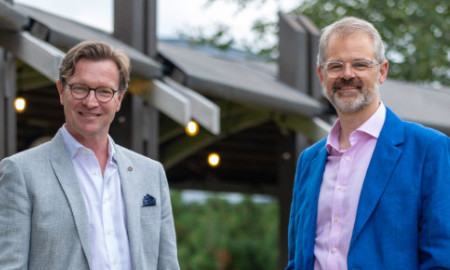
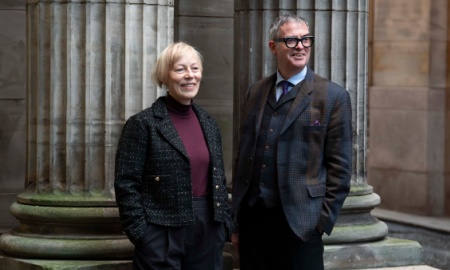
“Scotland is now completely out of step with the rest of Great Britain,” said Rob Aberdein, group managing director of Simpson & Marwick, one of three law firm leaders heading the ABS Scotland Group alongside Marie Macdonald, chair of Miller Samuel Hill Brown, and Brian Inkster, founder and CEO of Inksters.
“Non-lawyer ownership has been delivering clear benefits in England and Wales for more than a decade, from investment to innovation. Yet here, we’re still being told to wait.”
Aberdein pushed back against the suggestion that Scotland’s law firms are simply apathetic. “We’ve seen nearly 20 firms step forward to join this group before it even launched. That should send a clear message: the profession is ready; the market is ready. The only thing missing is law society regulation, support and acceptance.”
Macdonald said reform would “open the door to new models that exist for other professional services” such as “employee ownership, outside investment or involving key non-legal team members in ownership”.
“Critically, it’s also about succession,” she said. “More than 40% of Scottish law firms are sole practitioners. If they retire without a successor, the business dies with them.”
The ABS Scotland Group argues its members have been left at a competitive disadvantage with some adopting workaround structures or operating under English ABS rules through cross-border offices.
Ben Kemp, chief executive of the Law Society of Scotland, told GLP: “We understand the importance of law firms being able to innovate and adopt different business models. We also understand the sense of frustration that we have not been able to implement ABSs before now, for a range of reasons.
“That’s why it’s good to see this new group as a collective voice for many of those considering non-solicitor ownership. I’m looking forward to discussions with the group in the next few weeks. We are committed to bringing ABSs to Scotland’s legal sector and have confirmed our commitment to return to this work just as soon as possible. At the same time, our immediate priority must also be to deliver the major systemic reforms agreed by parliament just six months ago.”
Inkster dismissed fears that ABSs would erode professional standards.
“When ABSs were first introduced in England and Wales, there were loud warnings about the so-called ‘Tesco Law’. But those concerns simply haven’t materialised. In fact, what we’ve seen is a more diverse, innovative legal sector that’s still underpinned by strong regulation and ethical practice. Scotland now has the chance to take a similarly balanced approach, but we need to get on with it.”
Email your news and story ideas to: [email protected]