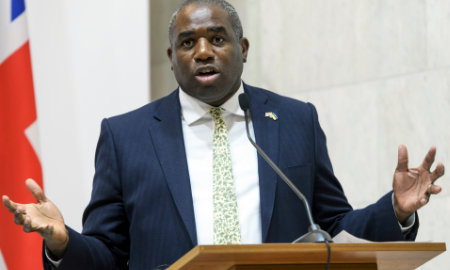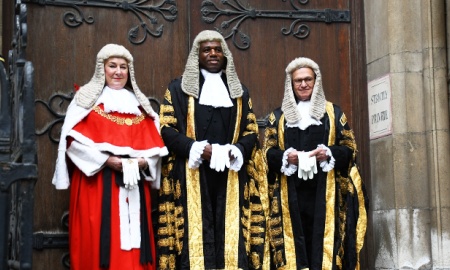

David Lammy MP was sworn in as Lord Chancellor – an office older than that of the Prime Minister, to whom he also serves as deputy – during the Opening of the Legal Year ceremony on 1 October.
At the ceremony, the Lady Chief Justice Baroness Carr said the moment was somewhat of a constitutional first, “as the first appointment, not before time, of a black Lord Chancellor and secretary of state for justice. And deputy prime minister”.
Lammy has taken over from Shabana Mahmood, herself the first Muslim Lord Chancellor and justice secretary, after she was moved across to be home secretary in Prime Minister Sir Keir Starmer’s wide-ranging cabinet reshuffle last month.
Carr highlighted the short tenure of recent Lord Chancellors, noting that Mahmood had “tempted fate” at the Mansion House judges’ dinner when she expressed the hope she might be the “first Lord Chancellor in quite some time to attend three dinners”.
Carr joked that her predecessor, Lord Burnett, “had worked with as many Lord Chancellors as Henry VIII had had wives (if you count Dominic Raab twice)”.
She added: “I will have worked with three Lord Chancellors in only two years, as many Lord Chancellors as John of Gaunt had wives.”
She expressed a wish for an enduring relationship in the future.
The Lady Chief Justice also swore in the Solicitor General, Ellie Reeves MP, who will be appointed as a silk, or King’s Counsel, as her Labour predecessors have been, including Lucy Rigby KC MP.
Lammy’s reply touched on well-worn themes, such as the Magna Carta, past incumbents like Thomas More and modern figures like the Blair administration’s Lord Irvine of Lairg, as well as the need for respect for the rule of law, saying: “We take these principles for granted at our peril.”
He also agreed to defend the independence of the judiciary “to the hilt”, arguing that “it is why international businesses choose our courts and our laws to settle their disputes”.
He pointed to recent “troubling signs of judges denounced for doing no more than interpreting the law and even attacked in their own courtrooms”, adding that the end result was Putinesque courts that “crush, silence and oppress critics”.
Lammy acknowledged that the courts had been “under too much pressure for far too long” and spoke of the need to “stabilise” the justice system. He pointed to planned sentencing reforms, changes to first-instance trials in the criminal courts and more Crown Court sitting days to help cut the criminal case backlog, now at more than 78,000.
Lammy also pointed to the creation of a new body to promote English law, which was announced on 28 September. Its brief will be to “future-proof English law’s eminent international status as part of a drive to enhance UK economic growth”, Lammy said, in line with the UK government’s growth agenda.
Lammy noted that English law is now used in around 40% of all cross-border business and financial transactions.
Emilie Jones, co-chair of London International Disputes Week and a legal director at Pinsent Masons, welcomed the move.
“As a global hub for legal excellence, LIDW welcomes initiatives that champion the value of English and Welsh law and the strength of our legal services sector on the world stage,” she said.
“We look forward to seeing how the new panel will promote the enduring relevance, trust in and innovation of English law for clients and practitioners worldwide.”
Email your news and story ideas to: [email protected]