
The European Court of Human Rights (ECHR) last week unanimously held Russia responsible for widespread and systematic violations of the European Convention on Human Rights (ECHR) in Ukraine from 2014 through 16 September 2022, when Russia ceased to be a party to the convention.
The nearly 500-page judgment – delivered by the Grand Chamber in a consolidated case: Ukraine and the Netherlands v. Russia – brings together four applications that address Russia’s conduct during its occupation of eastern Ukraine, the downing of Malaysia Airlines Flight MH17 in July 2014, and the invasion launched in February 2022.
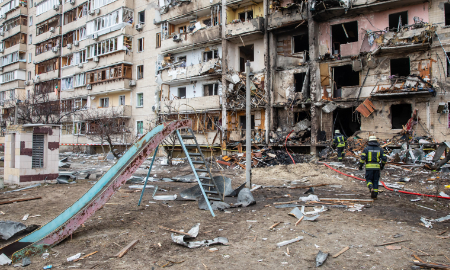
The court found that Russia exercised effective control over occupied territories and bore legal responsibility for alleged violations committed by its military and proxy forces. These include indiscriminate shelling of civilian areas, extrajudicial killings, arbitrary detention, torture, forced labour and sexual violence – including rape as a strategy of warfare.
It said: “The court is persuaded that sexual violence and rape were deployed as a military strategy to dehumanise, humiliate and break the morale of the Ukrainian population, and to assert dominance over sovereign Ukrainian territory.”
It also condemned the forced transfer and adoption of Ukrainian children and suppression of Ukrainian language, culture and religious expression.
In the MH17 case, the court held Russia responsible for failing to prevent the missile launch that downed the plane, obstructing investigations and inflicting additional suffering on the victims’ families – amounting to inhuman treatment under Article 3.
Legal experts hailed the decision as a landmark. Gibson Dunn partner Robert Spano, a former president of the court, called it “one of the greatest judgments in the history of the court”.
Blackstone Chambers' Tim Otty KC, who represented Ukraine, stated on LinkedIn: “The court established the full historical record of Russia’s flagrant abuses and provided a key first step to accountability.”
Ukraine instructed disputes specialists Quinn Emanuel, pro bono, whose team was led by partners Julianne Hughes-Jennett and Alex Gerbi, together with Ukrainian firm Asters, and included Twenty Essex peer Lord Guglielmo Verdirame KC. It described the ruling as “a significant milestone in the pursuit of justice under international law”.
Hughes-Jennett said: “We are proud to represent Ukraine in this historic case and look forward to the next phase of the proceedings to seek just satisfaction on behalf of Ukraine.”
Ukraine’s Ministry of Justice and Dutch officials also welcomed the outcome. Ukraine called it “historic”, while Dutch representatives told local media the decision offers long-overdue recognition to the families of the 298 MH17 victims, including 196 Dutch nationals.
Russia did not participate in the merits phase, having rejected the court’s jurisdiction since its expulsion from the Council of Europe and called the ruling “null and void”. However, the court made it clear that Russia’s refusal to participate in proceedings and its failure to cooperate were themselves a violation of its ECHR obligations.
Under Article 46 of the convention, the court ordered Russia to release all unlawfully detained Ukrainians and to return the deported children. The question of compensation, or “just satisfaction”, will be addressed in a future phase, alongside developments scoping a proposed Council of Europe Register of Damages.
The ruling also clears the way for more than 9,500 pending individual cases against Russia to proceed – cases that had been on hold pending resolution of the inter-state matter.
Former European Young Bar Association president Sergiy Barbashyn, managing partner of eponymous Ukrainian IP firm Barbashyn Law Firm, said: “This is a landmark ruling that confirms Russia’s direct responsibility for systemic human rights violations in Ukraine, including the downing of MH17.
“While enforcement is complex, it lays the foundation for future reparations and reinforces legal pressure on Russia across jurisdictions.”
Dr Mark Ellis, executive director of the International Bar Association, said the judgment was “a legal and moral victory for Ukraine”.
He added: “It affirms the overwhelming evidence that Russia is responsible for widespread and systematic violations of the ECHR and international humanitarian law during its war against Ukraine.
“The court’s ruling also reinforces the primacy of accountability under international law and underscores the vital role of legal institutions in holding even powerful states like Russia to account.”
The case continues.
Email your news and story ideas to: [email protected]