
The Lady Chief Justice of England and Wales, Baroness Carr, and the Senior President of Tribunals, Lord Justice Dingeman, have agreed a protocol with the Bar Council outlining how advocates can informally report bullying and harassment in court without fear of repercussion.
The protocol is part of a package of measures to tackle bullying, harassment, discrimination and exclusionary behaviour. A joint statement from Carr, Dingeman and Dame Maria Miller – the Bar Council’s Commissioner for Conduct – unveiled on Wednesday (8 July) sets out a shared commitment to creating and maintaining an environment in courts and tribunals where judicial office holders, legal professionals, court staff and all other court users are treated with courtesy and respect.
The protocol formalises existing approaches between the Bar and judiciary, which were acknowledged by the Bar Council's chair, Kirsty Brimelow KC, in her inaugural speech in January. Brimelow promised to advance the issue as one of her priorities for her year of office, following which Miller was appointed as commissioner.
The protocol sets out how concerns may be raised directly, through Miller’s office, or through a senior member of the Bar listed in the protocol.
The move follows last year’s independent review into bullying and harassment at the Bar by Baroness Harriet Harman KC, former deputy leader of the Labour Party. Harman said she had received “abundant, disturbing and compelling accounts of judicial bullying”, adding that in most cases no complaints had been made “for fear of repercussions”.
Under the new agreement, Miller and her team will be able to take forward informal complaints about judges on behalf of barristers, acting as an intermediary with the judiciary. Miller will liaise with Lady Justice Whipple, lead judge for diversity and inclusion, leadership, development and wellbeing.
Concerns may also be raised through Talk to Spot, the confidential reporting tool used by those working in and around the Bar. According to the Bar Council, approximately half of reports submitted via Talk to Spot about bullying, harassment and inappropriate behaviour relate to judges’ behaviour.
Informal resolution was described as “often the most appropriate first step for less serious issues, allowing for early and proportionate resolution”, while the protocol described such minor or less serious issues as “isolated incidences of brief loss of temper, or an apparently isolated ill-judged remark”.
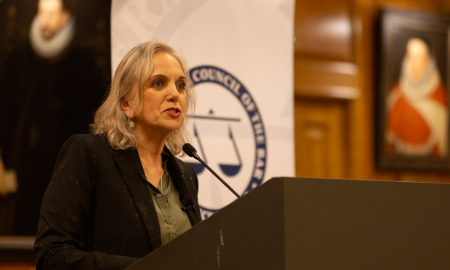
Miller said: “I am pleased we have established this agreement, which is an important piece in the jigsaw to breaking down reporting barriers. This agreement, together with the joint protocol the Bar Council has agreed with the Bar Standards Board, helps address key issues identified in the Harman review.
“The agreement sets out a shared commitment that courtrooms are a place of respect and courtesy and will help make sure reports to the commissioner about judicial behaviour can be taken forward appropriately.”
Whipple said: “This protocol formalises and improves a process that has long existed – giving legal professionals clarity about how they can raise concerns informally. The judiciary is committed to upholding the highest standards of integrity, fairness and respect.”
She added: “While the majority of judicial office holders behave professionally and courteously, we take concerns about bullying, harassment and discrimination very seriously and are committed to providing clear, accessible routes for legal professionals working in our courts and tribunals to raise and resolve concerns about a judge’s behaviour.”
While the protocol encourages informal resolution, both the Bar and the Bench were keen to emphasise that it didn’t replace the formal complaints process.
Minor issues, the statement said, could be handled through informal methods, such as talking to the judge in chambers, as an initial, proportionate step.
However, more serious concerns should be directed to the Judicial Conduct Investigations Office (JCIO), and concerns left unaddressed by informal approaches should be resolved there, with the JCIO remaining responsible for formal complaints against judges.
The new protocol aims to bridge the gap between concern and complaint by providing barristers with a trusted channel to raise issues without directly confronting a judge. It also fulfils Brimelow’s commitment to review the matter, following the Harman Review.
Email your news and story ideas to: [email protected]