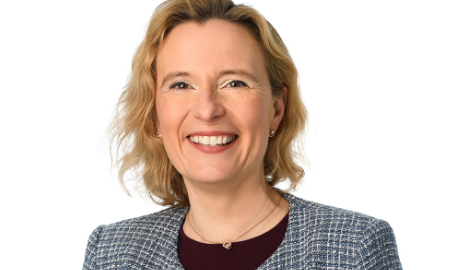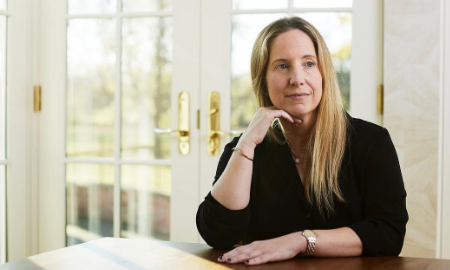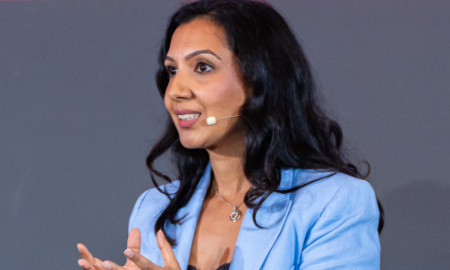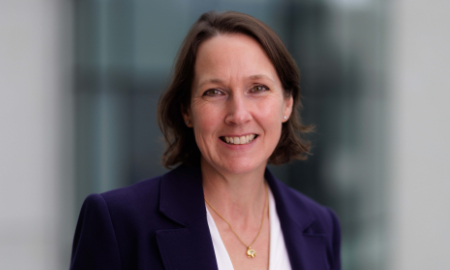

International Airlines Group (IAG) general counsel Sarah Clements and former GSK, Alexion and Novartis lawyer swapped the pharma industry for the fast-paced world of aviation back in 2022. The Global Legal Post spoke to Sarah about her role overseeing the legal teams at British Airways and other IAG brands, the legal issues impacting the airline industry and how AI will reshape in-house work.
What are your key responsibilities as group GC at IAG?
IAG is the group that owns a number of airlines, including British Airways, Iberia, Aer Lingus, Vueling and also our cargo and loyalty business. As group general counsel, my role spans legal, compliance, company secretariat and across all the IAG operating companies as well. At a high level, I’m responsible for ensuring we’ve got the right legal frameworks and governance in place to support the business, so that includes major transactions, regulatory compliance, litigation or reputational risk. I also act as adviser to the IAG board and our CEO, and I have a position on our management committee, which is the executive body that makes the decisions about where to invest capital and the overall strategy of the group. As a legal team and a compliance team, our job is to enable the business to navigate with confidence this complex environment, and we bring judgement, not just legal advice, to the table.
How is your legal department structured?
We operate a federated model, so we have strong legal teams embedded in each of the airlines, which are located in Madrid for Iberia, Dublin for Aer Lingus, Barcelona for Vueling and the British Airways legal team is based in London. They handle the day-to-day operations, and there are local regulatory dimensions to that. I also lead a central legal team, covering areas such as corporate law, M&A, competition law, employment law, sustainability, technology, privacy, compliance and corporate secretariat. We stay close to the business locally through those legal teams, but we also ensure consistency and alignment at group level – compliance being a good example of where we have a standardised code of conduct. It’s a structure that balances autonomy and collaboration, and we try and respond to local needs but also leverage the scale of the wider group.
What attracted you to the role at IAG?
It was a great opportunity and quite a change after years of working in life sciences. But both aviation and pharma are very regulated businesses, so they have that in common; a very different set of regulations, of course, but I was attracted to the scale and complexity of the group. The aviation industry is really interesting. The opportunity to work across all the different airlines and jurisdictions, as well as the opportunity to be a group general counsel, was appealing. Up until that point, I’d been reporting into the general counsel. Aviation is a dynamic and highly visible industry; you just never know what’s going to happen from one day to the next, and the legal function plays a key role in shaping how the business responds to those challenges.
How does the regulatory environment differ between pharma and aviation?
Regulators do seem to think in a similar way even if it is a different industry, and there are, of course, some regulations which apply across the board, like privacy, for instance. But whereas with pharma, things operate on a longer cycle – it takes a long time for drug discovery and development – in aviation, everything happens all at once, so it’s a very different way of working. You try and plan, but you just never know what will disrupt that plan.
What are your legal team’s key operational priorities over the coming year?
Our priority is always enabling the business to succeed in its ambitions – to deliver for our customers and our other stakeholders. We’ve been highly involved in the acquisition of new fleets, which is very complex. All our airlines have been replenishing their fleets. We have also been installing new technologies such as Starlink on aircraft. So getting the contracts over the line for these key activities is a priority, plus other initiatives like delivering returns to our shareholders, so making sure we’re supporting the share buyback plan. In terms of the legal team itself, we continue to focus on being a high-performing, modern function that’s aligned with the business. That includes making smarter use of technology and data, and looking at things like AI.
Are you working on any other initiatives?
I’m currently sitting on the board of Law Beats Cancer, which is an initiative between the legal community and Cancer Research UK where law firms, in-house departments and chambers come together with the objective of raising funds for cancer research.
What are the biggest legal issues impacting the airline industry at the moment?
The current conflict with Iran creates operational disruption and increased fuel costs. We have to find ways of supporting the business on that. Access to airspace is also more limited, and sanctions advice kicks in. So we’ve got to consider all these different areas. Regulatory pressure remains high, particularly in areas such as consumer protection; you’ve got to consider passenger rights when you’re having to contemplate things like flight cancellations. Sustainability continues to be a key focus. We’re advising on items such as procuring sustainable aviation fuel to meet regulatory targets and also on appropriate communications in this area. Competition law remains a key risk within the airline industry, in particular. So, we need to make sure that people are fully up to speed and trained on that.
How do you prioritise what to focus on?
Sometimes you do have to react to things, so it’s working very closely with the business and trying to understand what their priorities are and try to take noise out of the system and enable people to get on with their jobs. You also look at the objectives that the CEO has set for us in terms of growth, sustainable margins and sustainability, and making sure that we’re in tune with that.
How do you expect the GC role to evolve in a world of increased AI use?
It’s transformative for the legal function and the business too. The business is using AI, so the legal function needs to keep up to speed with that. It will change how we deliver work. There’s been quite a bit of doomsday reporting about it, but it will free up time from more routine tasks. We’ve got a very small team anyway, and it allows people to focus on higher-value, more strategic issues. Everyone’s got to be conversant in it; otherwise, you’re standing still when everybody else is moving forward. So I’m keen to promote the use of AI within the legal team, and also legal teams play a key role in helping the organisations they support adopt it responsibly, making sure you’ve got the right governance in place and managing any ethical or regulatory considerations from its use. Our responsibilities seem to get broader and broader as GCs as the world evolves, so AI is another risk of which GCs need to be aware, but beyond that, I don’t see that it’s going to replace GCs.
Who would be your top three dinner party guests and why? (can be anyone, alive or not)
One of them would be Kate Adie. She was the BBC’s chief news correspondent from the late 80s to the early 2000s. She’s amazing. She went to the same university as me, and she witnessed firsthand all these different events, reporting from war zones, challenging politicians, separating fact from noise. I actually met her earlier this year; she’s 80 and still going strong. The next person – and no politics intended here – is Barack Obama. He started out his career as a lawyer. He’s just the most extraordinary communicator, engaging, very clear, has the ability to distil very complex issues with great confidence and clarity. He’s navigated financial crises and geopolitics. He’s very diplomatic. He’s very much the statesman, so I think he and Kate would be quite an interesting combination. For the third person, I thought I'd better have somebody from the aviation world, so that would be Amy Johnson, who was a pioneer of long-distance aviation. She was the first woman to fly solo from Britain to Australia. So that was a time when you had to navigate by yourself in a very primitive kind of airplane and she did it. She eventually lost her life like Amelia Earhart, but it would be interesting to hear what made her do it.
Email your news and story ideas to: [email protected]