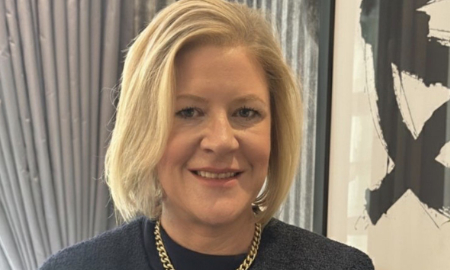

UK publishing giant Reach’s group general counsel Nicki Schroeder has been with the company for the past five years, overseeing legal for its more than 120 brands including the Daily Mirror, the Daily Express, OK! magazine and dozens of local and regional newspapers such as the Manchester Evening News and Liverpool Echo. Global Legal Post spoke with Nicki about her role, the evolving media landscape and the impact of AI on the publishing industry.
What are your key responsibilities as group general counsel at Reach?
I manage the legal functions, which includes the editorial legal function and the commercial legal function, we don’t do employment law but I’m responsible for anything else under the legal umbrella. The data protection officer also reports into me.
What editorial legal advice are you typically providing?
We give pre-publication advice to all of our titles, including our video content and our podcasting. We do it on an advisory basis, rather than a review basis, so we wait for people to come to us with an issue, and then we advise. The team also handle complaints – editorial legal complaints, copyright complaints, data protection complaints, and any content-related complaints.
How is your legal department structured?
All of the lawyers are on remote contracts, but they can come into the office. I have two lawyers based in Ireland, seven of us are based in the UK and I’ve got a consultant in Scotland. My two data protection people are based in the UK, and I have consultants in the US as well. We also use freelance lawyers in the evenings and at weekends to provide pre-publication advice.
What are your legal team’s main priorities over the coming year?
We are looking at AI. We’re constantly looking to make ourselves more efficient – more to speed up contracts, because obviously the length of time that a contract takes, from first inception to signature, can have a significant revenue impact. So we’re constantly looking to speed up the process, whether that’s by enabling the business to undertake a lot of the work themselves, by way of playbooks or by way of additional training, or whether it’s by using AI to help facilitate contract review or using contract management tools to try and make sure that the flow of work through the various teams that need to look at it is optimised.
We’re also looking at creating internal AI assistants which can help with some of the more straightforward questions. So certainly, if it’s something to do with an editorial guideline or an editorial policy, rather than giving advice ourselves, we’re looking at creating an AI assistant that can do it, and we are working to create an app on journalists’ phones so that, for example, if they need to get a signed release if somebody’s sharing footage with them, they can get a release form or a licence form signed via their phone.
What attracted you to joining Reach?
I’m a media litigator by background, and so when I first joined, it was very much with a view to resolving the long running phone hacking litigation that started in 2012. I joined in 2022, so it had been running for 10 years by that time. I like a bit of a challenge. So that’s why I came.
What are the biggest legal issues impacting the publishing industry at the moment?
The really big one at the minute is the whole AI licensing piece. It’s a very fragmented market, so you have AI developers who have entered into licensing agreements with some publishers, but not with others, but they are using content from all publishers in the same way. So we are heavily engaged in negotiating with AI developers to ensure that if they’re using our content, that they licence it and that they pay appropriately.
How do you monitor if an AI company is using your content without permission?
We can see the bots on our websites and we can see that they’re being scraped. We can also determine this sometimes from the answers which the AI tools return. If we know that certain content hasn’t been syndicated or picked up by somebody else, that it is genuinely exclusive content, but an AI tool refers to it in an output, then it’s pretty obvious that they’re scraping and that they ingested it and are spitting it back out again.
How has the media landscape evolved from a legal perspective since the start of your career as a media lawyer?
When I started we still had jury trials for libel actions. We certainly see a lot less claims being issued in the Media and Communications list than would have been the case when I first started my career. Standard libel actions are now quite few and far between. We’re seeing a lot of AI-generated complaints coming through over the course of the last year to 18 months. We’re seeing people sending automated right to be forgotten requests over articles that they’re unhappy with, or automated libel or copyright or even misuse of private information complaints, often quite unfounded, because these tools are designed to give the person that’s putting in the prompts the answer that they want to hear. So we’ve had a few occasions where people have have gone as far as issuing proceedings drafted by AI which have absolutely no prospect of success because they’re time barred or it’s just a total misunderstanding of what the law actually is.
Why are we seeing less libel cases, what has changed?
A number of things. When I first started out, as I said, we had jury trials and the libel damages awarded were extremely generous, so you would get more for somebody saying something unpleasant about you than even if somebody broke your leg or broke your nose. So one of the things that we’ve seen over the years is libel damages have come down. The Defamation Act that came in 13 years ago had a requirement of serious harm, that you had to show that something had caused you serious harm, or if you were a company, that it had caused you financial loss. So that’s been an extra hurdle for people to get over.
What is the best thing about working in-house in the media industry?
The people. To work for a media company and to be a journalist, you have to be passionate about what you do. I have worked with so many very committed journalists, some of whom have put themselves at considerable inconvenience, ranging right up to personal risk, in terms of pursuing stories that they think are important. You shouldn’t underestimate the backlash that some journalists get just from holding truth to power. Our journalists can often get a lot of personal abuse online for covering things like court cases. So it’s absolutely the people, because they are so committed and so devoted to what they do, and they are driven by a desire to keep the public informed.
If you hadn’t pursued a career in law, what would you have done instead?
I would have liked to write or be involved in some way in publishing, either as a writer or maybe as an editor, but something in that written, creative area. I didn’t particularly enjoy my law degree when I did it, I found it a little bit dull. I really enjoyed English when I was in school, and I slightly regretted not having done an English degree. But once I started practising law, my very first libel action was quite a significant one, because it involved exposing a large paedophile ring operating in North Wales and preying on children in care. Ultimately everybody we wrote about ended up being convicted. After that I knew that this was what I wanted to do and that this was important to me.
Email your news and story ideas to: [email protected]