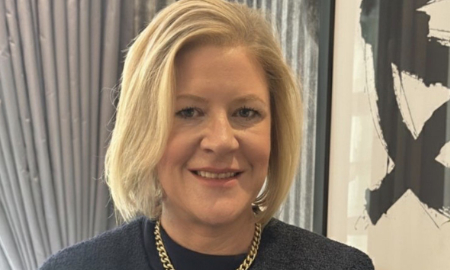

UK consumer credit and payments fintech Quint Group’s chief legal, risk and compliance officer, Sheraz Afzal, will celebrate his fifth anniversary as the company’s legal head this year. Global Legal Post caught up with Sheraz to discuss his role at Quint, the challenges impacting UK fintech legal departments and the skills in-house counsel will need in the future as AI reshapes how legal teams work.
What are your key responsibilities as Quint’s legal chief?
As the chief legal, risk and compliance officer, I have a couple of streams of accountability – overseeing the provision of legal advice and services to Quint and its portfolio of investment firms, and on a more personal capacity, I provide advice to the board and the company’s senior executive on discrete strategic projects and matters arising.
How is your legal department structured?
I have three lawyers – a head of legal and a couple of more junior staff – and then I also have a team of five compliance people.
How much work do you tend to outsource versus keep in-house?
Typically, there are two events that might cause us to go external. One of the triggers might be that the work is a big project, and therefore we haven’t got the bandwidth to do it ourselves. Or secondly, if it’s an area of expertise that we don’t have. So, for example, right now we are designing a new employee incentive scheme. We don’t have much experience in doing incentives, so we’ve taken that work externally. If we’re doing a big transaction, we will go externally for that too. Then there are other bits where we might split the work. For example, we’re about to do a joint venture with a leading lending company. And even though I’ve not done many joint venture agreements before, there are certain components that I’m familiar with, so I can put them together, and then use a third party to help with discrete bits of that. One thing we have to balance, though, is that the project work is the work that our in-house lawyers want to do, so you don’t want to give all the exciting work to external providers, and then our in-house people get bored. You want to ensure they have a steady state of interesting work.
What are your legal department’s priorities for the coming year?
We’re quite good on AI deployment, and we’re keen to carry on getting more and more AI use cases deployed. Secondly, I want to use AI to remove some of the really routine stuff and therefore create the capacity to do more of that exciting work in-house and not have to go externally. I’m also keen to develop our talent. So I’m looking two or three years ahead and thinking here’s what I believe the target business model will look like, and here are the skills that I think my team will need. Then I think about how I can feed them work and experience that gets us there. To some extent, that also shapes how I use external counsel, because one of the best ways that I find that people learn is working with more experienced people.
Can you give any examples of how you are using AI so far?
One thing we have done is automate approval of our financial promotions. That’s been quite a big step for us as it is a particularly tedious bit of work which the marketing team want done very quickly. It’s not a very important piece of work, so it’s always hard to prioritise it appropriately. So we’ve managed to get that automated, and that’s been super successful. Another area is around basic questions that aren’t terribly difficult but people just at least want some comfort, so we’ve created some AI agents that have been trained on thematic areas such as our HR employee handbook and our contract playbook, so for example when our counterparties are raising questions on what our appetite is for making changes to a contract, instead of asking the lawyer, they can ask the AI.
What attracted you to your current role at Quint?
I was previously doing a similar job for a multinational private equity-backed business. The business unfortunately experienced some issues, and so we restructured to get it into a solvent wind-down. Prior to that, I had a similar job for another PE-backed business, so I had about 14 years of working in restructuring environments. A lot of the problems I was fixing arose from businesses growing too quickly in an uncontrolled way, so I thought it would be interesting to join a business earlier in its lifecycle to prevent some of those issues arising in the first place. I also enjoy agile operating structures like Quint’s; committees of people making decisions frustrate me. Working for a PE-owned business means decisions get made quickly, and the same is true when you are working with a founder. So those were my two main reasons.
What are the biggest risks impacting corporate legal departments in the financial services industry right now?
The Consumer Credit Act is about to change. I’m an old-fashioned consumer credit lawyer at heart, and the last big change was 20 years ago, which I was involved in – that makes me feel old. But that’s a big change that we’re keeping an eye on. Secondly, we’re doing a fundraise. We always thought our biggest risk to a fundraise was a global macro-economic or political event, and then we saw what happened in Iran the other week. So it’s possibly the first time since Covid where something has had a big effect on our next 12-18 month plans. Those are probably the two biggest external events on my radar.
You mentioned earlier about upskilling your talent – what do you think will be the most important qualities for an in-house lawyer in the future?
I was talking to my CFO about this recently, because he was expressing his frustration at the textbook advice that somebody was giving him. I think to be an effective in-house lawyer, you have to understand the business, and not just the business, but businesses in general. I always say I’m a business person who’s wearing a lawyer’s hat rather than the other way around. So the more of a business person you can be, the more of an effective in-house lawyer you will be. It’s about understanding the law in context, not just in its pure academic form.
If you didn’t pursue a career in law, what would you like to be doing?
Writing or being on stage, one of the two. When I was younger, I wanted to write comedic satire. In my 20s, I was inspired by Terry Pratchett, who was an internal comms person by day, and he was trying to write his novels at night, and I was an internal comms person by day and trying to write a novel by night. You won’t be surprised to hear I wasn’t as good as Terry Pratchett was at writing novels at night.
Email your news and story ideas to: [email protected]