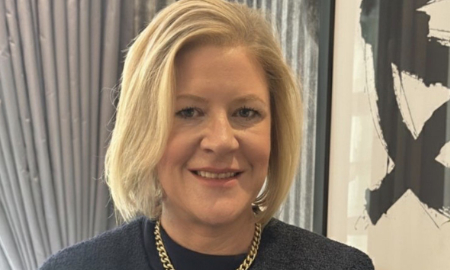

Experienced legal chief Funke Abimbola MBE has worked across a range of private practice and in-house roles over the past 25 years, including as general counsel for UK and Ireland at pharma giant Roche. She was awarded an MBE in 2017 for services to diversity in the legal profession and to young people. Since November 2024, Funke has been providing fractional GC services through in-house resourcing consultancy The Legal Director. Global Legal Post caught up with Funke to discuss her role as a fractional GC and how she sees the job of the GC evolving.
What attracted you to becoming a fractional GC?
After many years as a senior in-house lawyer, I realised that many fast-growing companies need GC-level judgement long before they can justify a full-time hire. The fractional model solves that problem. It allows organisations to access experienced legal leadership early, particularly in technology and AI-driven businesses. For me, it’s also intellectually energising working with multiple founders and leadership teams at critical growth moments.
What are the typical responsibilities of a fractional GC?
The core responsibility is providing strategic legal leadership rather than just transactional support. That includes governance, risk management, commercial contracting, regulatory compliance and helping leadership teams make confident decisions. In tech businesses, AI governance and data risk are increasingly central. A good fractional GC becomes a trusted adviser to the CEO and board while building scalable legal frameworks as the company grows.
How challenging is it to juggle multiple legal matters for different companies compared to being the legal head of just one company?
It requires discipline and clarity of priorities, but it’s very manageable with the right structure. The key is to focus on strategic issues rather than operational noise. In so many ways, the variety has really sharpened my thinking and I see clear patterns across industries. The role becomes less about firefighting and more about guiding leadership teams through complex decisions with calm, experienced judgement.
What type of companies typically look to work with a fractional GC?
Typically high-growth technology, AI, healthtech or SaaS companies that are scaling quickly but aren’t ready for a full-time GC. Some already have a small in-house legal function and want senior oversight. Others are founder-led businesses that need governance and regulatory guidance as they mature. Increasingly, boards are recognising the value of experienced legal leadership earlier in a company’s lifecycle.
How have you seen the GC role evolve during your time working in-house?
The GC role has moved far beyond traditional legal advice. Today’s GC sits at the centre of strategy, governance and risk leadership. Technology, AI regulation, data protection and ethical decision-making have made the role far more multidisciplinary. The best GCs are not simply lawyers. We are trusted advisers who help organisations navigate uncertainty while maintaining integrity and responsible leadership.
What one lesson about in-house lawyering do you wish someone had told you earlier in your career?
That the most valuable skill is judgement, not technical brilliance. Law firms train lawyers to be precise analysts, but in-house leaders must be pragmatic decision-makers. Business leaders don’t need 20 pages of legal analysis. They need clear guidance on risk and options. Learning to translate complexity into confident, commercial advice is the real art of great in-house lawyering.
Who would be your top three dinner party guests and why?
Nelson Mandela, for his extraordinary leadership and moral courage; Jane Austen, whose sharp observations of human nature remain timeless and Ada Lovelace, often considered the world’s first computer programmer. Between them we’d cover leadership, society and technology – three themes that shape my own work today at the intersection of law, ethics and the future of innovation.
Email your news and story ideas to: [email protected]