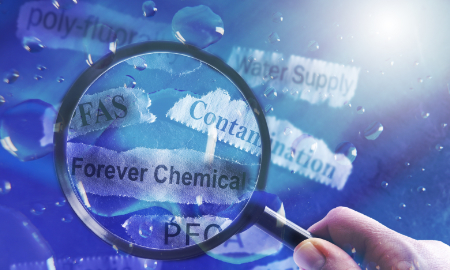

Growing public concern over so-called ‘forever chemicals’ may lay the groundwork for a wave of litigation in the UK, according to research from Byfield Consultancy.
Byfield’s survey found that half of its respondents were concerned about the potential effects of exposure to per- and polyfluoroalkyl substances (PFAS) – the forever chemicals in question – with more than half believing they were associated with cancer and one-third linking them to reduced immunity.
Nearly half of respondents were concerned that their local area was already affected by PFAS contamination of water, soil or air, with that share rising to more than 50% in London. Some 37% of Londoners said they would support legal action against companies that use PFAS, while 43% said they would boycott such businesses.
Another 32% of respondents believe businesses should bear the burden of addressing PFAS-related harm, creating what Byfield’s report argues could be a nascent class of potential claimants.
The survey, conducted by pollsters Obsurvant in early November 2025, sampled 2,000 people recruited to reflect the UK’s age, gender and regional population distribution.
The report comes as Hausfeld released a significant poll on the UK class actions regime, which showed considerable support for collective actions: nearly two-thirds (64%) of the 3,000 respondents supported measures to make collective claims easier to bring. However, this comes at a time when the regime is under reform, with not everyone believing that class actions are a good thing.
Gus Sellitto, founder of Byfield Consultancy, said the Obsurvant findings indicated an inflexion point in PFAS disputes in the UK, noting “a clear shift” in perception. “Public awareness is rising quickly, media scrutiny is intensifying and developments in European collective redress and class action regimes are reshaping how individuals and consumer organisations pursue accountability,” he said.
Few claims have reached London’s courts in large numbers; Sellitto believes that may well change, saying “the direction of travel is clear”. There are also reputational issues to consider, said Dina Hudson of Byfield, given “the media plays a key role in PFAS-related legal disputes” as press coverage can rouse regulators and legislators alike. As a result, businesses should ensure they are prepared “from both a legal and reputational perspective” as litigation risks grow, Hudson said.
Lawyers said PFAS claims present complex, cross-cutting legal issues spanning environmental law, product liability and regulatory frameworks. While such issues are often tested separately, PFAS brings them together – and that makes lawyers nervous.
Sarah-Jane Dobson, global head of product liability at Ashurst, said the survey data confirms widespread concern. “These statistics confirm that people are very worried about PFAS and think it is a widespread issue that is affecting them personally,” she said.
Dobson noted that while discussion of PFAS has been ongoing for years, legal action is only now emerging. “We are now finally starting to see some cases come through in Continental Europe, and some precursor cases in the UK,” she said, describing PFAS as “one of the first and best examples of a complete supply chain risk”.
She added that PFAS claims are attractive to litigation funders due to the breadth of potential classes, while regulatory reform supplies a potential platform, pointing to the EU’s revised Product Liability Directive. “From 2027 onwards, there is a real risk that we will see an uptick in PFAS-related cases,” Dobson said, noting that the directive extends liability to psychological injury.
“The fear of being contaminated by these chemicals is enough,” she said. “People’s distress is subjective and harder to disprove, so it could be a strong basis for a claim.”
Emily Nicholson, partner at Mishcon de Reya, cautioned that PFAS litigation presents practical challenges given the chemicals’ widespread use. “The issue is a lot more complicated than just saying you would boycott a particular company,” she said, noting that many everyday consumer products likely involve PFAS.
Nicholson said the legal focus should be on “careful regulation of their use and their disposal, including bans where appropriate”.
Susie Wakefield, partner at Shoosmiths, said PFAS are increasingly drawing legal attention due to their reach. “PFAS touch so many areas and have such a potential reach that they are catching lawyers’ attention,” she said, adding that while the UK lags the US and Europe, “there is definitely a momentum building”. Law firm recruitment seems to confirm that, too.
Technical challenges may further complicate claims. Geraint Williams, a PFAS expert at HKA, said the chemicals’ persistence makes remediation difficult. “Sites impacted by PFAS will be difficult and costly to remediate,” he said, which will pose issues for courts considering such cases.
Then there is insurance. Adam Heppinstall KC of Henderson Chambers said some US insurers are already concerned. “If PFAS are as pervasive, and if it can be proved that they cause injuries, insurers will be very nervous,” he said, drawing parallels with historic mass-tort liabilities such as asbestos.
When US insurers worry, London follows, and so too do their insurance lawyers. Forever chemicals may remain with London’s lawyers for years to come.
Email your news and story ideas to: [email protected]