
Four top litigators have left Paul Weiss to form their own boutique, two months after it became the first law firm to cut a deal with the White House to avoid a punitive executive order targeting it.
Prominent Democratic lawyer Karen Dunn, who co-chaired Paul Weiss’s litigation department, has left alongside longtime partners Bill Isaacson and Jessica Phillips and former prosecutor Jeannie Rhee, who was involved in special counsel Robert Mueller’s probe of the 2016 election and had been managing partner of Paul Weiss’s Washington DC office.
“We were disappointed not to be able to tell each of you personally and individually the news that we have decided to leave Paul Weiss to start a new law firm,” the lawyers said in an email to the firm’s partners on Friday (23 May), according to a New York Times report.
All four partners were hailed as coveted hires when they joined Paul Weiss. Dunn, Phillips and Isaacson moved over from Boies Schiller in 2020, while Rhee joined in 2019 directly from the US Department of Justice, having earlier been a partner at WilmerHale alongside Mueller.
They are known for high-profile litigation work and have represented tech giants including Google, Oracle and Uber. Dunn also oversaw former vice president Kamala Harris’s and former secretary of state Hillary Clinton’s debate preparation during their presidential campaigns, according to The New York Times.
The lawyers have also worked on prominent pro bono matters. In 2021, Dunn, Isaacson and Phillips secured a landmark trial victory on behalf of clients injured in the violence during the ‘Unite the Right’ rally in Charlottesville, Virginia, in 2017.
Meanwhile, Rhee previously represented Hillary Clinton in a lawsuit relating to her use of a private email server. Later, while serving in the special counsel’s office, the Washington Post reported she played a lead role in a case against Russian firms and individuals charged with carrying out an alleged campaign to create discord within the US electorate during the 2016 presidential race.
Paul Weiss said of the departures: “On behalf of the firm, Paul Weiss is grateful to Bill, Jeannie, Jessica and Karen for their many contributions. We wish them well in all their future endeavours.”
Paul Weiss has come in for strong criticism from within the legal profession, including from some of its own lawyers, since striking the deal in March that meant it avoided an executive order that would have limited its access to federal buildings and directed agencies to strip government contracts from its clients.
Bloomberg Law reported that members of the departing group had privately expressed support for the deal, but would have more leeway to take on litigation that challenges the administration now that they have left Paul Weiss.
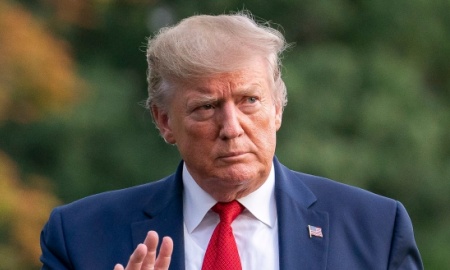
The order formed part of a campaign by Trump targeting law firms he maintains have supported efforts to unfairly prosecute him or help his opponents, alongside a broader effort by his administration to challenge diversity, equity and inclusion policies.
The order aimed at Paul Weiss cited the firm’s hire of Mark Pomerantz, who was a central figure in an investigation into Trump’s finances while at the Manhattan District Attorney’s Office, and its “discriminatory” DEI practices.
The firm’s deal with the administration includes providing $40m in pro bono work for shared causes. In a letter to staff in March, chairman Brad Karp, who was well known for his fundraising efforts for the Democrats, emphasised the order “could have easily destroyed our firm”.
Two other prominent Paul Weiss lawyers have announced their exit from the firm since the deal was struck. Steven Banks, who had been head of the firm’s pro bono practice, departed last month citing a desire to return to direct advocacy work.
Jeh Johnson, a former secretary of the Department of Homeland Security, also said earlier this month he would retire from Paul Weiss at the end of June, having practised on and off at the firm for more than 40 years.
Johnson was recently made co-chair of the board of trustees at Columbia University, which has itself been caught up in Trump’s campaign targeting businesses and institutions, losing $400m in federal funding in March after the administration said it failed to fight antisemitism on campus.
Eight other law firms, including Kirkland & Ellis and Latham & Watkins, have also cut deals with the White House to avoid executive orders that will see them provide nearly $1bn in pro bono legal work for the administration.
Some of those firms have seen high-profile exits by lawyers concerned over their decision not to challenge the administration.
Associates, including Rachel Cohen and Brenna Frey, made public resignations from Skadden Arps Slate Meagher & Flom after it struck a pre-emptive deal in late March.
Top litigator Joseph Baio – Willkie Farr & Gallagher’s longest-serving lawyer – also exited the firm in April after 47 years, telling the firm’s executive committee in an email he would “join the fight against governmental tyranny, unconstitutional decrees and social injustice, particularly at this critical time”, according to the New York Times.
Four law firms have chosen to sue to block executive orders targeting them. On Friday, a federal judge struck down the order against Jenner & Block, echoing an earlier decision by another judge over the order aimed at Perkins Coie. Litigation firm Susman Godfrey and WilmerHale have also won temporary restraining orders while they pursue their cases.
Email your news and story ideas to: [email protected]