Women account for more than half of all lawyers in Australia but make up only 42% of partners at larger law firms in the country, according to a new report from the International Bar Association.
The Raising the Bar: Women in Law Project – Australia report, produced in collaboration with the Law Council of Australia, shows that women accounted for 58% of lawyers nationwide and 59% at large law firms. At the same time, roughly only four in 10 partners at larger law firms were women, highlighting a gulf in progression between entry‑level representation and progression to leadership.
That dynamic is consistent in senior roles across all sectors, with the Bar showing the starkest disparities.
The study draws on data from 31 law firms, 26 barristers’ chambers, the judiciary and public sector lawyers, supplemented by extensive desk research from the Law Council. Response rates to the IBA survey, however, were relatively low at 39% and 27%.
The Law Council of Australia’s immediate past president, Juliana Warner, said the findings reflect challenges that continue to impede women’s advancement across the profession.
Warner said: “I have enjoyed a challenging and rewarding career as a commercial litigator in Australia. However, I have encountered the same obstacles that many women lawyers face as they endeavour to balance a demanding career with family and carer responsibilities.”
Thanking the IBA for its work on “an innovative project”, Warner added: “It is heartening to observe that flexible working arrangements, once considered exceptional in the legal profession, are now common in Australia. These arrangements go some way to addressing the barriers to achieving gender equality across all levels of the legal profession, though there is more to be done.”
The various Bar associations in Australia’s states and territories, some partially fused and partially separate, showed significant disparities. Despite improvements among solicitors, where women now represent 56% of practising solicitors, the report stresses that the Bar remains the sector with the “most pronounced disparity”.
Women make up just 23% of barristers in chambers that responded to the survey, and 30% nationally, with only 16% of Senior or King’s Counsel being women.
Representation in senior advocacy has improved only marginally over time. Between 2007 and 2009, 14.9% of barristers appearing before the High Court of Australia were women; from 2019 to 2021, this figure rose to more than 24%. For Senior Counsel appearances, the increase was from 5.6% in 2007 to just under 13% between 2019 and 2021.
Women now constitute 47% of judicial officers, though their presence declines at the state and federal apex courts, underscoring a continuing deficit in the senior judiciary – despite a period in which women judges outnumbered men at Australia’s highest court.
Respondents reported a strong reliance on flexible working arrangements, identifying them as both the most widely adopted and most effective measure for improving gender balance. Mentoring and coaching were also common, but initiatives such as leadership training for women and target‑setting were viewed as more effective in driving senior‑level progress.
Many major Australian law firms have now adopted the 40‑40‑20 partnership model, aiming for 40% women, 40% men and 20% flexible representation, to accelerate progress towards balanced leadership.
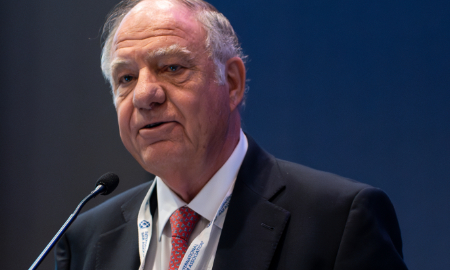
New IBA president Claudio Visco said: “I am delighted the IBA has added another jurisdiction to its already extensive list of countries covered by [this] project. The issue of gender parity in the law remains a priority for my presidential term and beyond. Today in Australia, most law students are women, and although the proportion of women at senior levels has increased over time, it still does not reflect the overall proportion of women lawyers in the profession.”
Australia’s report is the 14th in the series, which has examined jurisdictions including England and Wales, Uganda, Spain, Nigeria, Holland, Chile, Brazil, Mexico, Ukraine, Turkey, Nepal, South Korea and Taiwan. A report on Canada is due later this year.
The project previously won an award at the 2024 Women and Diversity in Law Awards for its work tracking gender parity, while the IBA has signposted opportunities for advancement.
Its next major phase – a global survey of 5,000 women lawyers – will be launched in London on 12 March this year to mark International Women’s Day. It will examine workplace barriers, reasons women leave the profession and the impact of legal work on life beyond practice.
Email your news and story ideas to: [email protected]