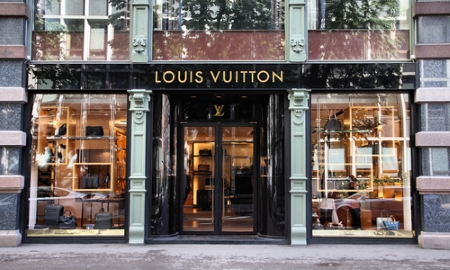
“We let others copy, and when they do – we drop it”, is one of Miuccia Prada’s most famous quotes, a comment that led to the controversial thesis that piracy actually innovates fashion. Piracy certainly gives luxury brands an incentive to market new goods rapidly, keeping one step ahead of those knocking off their products. However, with the slowdown of the fashion industry following the breakout of COVID-19, many brands with no option but to turn a blind eye to knockoffs, will seek to litigate after the pandemic. Design patents are a tool in the box for many brands - and we may be about to witness the beginning of the golden era of design patents.
Although design patent protection is not a new strategy - Louis Vuitton has been registering its designs as early as 1863 - over the last years design patent applications by luxury fashion houses have grown significantly with the most meaningful shift in the number of registrations occurring during the financial crisis of 2007-2010.
By way of example, Gucci’s design patent registrations until 2006 totalled 240 designs (an average of 9 registrations per year), while between the years 2007-2009 the number of its registrations jumped to almost 100 (an average of 33 registrations per year). Louis Vuitton registered 6420 up to 2006 (an average of 45 registrations per year) while for the years 2007-2009 the average escalated to an average of 361 (1,085 registrations).
The jump during the years of the financial crisis can be explained based on a common assumption that during such times, luxury brands tend to make way to logo-less (or concealed logo) items that can be easily marketed as “timeless”, and as an “investment”, allowing the brands to inflate prices and to build upon singular expensive purchases over mass less expensive ones. From the consumers’ end, such purchases can be more easily justified, as they assume their purchase will still be relevant in the following decade or two, and it also corresponds with the consignment market phenomena, which has grown tremendously in recent years, and is now an important component of consumers’ resolution when paying high prices for luxury goods.
Such timeless pieces, however, highlights the importance of design patents: As trademarks are less relevant for such “timeless” pieces and trade dress are hard to prove, design patents are fast, easily granted and cover the true essence of the design – its shape. This quickly became a useful tool in luxury brand’s toolbox, leaving behind smaller brands that could not seek the same protection. Design patents traditionally required a patent attorney and multiple registrations for a certain collection, which turned this operation into a highly expensive one. Smaller brands that wanted to market timeless or unique pieces and put an enormous effort in their designs, were knocked off, and soon lost their competitive advantage. In a way, luxury and financially stronger brands monopolized one of the most useful intellectual property tools during financial crises.
In recent years, Israel, whose luxury market is only now beginning to grow (with new luxury department stores and luxury boutiques opening daily), had foreseen this monopoly over design patents and enacted a new Design Law that is most favorable for smaller brands. One of the encouraging news in this new Design Law is that it grants designers with automatic protection for three years (without any registration required). For those who do seek a registration protection for 15 years, they can do so without requiring any involvement of a patent attorney (the applicant can apply on its own behalf) which really helps reducing registration costs.
Furthermore, applicants have 12 months from the first publication of a new design to proceed with their application. This enables smaller brands to launch their collection and wait to track the true timeless and successful pieces without having to register the entire collection (which, for the most of it, a protection of three years can suffice). However, not many designers in Israel actually use this platform, due to lack of education and accessibility.
On the heels of COVID-19, when we can expect an increasing number of design patent applications from luxury brands, while witnessing an unfortunate increasing number of Chapter 11 applications for smaller brands, it may be a good time to make design patents registrations more accessible and favourable for smaller brands. This may turn out to be a material property, which could be a “rescue rope” for a designer, who faces Chapter 11. A large number of design patent registrations for smaller brands could also expose their designs to other brands and will enable them to monetise and collaborate with much bigger ones. Eventually, design patents may be the solution to shift fashion from unsustainable attitude of ‘drop it’ to long term attitude of ‘making the most of it’.
Try to imagine how this, simple and affordable tool, may influence our economy, our environment, and our consuming habits…
Assaf Lapid is a partner and Rachel Zilberfarb-Schreiber is a lawyer at Israeli law firm Amar Reiter Jeanne Shochatovitch (AYR)
Email your news and story ideas to: [email protected]