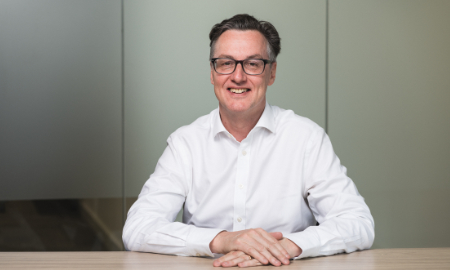

Financial Services Compensation Scheme (FSCS) chief counsel James Darbyshire has been with the organisation for two decades. The UK's FSCS not only provides compensation to individuals when financial services firms fail but it also plays an important role in maintaining confidence in the financial system. Global Legal Post caught up with James to talk about his long tenure at the helm of the FSCS’s legal team, the evolution of the consumer protection landscape over that time and the huge variety of matters that cross his desk.
What are your key responsibilities as chief counsel at the FSCS?
I’m a member of our executive team here at FSCS, and act as a strategic adviser to the board. My role is diverse: I’m responsible for the legal team, as well as our recoveries team, which acts as our litigation function, seeking to recoup the costs of compensation from those responsible for causing consumers harm – the ‘polluter pays’ model. I’m also responsible for the company secretariat function and data protection.
How is your legal department structured?
We’ve got 16 people in the legal and recoveries teams. We’ve got a head of legal, a head of recoveries and then we have lawyers at various levels of seniority, including at paralegal level in the team as well. Three of our lawyers have trained with FSCS as we’ve been privileged to offer training contracts once every few years, so we have the good fortune of having people who’ve been with us for a long time.
You are coming up on 20 years as FSCS’s chief counsel – what do you most enjoy about the role?
Lots of things: the people are of course the number one great thing at FSCS, both in the teams that I work with but also more broadly across the organisation; we’ve just got one office in one location so it’s easy to get to know people well. The work we do also makes a real difference to people. We’re here to look after people in a time of crisis, and if they’re eligible, we can pay them compensation where they’ve lost money through no fault of their own. That purpose is really a big draw for me. And the variety of the work we do here as well keeps it really interesting – from the outside it looks like it should be relatively straightforward, but once you get inside and you see the breadth of what we get involved in, there’s always something new – whether it’s investment failures, PPI, pension miss-selling, but also our broader role in maintaining confidence in the financial system. Our work spans everything from individual compensation claims through to preparedness for major firm and bank failures – so you never know what’s going to be next.
How do you decide what work to keep in-house and what to outsource?
We’ve got a panel of six law firms that cover everything we do and we use them from both a scalability and expertise perspective. We try to do as much as possible in-house, but there’s quite a breadth of work, particularly on the litigation side, whether that’s judicial review challenges or pursuing recoveries. So, for commercial-style litigation we’ll rely more heavily on external counsel, but also sometimes we might go direct to barristers rather than necessarily via our panel law firms.
What are your legal team’s key operational priorities over the coming year?
We’ve just launched a new strategy for FSCS and a big element of that is making sure we are building a scalable, efficient operating model to react to external events and stakeholder needs. Operationally what we’re trying to do is embed legal knowledge and decision making within the system of FSCS, so moving away from just a functional approach where you come to legal at the beginning of a problem or at the end of a problem when you need something sorted out, and instead being much more embedded in our processes and ways of working. The other thing is obviously the use of AI and other operational efficiencies that we can build on. We’re treating AI as a strategic opportunity rather than simply a productivity tool. Like many legal functions, we’re exploring how legal LLMs can help us scale expertise, improve consistency and free lawyers to focus on higher-value judgement and stakeholder work.
What are the key legal challenges impacting the financial services industry and your work in particular at the moment?
At FSCS, we’ve moved from responding to large historical waves of consumer harm, such as PPI and pension mis-selling, towards ensuring we’re prepared for what comes next. Our focus is increasingly on resilience, scalability and readiness for future firm failures and emerging risks. By way of example, a recent development has been the introduction – through legislation – of a new bank stabilisation tool which enables FSCS to recapitalise a bank in financial distress rather than necessarily having to resort to insolvency and paying compensation: thereby allowing continuity of banking services for affected depositors.
How have you seen the consumer protection backdrop change over the past 20 years?
From our point of view, there’s a big change in terms of consumers being aware of who we are and what we do, but also the desire for us to be known both from consumers, and also from the regulators themselves. When I first joined many years ago, we were almost regarded slightly as the Grim Reaper of the regulatory family, you didn’t really want to be spotted, and if you were spotted, everyone knew something horrible was about to happen. Whereas now banks need – and want – to have our logos (the FSCS protected badge) visible in their physical premises and also online, as a way of providing reassurance to their customers that FSCS will step in if the worst happens.
What one lesson have you learned about in-house lawyering over the years that you wish somebody had told you earlier on in your career?
This is probably a very familiar one I suspect, but just the fact that most people outside the legal team aren’t interested in what the legal analysis is on any particular issue or the nuances of the law; it’s the realisation that people just want you to be calm, be able to provide the guidance as to what they can and can’t do and how they can do it, and being an enabler for them in service of whatever they’re trying to achieve. If you go in with that mindset, it makes such a difference. The other thing is that lawyers can be a bit of an echo chamber in the way they decide things, so the importance of actually bringing in an outside view on something, even if it is quite a legal question, can often give you a new perspective on something and that can often be a very powerful thing.
What do you like to do outside of work to relax?
I like playing sports – I love playing tennis and, less successfully, a bit of paddle these days as well. Because I live in London I take the opportunity to go to the theatre whenever I can, so I make good use of that with my wife and friends. And I also love travelling. I’ve got three kids, one of whom lives in Amsterdam, so that’s a good excuse to go there. As a family, we’ve been lucky to go on lots of interesting trips over the years. I love exploring the world, so that’s definitely a big thing.
Email your news and story ideas to: [email protected]