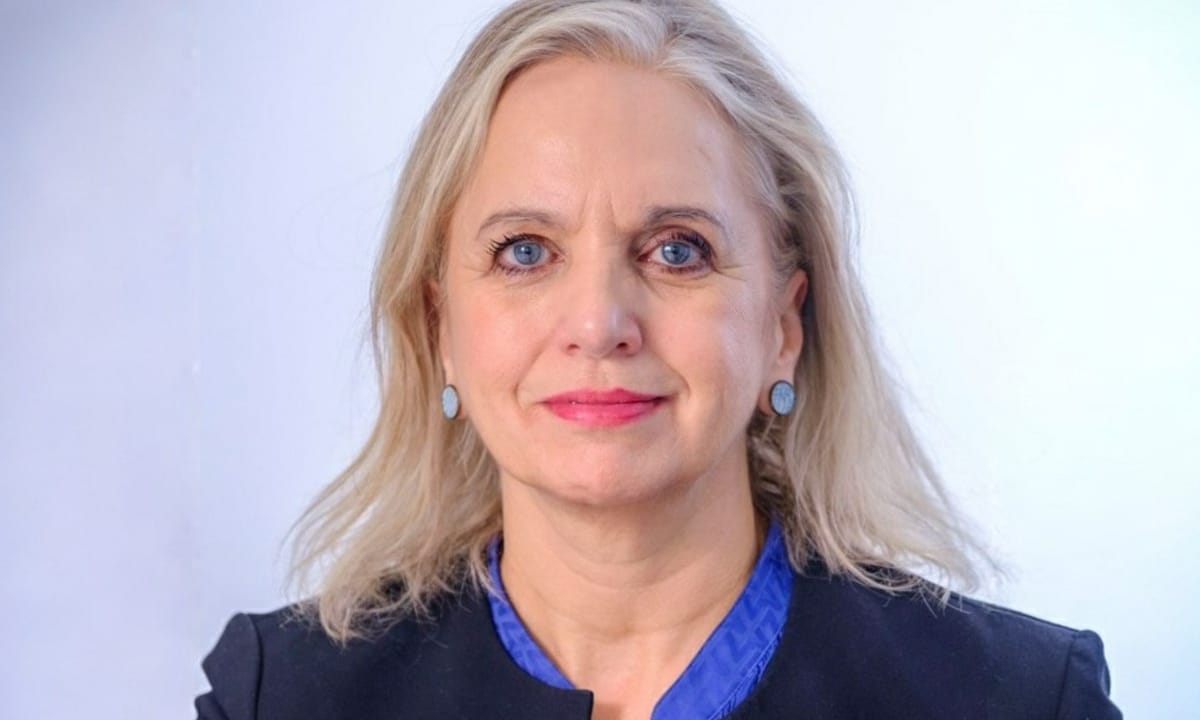

Bar Council chair Kirsty Brimelow KC urged ministers to deliver on outstanding legal aid funding increases before the end of 2026, speaking at last Saturday’s sold-out Bar Conference at One Great George Street in London.
In her keynote address, she said the Bar welcomed an earlier legal aid increase announced in July, particularly for junior barristers. However, she noted, a previously announced increase of up to £34m intended to help retain advocates remained unrealised, while cases were being adjourned because barristers were unavailable.
“Legal aid belongs alongside health and education as an essential public service,” she said.
Brimelow also claimed victory for the Bar over the abandonment of plans for a judge-only Crown Court division, saying: “It was a success for the Bar and for the public whose participation in jury justice we defended.”
She credited barristers’ lobbying with persuading the Burnham administration to drop controversial criminal justice reforms in October, arguing that reducing jury trials would not resolve court backlogs, as she continued to campaign to preserve defendants’ right to elect for jury trial and to retain juries in complex fraud cases.
Turning to funding, Brimelow said public spending on justice had fallen by 22.4% in real terms per person between 2009-10 and 2022-23. Despite a subsequent reversal in 2024, she said the Ministry of Justice budget remained no higher than it was two decades ago, even as the economy and population had grown.
She called for court fee income to be reinvested, citing the £621m generated by civil courts and £236m by family courts in 2025-26 as potential sources for investment.
Linking reform at home with the Bar’s international standing, Brimelow said that legal services contributed £42.6bn to the UK economy in 2024 and highlighted her efforts to promote the Bar’s international work, including visits to Japan, South Korea, India, Sri Lanka and Vietnam.
“There is no firewall between criminal justice failure and commercial justice confidence,” she said.
She renewed calls for the UK to ratify the Council of Europe’s convention to protect lawyers, noting Bosnia had become the first country to ratify it.
“Whilst the work of barristers is not always appreciated, it becomes dangerous when it is not tolerated,” Brimelow added, saying she had spoken at conferences in Berlin, Paris, Vienna, Warsaw and Copenhagen on ethics and international protections of freedom of expression.
She noted that campaigning for the convention was one of many collaborations with the Law Society of England and Wales, including work to address gender and racial earnings disparities at the Bar.
She said that work on well-being had led to new protocols with the Bar Standards Board and judiciary to address bullying and harassment, highlighting Dame Maria Miller’s first year as the Bar Council’s commissioner for conduct.
Brimelow also cited a Bar Council analysis recommending that the minimum age of criminal responsibility rise to 14 from 10, arguing that effective early intervention could protect children and potential victims, a policy priority as chair.
Her address built on the many priorities outlined in her inaugural speech at Gray’s Inn in January, and was delivered after Lord Chancellor Alex Norris MP had opened the event.
Norris, speaking at his first Bar Conference, said he wanted a ‘National Legal Service’, acknowledging: “We have for too long dealt kind of whack-a-mole style with issues as they have arisen and what comes together actually isn’t a whole system.”
Norris wanted “a more formal, consistent evidence-based approach to reviewing fees, to give providers greater certainty so that we’re seeing the pressures before things have to reach breaking point”.
He said a National Legal Service would be “one that makes it easier for people to understand where to turn to with their problems, with clearer information, better pathways to advice and stronger connections between the services that people rely on”.
Email your news and story ideas to: [email protected]