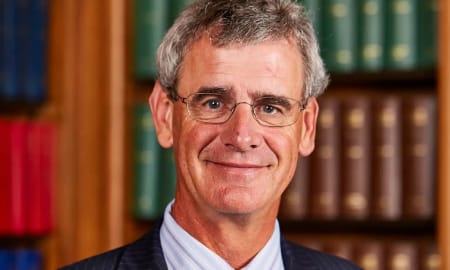

Lord Briggs of Westbourne has been named as the next president of the UK Supreme Court, succeeding Lord Reed at the start of next year.
His Majesty King Charles III made the appointment on the advice of Prime Minister Andy Burnham and Lord Chancellor Alex Norris, following the recommendation of an independent selection commission.
Briggs will assume his new role in January when Lord Reed retires. Briggs will be the court’s fifth president since its establishment in 2009, following Reed, Baroness Hale, Lord Neuberger and Lord Philips in the post.
Briggs said: “It is a great privilege to be appointed president of the Supreme Court and to serve the public by upholding the rule of law. I look forward to working with colleagues across the Supreme Court and the Judicial Committee of the Privy Council (JCPC) to deliver justice of the highest quality, transparency and accessibility.”
In response, Lord Reed – the first Scottish judge to serve as the court’s president – said of Briggs: “He is a judge of the highest distinction, with previous experience of judicial leadership. He has also demonstrated his commitment to increasing the accessibility and efficiency of the justice system, both in domestic cases and in those heard by the Privy Council.”
A chancery barrister by training, Sir Michael Briggs practised from what is now Serle Court Chambers, taking silk in 1994 and specialising in commercial, business and property litigation. He served as the chancery ‘Treasury Devil’ (junior counsel to the Crown), the government’s lead adviser on such cases, and as attorney general to the Duchy of Lancaster.
He was appointed a High Court judge in 2006, where he was the lead judge in the long-running series of cases following the Lehman Brothers insolvency and administration after the global financial crisis.
Lord Briggs was appointed as a Lord Justice of Appeal in 2013. He chaired the Chancery Modernisation Review in 2013 and led the Civil Courts Structure Review from 2015 to 2016, which recommended establishing an online civil court. That furthered work by Lord Justice Jackson on reforming civil justice – with new online procedural rules finally being published this month.
That role preceded his appointment as deputy head of Civil Justice, where he served as the de facto head of the Civil Procedure Rules Committee.
Appointed to the Supreme Court in 2017, Briggs is best known for having developed the law on the role of equity and fiduciary duty in the common law. From 2022, he also had delegated responsibility for the practice and procedure of the Judicial Committee of the Privy Council, the final court of appeal for many offshore Commonwealth jurisdictions, which will sit in Bermuda for the first time next year.
Briggs’ appointment means he will receive a peerage on appointment but will not sit in the House of Lords during his tenure. The UK Supreme Court welcomed another chancery barrister, Lord Snowden, to its ranks earlier this year, while Lord Sales, another former ‘Treasury Devil’ and distinguished public lawyer, became deputy president of the court last year.
The news was warmly received by Serle Court, which said: “We could not be prouder of Lord Briggs, who has shown himself over decades in practice and then on the bench to be the finest equity lawyer of his generation. He has most deservedly attained the summit of judicial office.”
His appointment was welcomed by the Bar Council and Law Society, with president Mark Evans commenting: “His work on the modernisation of the civil courts places him well to lead the Supreme Court through the opportunities and challenges presented by AI.
“We look forward to working with him to ensure AI in the justice system is responsible, transparent and enhances access to justice.”
Email your news and story ideas to: [email protected]