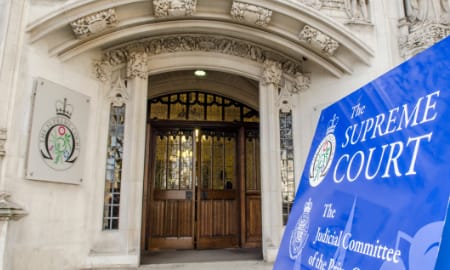

The UK Supreme Court has delivered an important ruling on breach of directors’ duties in the case of Saxon Woods Investments Ltd & others v Costa [2026] UKSC 21.
The case is now the leading authority on the scope of the core director’s duty under section 172 of the Companies Act 2006, establishing that good faith should guide a director’s actions and beliefs.
Spring Media, through its investors, was a holding company for a group of companies that provided creative services to existing businesses in the fashion, beauty and luxury-brand sectors.
The company was looking to be sold in 2019, a task assigned to chairman Francesco Costa. He believed delaying the sale was better, for business reasons, but did not disclose this to the other board members.
Costa used various tactics to delay the sale, including making sure the other directors were not involved in the process and misleading the board by giving the impression the company was fulfilling its obligations under the shareholder’s agreement, whereas to his knowledge it wasn’t. He also failed to disclose that his instructions to the company’s advisors did not include achieving a 2019 sale.
Having successfully delayed a sale, the prospect of a profitable exit was later destroyed by the Covid-19 pandemic. Saxon Woods, a minority shareholder, filed an unfair prejudice petition.
In the first instance, the trial judge found unfair prejudice but no breach of s172 because Costa sincerely believed he was acting in the company’s interests. The Court of Appeal found that s172 had been breached, however, arguing that the law required the director’s conduct to be honest according to the standards of ordinary people. Costa appealed.
In a unanimous judgment, the Supreme Court held that the appellant, Costa, had breached his duty under section 172 of the Companies Act 2006 by covertly subverting the exit strategy approved by the company’s board.
Lord Briggs considered both the Companies Act 2006 and the common law fiduciary duties it codified when forming his judgment, which was unanimously supported by Lords Sales, Hamblen, Burrows and Lady Rose.
The Supreme Court confirmed that the statutory duty to act “in good faith” applies not only to a director’s intentions but also to their conduct.
Directors are not permitted to secretly undermine decisions approved by the board, even if they genuinely believe they are acting in the company’s best interests. The question of whether they acted in good faith depends on whether their subjective intentions would be considered disloyal based on objective standards.
A single director who secretly acts without the board’s knowledge to undermine the company’s goal, even if he or she believes it is for the company’s benefit, cannot be considered to be fulfilling his s172 duty to the company. Lord Briggs, delivering the judgment, said that any other outcome would have been “a recipe for chaos and paralysis in corporate governance” and destructive of the collegiality of the board.
The Supreme Court confirmed the Court of Appeal’s unconditional order, mandating Costa to purchase Saxon Woods’ shareholding at its full, undiscounted value as of 31 December 2019.
Genevieve Quierin, who led the case at Stephenson Harwood, commented: “This is a landmark decision for UK companies and directors. The Supreme Court has sent a clear message that directors must act loyally and transparently, and that a subjectively held belief alone will not excuse covert or disloyal conduct.”
Luke Harrison, co-editor of the Law Over Borders Guide to Restructuring and Insolvency and name partner at Keiden Harrison, told GLP: “Saxon Woods is likely to become a touchstone authority in shareholder and directors’ duties disputes.
“The Supreme Court has preserved the core protection for directors’ business judgement, but made clear that it does not protect covert action which subverts the board’s constitutional role. That is important for those pursuing unfair prejudice claims because many petitions are really about process, trust and the agreed bargain between shareholders.
“For shareholders, the decision strengthens claims where negotiated rights have been bypassed. For directors, it is a warning that even a genuinely held belief in the company’s best interests will not excuse concealment, misleading the board or quietly undermining an agreed strategy.”
Edmund Davies KC and Jack Rivett of Erskine Chambers appeared for the claimants; Jonathan Crow CVO KC and Lara Hassell-Hart of 4 Stone Buildings appeared for the appellant, instructed by DLA Piper. DLA Piper declined comment.
Email your news and story ideas to: [email protected]