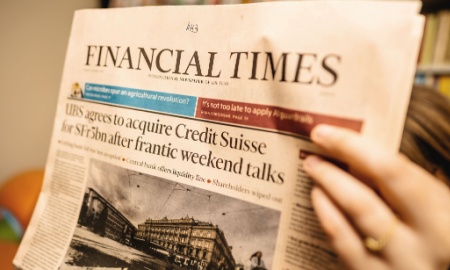

The Japanese owners of the Financial Times and Japan’s daily title, Asahi Shimbun, are suing US AI search engine Perplexity AI for copyright infringement.
The FT reports that the companies have issued a joint statement accusing the AI answer engine of “ongoing ‘free riding’ on article content that journalists from both companies have spent immense time and effort to research and write, while Perplexity pays no compensation”.
The statement adds: “If left unchecked, this situation could undermine the foundation of journalism, which is committed to conveying facts accurately, and ultimately threaten the core of democracy.”
The FT’s parent company, Nikkei, and the Japanese daily title are calling for an injunction to ensure Perplexity stops reproducing their content and deletes all existing data. They are also seeking damages of 2.2bn yen (£11m) each.
Unlike traditional search engines that present lists of links, Perplexity, like ChatGPT, uses large language models to process queries and search the live internet for relevant information to generate a response.
Perplexity’s monthly average user numbers are estimated to be between 22 and 30 million. It has some high-profile backers, including Amazon founder Jeff Bezos and AI chipmaker Nvidia.
This lawsuit is part of a wave of legal action engulfing AI outfits over alleged copyright infringement of authors’ and media outlets’ work to fuel AI models.
In June, the Financial Times revealed that the BBC had accused Perplexity AI of using its content without permission and had asked it to delete any BBC material used to train its AI models.
Earlier this week, another AI outfit, Anthropic, and a group of authors reached a class-wide settlement in the closely watched case Anthropic v Bartz. The parties have asked to stay discovery and vacate deadlines while they finalise the deal.
In June, San Francisco federal district judge William Alsup partially sided with Anthropic in the landmark case, ruling that using legally purchased books to train Anthropic’s chatbot Claude amounted to fair use and did not violate copyright law.
However, the judge also ruled that Anthropic’s copying and storage of more than 7 million pirated books in a “central library” infringed the authors’ copyrights and was not fair use, according to a report by Reuters. The judge had ordered a trial in December to determine how much Anthropic owed for the infringement.
The judge has ordered the parties to file requests for preliminary approval of the settlement by 5 September.
Email your news and story ideas to: [email protected]