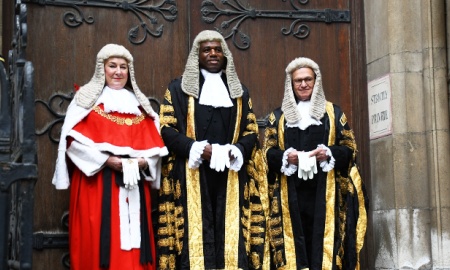

The High Court of England and Wales has seen 10 new judges appointed, adding experience spanning public law, commercial disputes, crime, family law, media and intellectual property to the bench.
The appointees, approved by King Charles III, are Aidan Eardley KC, Dan Kolinsky KC, Nigel Lickley KC, Dan Squires KC, Paul Stanley KC, Andrew Twigger KC, Nicola Rushton KC, Michael Tappin KC, James Ewins KC and David Pievsky KC.
Four of those appointed will sit in the King’s Bench Division; five in the Business and Property Division; and one in the Family Division.
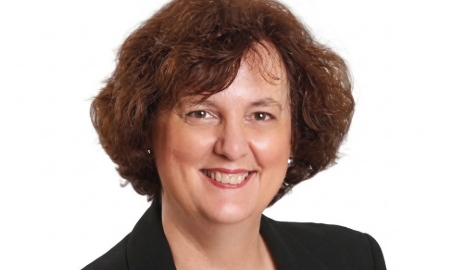
The appointments follow an open Judicial Appointments Commission competition and will take effect in stages from October to December. Three appointments went to current heads of chambers and one went to an existing circuit court judge. The cohort is the first to be approved under Professor Lynne Barry CBE’s tenure.
The profiles reflect greater social mobility: Eardley, Lickley, Ewins, Twigger and Pievsky were either the first lawyers in their families or the first family members to attend university, while seven of the 10 appointees attended state schools. Nine of the 10 attended Oxford or Cambridge.
However, Rushton – the only woman in the group – continues a trend by which women remain underrepresented in the senior judiciary. As reported in July, women represented 40% of judges in England and Wales – up 12% over the last decade – and 54% of tribunal judges, but remained concentrated in less senior judicial posts.
That suggests gender equality at the upper levels remains uneven, a finding borne out by the International Bar Association’s previous survey of gender parity in England and Wales, despite the Lady Chief Justice’s stated ambition to look at judicial diversity afresh alongside Lord Chancellor David Lammy, who later left the government.
Eardley, called to the Bar in 2002 and appointed King’s Counsel in 2022, practised in media and communications law at 1 Brick Court and later at 5RB. He began sitting in the First-tier Tribunal’s Social Entitlement Chamber in 2013, became a recorder in 2020 and sat as a deputy High Court judge in 2024.
Kolinsky, of Landmark Chambers, was called in 1998 and took silk in 2015. His public, local government, planning, rating and valuation practice included Supreme Court advocacy. He became a recorder in 2018 and a deputy High Court judge in 2023.
Lickley brings more than four decades at the criminal Bar. Called in 1983 and appointed silk in 2006, he led the Western Circuit from 2010 to 2013 and headed 3 Paper Buildings from 2015 to 2018.
He became an assistant recorder in 1998, recorder in 2000, a circuit judge and deputy High Court judge in 2018, and was authorised to sit in the Court of Appeal’s Criminal Division as an appellate judge in 2023.
Squires was called in 1998 and has practised at Matrix Chambers since 2000, principally in public and administrative law – including judicial reviews – for claimants, NGO’s, local authorities, government departments and other public bodies. He took silk in 2016 and has sat as a deputy High Court judge since 2018.
Stanley, of Essex Court Chambers, was called in 1993 and took silk in 2010 after building a commercial practice. He has expertise in complex commercial disputes, insurance and reinsurance, financial services, civil fraud and international arbitration.
Stanley is the current joint head of Essex Court and, like former heads of chambers Sir David Foxton and Sir Richard Jacobs, joins the Commercial Court after 32 years at the Bar. He chaired the board of governors of the Inns of Court College of Advocacy from 2021 and became a deputy High Court judge in 2023.
His set welcomed the announcement, saying: “Paul has been an inspirational joint head of chambers since 2024, and his leadership in chambers will be missed.”
Twigger was called in 1994 and took silk in 2011. After beginning at 3 Stone Buildings, he moved to Maitland Chambers, where he developed a commercial and chancery litigation practice.
A former chair of the Chancery Bar Association, he has sat as a deputy High Court judge in the Chancery Division since 2023, which was renamed the Business and Property Division.
Rushton was called in 1993 and took silk in 2018. A professional negligence and commercial specialist, she moved from Five Paper to Hailsham Chambers in 2014 and has led the set since 2024.
She joined the First-tier Tribunal’s Property Chamber in 2019 and became a deputy High Court judge in 2023.
Her set said: “Her appointment to the High Court is a significant and well-deserved recognition of her legal expertise, leadership and service to the administration of justice.”
Tappin, of 8 New Square, was called in 1991 and took silk in 2009. He has practised exclusively in intellectual property, particularly patents, served as standing counsel to the Comptroller-General of Patents, Trade Marks and Designs from 2003 to 2008, and became a deputy High Court judge in 2021.
Ewins was called in 1996 and joined Queen Elizabeth Building (QEB), one of London’s largest family sets, in 1997. He later specialised in the financial aspects of family law. His other work has included advising the UK Parliament’s joint committee on the Modern Slavery Bill.
He took silk in 2016, qualified as a family arbitrator in 2018 and became a deputy High Court judge in 2023, before being elected joint head of chambers in 2024.
Pievsky spent 25 years at Blackstone Chambers, practising in public, human rights and employment law. Called in 2001 and appointed silk in 2020, he joined the First-tier Tribunal in 2019 and became a deputy High Court judge in 2021.
Email your news and story ideas to: [email protected]