
Leading lawyers have called upon national governments to ratify the landmark international Convention for the Protection of the Profession of Lawyer, warning that legal professionals are at risk.
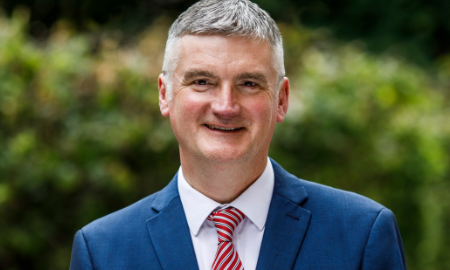
The calls came at the European Young Bar Association’s (EYBA's) conference in Turin, Italy, this weekend, which was opened by Chiara Palombi and Simona Grabbi, presidents of the EYBA and the Turin Bar Association, and Claudia Iacobino, president of AGAT (the Young Lawyers Association of Turin).
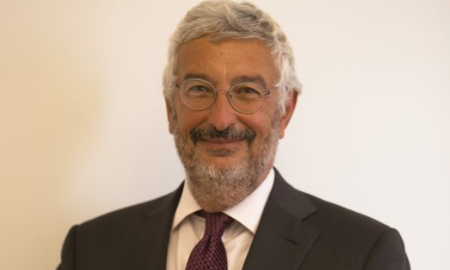
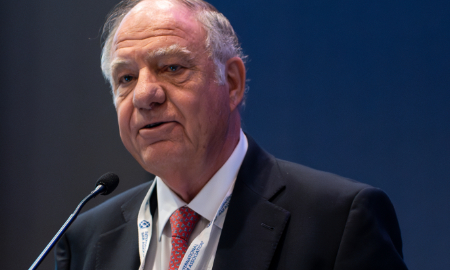
Speakers included Enrico Maggiora of the Fondazione Fulvio Croce, a charity set up to honour a senior Turin lawyer assassinated by the Red Brigades in the 1970s; Roman Zavrsek, a Slovenian lawyer who currently leads the CCBE, the Council of Bars and Law Societies of Europe; and Italian lawyer Claudio Visco, the current president of the International Bar Association.
They explained what their organisations were doing to safeguard lawyers, and thanked the EYBA, which has passed resolutions in support of the Istanbul Bar Association, which was previously prosecuted by the Turkish state for alleged violations of national security laws – actions condemned by the IBA and CCBE.
Visco outlined the IBA’s response to political attacks on the rule of law, highlighting the need for organisations to defend the principles of international law.
The IBA took action to protect the ICC and its officials from US sanctions and collaborated with Denmark’s Ministry of Education and the Danish Bar Association on a pilot programme to educate high school students about the rule of law, to be showcased at October’s conference in Copenhagen. It also supported a young lawyers’ programme in Salzburg, where global lawyers discussed and passed a rule-of-law resolution.
The conference addressed the ratification of the convention in a session led by Barbara Porta from the CCBE HR Committee and Professor Gustavo Minervini of the University of Turin, with Daniela Giraudo of the CNF (Italian National Bar Council) as moderator.
Minervini, in wide-ranging remarks, said: “International law is going through troubled waters. It would be false to pretend otherwise when we see daily violations that often go unanswered and a growing disdain – sometimes outright contempt – from states toward the international rule of law.”
He added: “We tend to judge international law by its sickest part. We look only at the most visible and contested rules – the use of force, the paralysis of the Security Council – and forget that most of the discipline quietly works every day.”
There was, however, hope for lawyers about the international rule of law, based on its commercial operation: “Think of every flight that crosses a frontier, every parcel that reaches another state, every undersea cable laid down: behind each of these is international law working effectively, even if we rarely notice it.”
He added, in conclusion: “Crises have always shaped international law. The UN Charter emerged from the scourge of the Second World War; the Genocide Convention and the modern human rights framework arose from the Shoah. Crisis is not foreign to international law – it is its native environment.”
Porta, outlining the convention and its uses and utility, told the audience of nearly 100 young lawyers from across Europe: “Being a lawyer today can be dangerous – not only in countries like Tunisia, Egypt or Turkey, but also in the very heart of Europe and even in the United States. Lawyers are threatened, assaulted and searched simply for defending their clients.”
She explained: “Until now we have relied on soft law, but there was nothing truly binding to protect our profession. This convention is the first attempt to create a binding, potentially global defence of lawyers.”
The convention, explained Porta, rests on five pillars: protection from intimidation and attacks; the inviolability of lawyer-client confidentiality; the autonomy and independence of lawyers and bar associations; no-discrimination and equal access to the profession; and fair, depoliticised disciplinary procedures.
Ratification was crucial, she said: “Only once at least eight states ratify the convention will it open to third countries. That is why national bars and governments must be lobbied – colleagues in places like Turkey quite literally need this convention as much as bread and air.”
Responding, Zavrsek stressed the need for national bar associations and governments to lobby for the convention's ratification, saying: “We need legal professionals with experience and the highest ethical standards to exercise supervision over political power.”
He added: “This convention is not just another document; it is an opportunity for lawyers themselves to have control and supervisory power over the political authorities within the state.”
His comments came as the Law Society of England and Wales again urged the UK government to ratify the convention. In remarks marking International Fair Trial Day, Law Society president Mark Evans said: “The 2024 summer riots clearly demonstrated that UK lawyers are not immune to the risks that come with upholding the rule of law. They showed that UK lawyers are increasingly exposed to targeted threats and abuse.”
He added: “By being among the first to ratify the convention, it would encourage other countries to follow suit and stand up for justice.”
Email your news and story ideas to: [email protected]