
Each year, as International Women’s Day rolls around and many women in leadership positions are asked to speak on panels or put out LinkedIn posts, it is challenging to believe any progress is being made, or indeed if there is a point to this.
The World Bank’s 2025 Gender Gap Report suggests there is “encouraging momentum” but this generalisation masks the reality of what is being achieved in many environments.
We’ve known for years that countries that employ the full depth of their human capital will enjoy long-term prosperity.
Despite this, for the past three years running, women’s participation in leadership roles in Western nations has been in decline. This is made more challenging at a time of economic uncertainty. Yet the elusive “growth” will be secured on raising women’s economic participation and integrating women into political decision making.
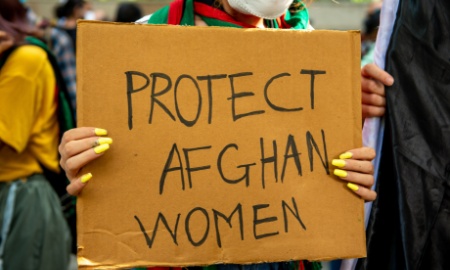
For many years now, through our pro bono practice we have been supporting women in Afghanistan. Their recent experiences demonstrate the precarity of hard-won rights in Afghanistan, and how easily we can take these rights, and the rule of law, for granted.
Prior to 2021, women in Afghanistan were members of the judiciary, lawyers, physicians and journalists, including as anchors for the public broadcaster. Women worked in the ministries of finance and justice. The head of counter-narcotics was a woman, as was the deputy speaker of parliament. Women were 21% of the labour force in 2017 and 26% of public sector roles were held by women in 2020. They were, they thought, well embedded with rights in society, underpinned by the rule of law and the Afghan Constitution.
Then, as the Taliban claimed power, overnight women lost their rights to participate in society. We were outraged but today’s outrage becomes tomorrow’s normal. Russia and China have re-established ties with the Taliban as a legitimate government – further, Germany, Switzerland and Austria are engaging officials repatriation of Afghan refugees so have every interest in normalising the situation with the Taliban.
Consider this:
- 28 February marked 1,625 days since the Taliban banned secondary education for
girls, and 1,165 days since public universities were instructed to expel female students
and lecturers. - 28 February also marked 453 days since the Taliban prohibited women from studying
midwifery, nursing and medical disciplines. - On 13 February 2026, Taliban authorities prevented Afghan women from entering the
third International Construction and Reconstruction Exhibition in Kabul. - In December 2024 the Taliban officially closed the country’s only remaining shelter for
survivors of domestic abuse.
Last week a new Criminal Procedure Code for Courts was introduced containing deeply alarming provisions. The regulation calls for the “disciplining” of women by husbands and members of society under the pretext of preventing vice. It also legalises slavery, formally divides society into free and enslaved persons, and establishes a four-tier-class system.
There is of course no rule of law to protect and enforce these rights for women. We have been advised that any woman bringing an employment claim, as she could once do, would risk her life in doing so.
So, before we become jaded by the need for International Women’s Day, we in the legal sector should perhaps consider what more we need to do. Law firms can look to the World Bank’s suggestions and consider:
- Introducing flexible work and care;
- Encouraging women into STEM-related education; and
- Addressing safety and violence.
The National Pro Bono Centre’s event on 9 March, ‘Advancing The Rights of Women Through Pro Bono’, will look at the pivotal role firms’ pro bono practices can play in strengthening the rule of law and women’s rights.
Issues on the agenda include Emma Rehal-Wilde, pro bono counsel at Baker McKenzie, talking about how City firms are collaborating to tackle inequality; the Every Woman Treaty project: the most comprehensive analysis of domestic violence laws around the world; the LawWorks’ unpaid wages project – ‘wage theft’; the Image-Based Sexual Abuse initiative by Frances Ridout and Kelli Ryan from Queen Mary University; as well as opening remarks from Dana Denis‑Smith, deputy vice president of The Law Society of England and Wales.
There is no easy fix. Women’s rights have to be fought for every day of every decade, and this is a sobering reminder that we can’t afford to take International Women’s Day for granted.
Yasmin Waljee is an international pro bono partner at Hogan Lovells.
Email your news and story ideas to: [email protected]