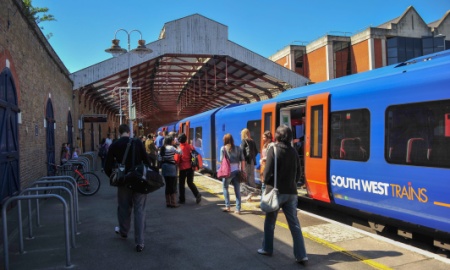

The Competition Appeal Tribunal (CAT) has ordered that £3.7m of unclaimed damages from a £25m rail fare settlement be handed to an access to justice charity after expressing concern at the “very low rate of take-up” by the claimant class.
The funds will go to national grant-making charity the Access to Justice Foundation (ATJF), whose grantees will benefit from the fact that just £216,500 of the settlement with Stagecoach South West Trains (SSWT) has been claimed.
Meanwhile, the lack of take-up in a case expected to benefit 1.4 million rail passengers prompted the CAT to allow an intervention by the campaign group Fair Civil Justice (FCJ), which opposes collective actions and calls for tighter controls on litigation funding.
The case concerns allegations that train companies abused their dominant position by failing to make boundary fares accessible to travelcard holders, effectively double-charging for part of the same journey.
The CAT, which had approved a settlement between SSWT and class representative Jason Gutmann in 2024, held a hearing in August to determine the distribution of the unclaimed damages and the correct division of costs.
At the time, it indicated it would consider a “substantial payment to charity alongside any claims and representations by stakeholders, to be paid out of any costs, fees and disbursements”.
Tribunal chair Hodge Malek KC noted the take-up by class members fell “very much short of the level predicted by the class representative”.
The intervention by the campaign group Fair Civil Justice (FCJ), which was represented by CMS, had been opposed by Gutmann’s solicitors, Charles Lyndon, litigation funder Woodsford and its insurers, who claimed it was not an impartial consumer body.
The CAT, however, said the FCJ’s submissions would be of assistance, as “an important counterpoint” to the “aligned interests” of the claimants and their associated entities. The tribunal said it was “keen to get the balance right between all the interests involved and to reach fair outcomes”.
Last month, the UK government launched a review of the opt-out collective actions regime under the Consumer Rights Act, which took the profession by surprise, given the publication in June of the Civil Justice Council’s long-awaited – and comprehensive – review of litigation funding, which called for the ‘light touch’ regulation of funders.
The FCJ’s director, former Conservative MP and City solicitor Seema Kennedy, said: “Less than one per cent of the £25m settlement has been claimed by class members. This is despite alleged efforts to inform those affected through advertising and the media. The claimant law firms and funders stand to receive millions. This raises the question: ‘Was this case truly in the best interests of consumers?’”
However, Fieldfisher partner Richard Pike, who acted for the ATJF described the donation as “a significant moment for collective actions in the UK” given that it “demonstrates how such proceedings can deliver tangible public benefit”.
He added: “We’re proud to have supported the foundation in securing this outcome, which ensures that unclaimed damages will be used to improve access to justice for communities across the country.”
ATJF chief executive Clare Carter said: “The tribunal has recognised our unique position and expertise in making impactful use of unclaimed damages. It’s crucial that collective actions deliver real benefits to the public and we’re able to work collaboratively to make sure these funds reach the people who need them most.”
The charity also intervened in the £200m Mastercard credit card fees settlement hearing and stands to benefit to the tune of £30m in that case, although the funder, Innsworth, has launched a judicial review challenging this potential allocation.
In the rail fares case, the tribunal is yet to rule on the division of funds to the claimant lawyers and the litigation funder, with judgment being reserved on that subject at the time of going to press. Litigation in relation to other train companies is ongoing.
Gutmann was represented by Philip Moser KC and Stefan Kuppen of Monckton Chambers, instructed by Charles Lyndon. Stagecoach South Western Trains was represented by Sarah Abram KC of Brick Court Chambers, instructed by Dentons, which declined to comment.
Charles Lyndon was represented by Ben Smiley, of 4 New Square Chambers; while fellow 4 New Square tenants Roger Mallalieu KC and Simon Teasdale represented Woodsford and the insurers. The ATJF was represented by Gerard Rothschild of Brick Court Chambers.
Fair Civil Justice was represented by Geraint Webb KC and Thomas Mallon of Henderson Chambers, and Alexander Hutton KC of Hailsham Chambers.
Email your news and story ideas to: [email protected]