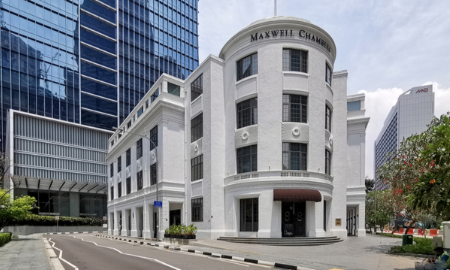

The Law Society of Singapore is reconsidering whether to release more details of a report on governance and workplace failings after members – subsequently backed by law minister Edwin Tong SC – pressed for greater disclosure during a lengthy closed-door meeting last week.
The meeting at Maxwell Chambers on 13 August, which was attended by around 170 people, ran from 5.30pm until about 9.30pm, two-and-a-half hours beyond its scheduled finish, according to local reports.
Members were allowed to read hard copies of an audit committee report containing a summary of findings and recommendations before the meeting but had to return them afterwards.
The dispute intensified on Friday (14 August) when Tong urged the Law Society to make the relevant reports available.
In a statement, he said meaningful discussion had to be supported by sufficient information, adding: “In particular, the relevant reports (with appropriate redactions to protect the interviewees) should be made available to members, so that they can form their own views.”
The investigation arose from an anonymous email received by his ministry, and others, in September 2025. In a parliamentary reply on 5 August, Tong said the allegations covered conduct between 2022 and 2025, when the late president, Adrian Tan; his successor, Jason Chan SC; and the immediate past president, Lisa Sam, were officeholders.
It concerned allegations of inappropriate workplace conduct, weaknesses in governance and oversight, deficient grievance and whistleblowing processes, and shortcomings in controls over administrative and financial practices.
The audit committee investigated the matter independently of the 21-member council and submitted its report to the council in June, after which the society sent it to the Ministry of Law in July.
Tong said the inquiry found no evidence of deliberate financial impropriety or an intentional cover-up, but identified “significant failings in leadership, workplace culture and governance”.
The closed-door meeting followed a petition led by Jimmy Yim SC and signed by more than 100 members seeking full disclosure. Members reportedly questioned the decision to withhold underlying material, the handling of reputational concerns and the absence of disciplinary action over alleged inappropriate conduct.
Writing on LinkedIn, the society’s president, Professor Tan Cheng Han SC, described the meeting as a “constructive and meaningful discussion” despite “passionate exchanges”. He said the council was on track to introduce a strengthened whistleblowing framework and more comprehensive travel policy by the end of September.
Tan added that the council needed time to consult former staff and others who assisted the inquiry because they had been promised confidentiality.
Members broadly recognised the need for consent before identities were disclosed or names were redacted, he said.
Council member Remy Choo Zheng Xi wrote on LinkedIn that there was consensus that members “need and deserve more information, not less”, while fairness required full context and protection for confidential interviewees.
Clarence Lun of Fervent Chambers agreed that disclosure was necessary for accountability, subject to confidentiality, adding that “meaningful accountability requires disclosure of the entire relevant investigation material, and not merely the audit committee report”.
Several members told local media they may requisition an extraordinary general meeting if fuller disclosure does not follow, a move that requires 25 members under the governing legislation.
In a statement, the society said there had been “broad recognition” at the meeting “of the need to protect the privacy of those who assisted the audit committee’s investigations and to seek their permission for their identities to be revealed, or for their names to be redacted”.
The statement added: “As explained to members, the council must honour the promise made to those who assisted with investigations and will need time to reach out and consult the individuals concerned and respect their wishes, many of whom are former staff members of the Law Society. Council will soon be deliberating whether to provide the full report with necessary redactions after ascertaining the wishes of the interviewees.”
In December, an extraordinary general meeting was called following controversy over the then president-elect Dinesh Dhillon’s nomination due to his status as a government nominee to the society’s ruling council. The issue was resolved consensually, with Tan taking the role of president and Dhillon, an arbitration partner at Allen & Gledhill, becoming vice-president.
Email your news and story ideas to: [email protected]