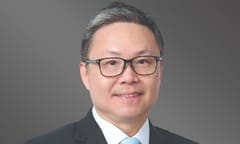

The 2026 president-elect of the Law Society of Singapore, Dinesh Dhillon, has stepped aside following controversy over his status as a government nominee to the society’s ruling council.
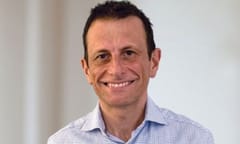
Dhillon, an arbitration partner at Allen & Gledhill, made way for Professor Tan Cheng Han SC, a consultant at Wong Partnership, ahead of an extraordinary general meeting on Monday, when 86% of members supported a resolution that the president be an elected member of the council.
Dhillon, who will instead become vice president, told Singaporean legal media he had agreed to step aside as president “in the interest of preserving unity” and that he would work towards creating “a stronger and more united Bar”.
The passing of Monday’s consent resolution followed weeks of debate over the appropriateness of the choice of Dhillon to be president, given that he had been appointed as a statutory member of the society’s council by the Minister for Law, Edwin Tong SC.
The resolution was proposed by two former presidents of the society, Peter Cuthbert Low and Chandra Mohan, who argued that the holder of the presidency should have been elected to the council by the society’s 6,000 members.
In a LinkedIn post, Harpreet Singh Nehal SC explained that the principle of election had been “unquestioned” for nearly 60 years, with every successive president having been an elected council member, “save the society’s inaugural president in 1966 before elections were first held”.
He explained: “The EGM was called to consider whether the society’s president should continue to be drawn only from among elected members of council, or whether a government nominee who has not stood for election by the Bar should lead the profession.”
He added: “This EGM was called by senior members of the Bar, including two respected past presidents. That thoughtful seniors have done so does not mean the society is divided. It means it is engaged. Raising questions about the independence of the Bar is not divisive. It’s an expression of professional responsibility.”
The resolution means Dhillon will be eligible to seek election and subsequent appointment as president in the future.
Tan said: “I am pleased that in the best traditions of the Bar, the profession has reached a sensible and reasonable outcome. This reflects the strength and cohesiveness of the Singapore legal community. I want to pay tribute to the law society members for their considered and valuable engagement. I also want to thank Dinesh for the spirit in which he ran for the presidency and the grace and dignity he has demonstrated in recent weeks.”
Many commentators stressed that the debate was not a reflection of Dhillon’s merits but concerned professional independence, and that the EGM’s decision avoided division and emphasised intra-generational consensus.
Akesh Abhilash, of Silvester Law, writing on LinkedIn, said the society’s role is “uniquely balanced, acting simultaneously as a representative of the Bar and a partner in our legal infrastructure. This EGM serves as a powerful reminder that such a partnership is most effective when leadership is seen to have a clear mandate and the trust of its members”.
Email your news and story ideas to: [email protected]