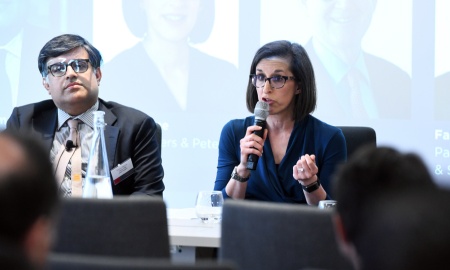

When billions of dollars are on the line, the pressure on litigation lawyers in mega-claims increases exponentially. Speaking at a panel event hosted by Ashurst and Global Legal Post during London International Disputes Week – and chaired by Ashurst partner Philip Chong – disputes lawyers from Volterra Fietta, Peters & Peters, Pitkowitz & Partners and McDermott Will & Schulte discussed the next frontier of multijurisdictional mega-claims and how to manage them. The roundtable marked the official launch of The Global Legal Post Arbitration guide and featured contributors to the guide.
Mega-claims are typically more complicated than lower-value claims because they have their own reporting lines and governance oversight, while also typically involving a far broader set of participants.
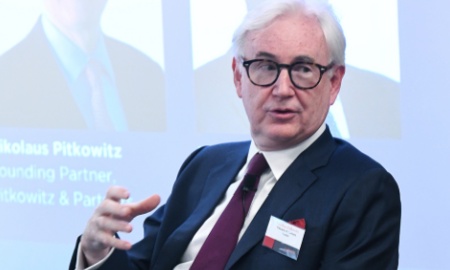
“You’re running a number of law firms across jurisdictions, forensic accountants, economists, quantum experts, e-discovery platforms, investigators and so on, and the real objective is that they all move in the same direction,” said Nikolaus Pitkowitz, founding partner at Austrian firm Pitkowitz & Partners.
The potential pitfalls are also different. In an ordinary case, the main risk is that you might get the law wrong, Pitkowitz says. In a mega-claim, the legal questions are no more complex – the biggest risk is the scale and scope of the work involved.
“What really sinks you is incoherence when the left and the right hand are not properly working together, particularly when you have a number of forums to deal with,” said Pitkowitz.
Mega-claims can also sometimes involve more sketchy tactics, such as PR campaigns that seek to sway the narrative and influence public opinion.
“Sometimes you have a judgment, and a feature of that judgment appears to be promoted in a lot of the reporting, and that might be against you,” said Emma Ruane, a partner at Peters & Peters in the UK. “There’s lobbying efforts we’ve seen, most recently in relation to litigation funding. It’s been a very firm effort from certain parties to try and constrain that.”
These types of claims also raise the risk of lawyers’ emails or other IT systems being hacked to gain information that would be beneficial to the case.
“I remember quite a long time ago I worked on a case and the firm took the decision in the lead-up to a hearing to take down its website because there was a threat online of DDoS attacks,” said Ruane. “More and more it is becoming necessary because lawyers are seen as legitimate targets.”
Because mega-claims tend to be international in nature, managing multiple cases across jurisdictions requires careful coordination.
“You shouldn’t be making one pleading in one country that’s the exact opposite of another country, because then you have a problem,” said US lawyer Gunjan Sharma, a partner at Volterra Fietta in the UK. “Beyond that, you have to be able to operate in legal traditions and judiciaries and arbitration forums in which you are not comfortable.
“As a lawyer, be ready to navigate cultural and legal traditions that are fundamentally different from what you are used to, and that’s a very difficult exercise and it’s disorienting if you’ve not trained yourself to do it.”
Another feature of mega-claims is that even if they involve the same in-house team a firm usually deals with, the high-stakes nature of the work means client interactions may be more rigorous, with boards expecting to be updated daily on progress.
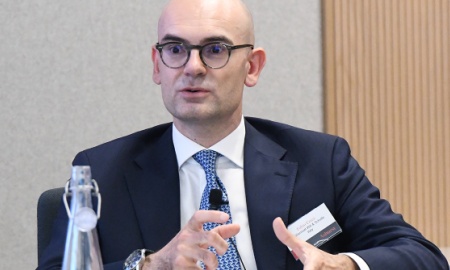
“The way you handle the client relationship is more demanding," said Fabio Cozzi, a partner at McDermott Will & Schulte in Italy. "In-house legal counsel are under high pressure and senior management is often directly involved to consider the proposed strategy. The preparation – the early assessment of the case – is extremely time-consuming and energy-intensive, given the number of involved stakeholders and different legal teams.”

Jurisdictional approach
The jurisdictions where the mega-claim takes place will also impact the strategic approach. For example, experienced international practitioners, particularly in the arbitration world, will naturally adjust pleadings to the tribunal, says Sharma.
“Your counsel should sound different to different people… it’s a learned talent on the procedural elements,” he said.
Different jurisdictions also have different rules that legal practitioners need to be aware of, particularly around witness preparation. In the US, lawyers can coach witnesses by practising what opposing counsel might ask, whereas in the UK, coaching witnesses is forbidden, though they can familiarise the witness with the case.
“A good English lawyer can achieve the same result without breach of the ethics rules, because, although a good English lawyer will not be examining the witness and preparing them for testimony, they’ll be talking to their client representative about the relevant facts and why they’re material. That will result in a client who is focused and prepared for the testimony and to be useful to the judge, in the same manner as American-style preparation,” said Sharma.
Chong pointed out that senior judges including Lord Leggatt and Lord Neuberger have called for less reliance on witness evidence, given that witness evidence can be unreliable – not because witnesses lie but because they can be influenced and guided and have their memories altered. A better approach, some suggest, is placing more reliance on contemporaneous documents.
However, Pitkowitz counters that approach also has pitfalls. “There is an old practitioner saying that all witnesses lie and only documents can tell the truth because documents do not suffer from memory distortion,” he said. “But documents are not innocent either; they can be selective, incomplete, self-serving, and the true task of an arbitral tribunal is to test one against the other.
“Another dimension to this is that in a multijurisdictional claim, cross-border evidence gathering requires navigating fundamentally different approaches to fact-finding, with expansive US discovery often colliding with civil law systems, such as the Italian one, that demand highly specific, court-supervised document requests. Counsel must 'translate' their discovery strategy into narrowly tailored, highly specific requests, and prepare carefully to avoid that procedural differences will not create unpredictable consequences.”
Managing parallel claims
Finally, mega-claims can frequently attract parallel proceedings in both criminal and civil courts.
“Quite often, you see that criminal proceedings actually start first and the civil proceedings might arise out of those, and often finish first, because the criminal proceedings take such a long time,” said Ruane. “Not infrequently a defendant will take the view, not unfairly, that they shouldn’t have to fight on two fronts.
“Usually, the reason that they will say their civil proceedings should be stayed is that they don’t want to have to have that burden, and they don’t want to risk evidence gathered in one forum, sometimes through compulsory measures, being made available in another.”
When choosing appropriate forums for mega-claims, lawyers should also be wary of defaulting to the system they are most familiar with.
“There’s a natural inclination to trust the legal system in which you operate, because you know it,” said Sharma. “You know its weaknesses, but you know its strengths. And so lawyers naturally are inclined to say, I’ll take it to my domestic forum. That’s not strategically optimal.
“You really have to start to understand and work with local counsel and understand which is the forum that’s going to get you the best legal principles for your case, the best potential outcomes for your case, the best leverage over assets. It’s a very complex pre-dispute analysis.”
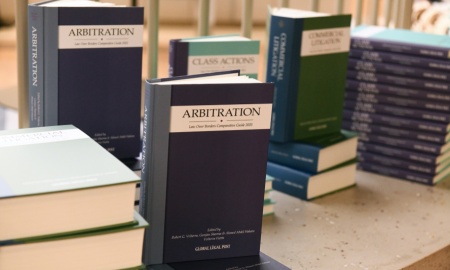
The Global Legal Post Law Over Borders comparative guide to Arbitration is written by leading practitioners from jurisdictions around the world and is available online as a downloadable PDF and for purchase as a hard-copy guide. Learn more and download the Arbitration comparative guide.
The guide is one of the titles in the Law Over Borders series, which also covers topics including artificial intelligence, crypto assets, data protection, ESG, merger control, restructuring and insolvency, luxury law and fashion law.
Forthcoming guides include: Tax, White Collar Crime, Corporate Governance, FDI, and International Fraud and Asset Tracing.
For further information about the guides, email [email protected].
Email your news and story ideas to: [email protected]