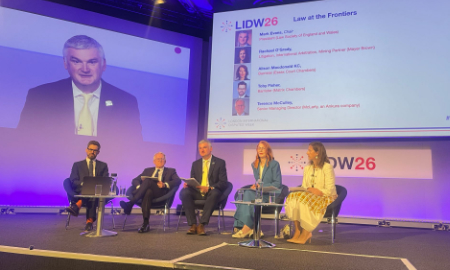

The future of mass claims in the UK and strategies to extol the benefits of the embattled concept of the rule of law were key topics at London International Disputes Week’s main conference last week.
A panel of senior legal practitioners and policy advisers was in broad agreement over the need to push back against US President Donald Trump’s challenge to the liberal world order built on long-standing alliances and established norms.
Unsurprisingly, there was less consensus on display during an earlier session on the future of class actions in the UK, given the differing perspectives of representatives of consumers and businesses.
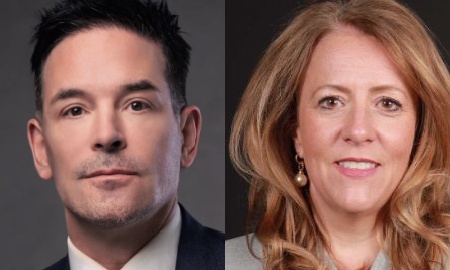
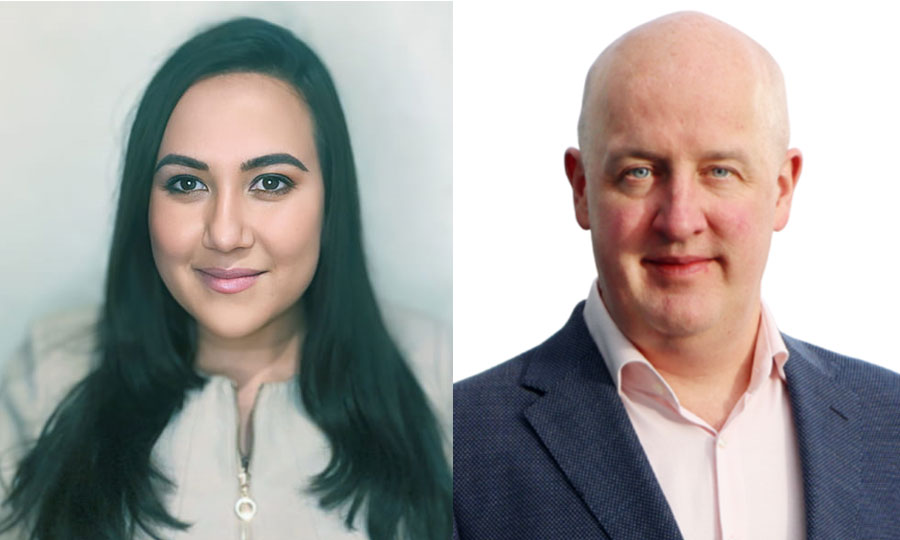
The class actions panel at the conference, which was held at the Queen Elizabeth II Centre in Westminster on 3 June, was chaired by Freshfields partner and head of environmental and consumer disputes Simon Duncombe. It comprised Sophie Thomson, head of competition and regulatory law at BT; Kimberly Phillips, Shell USA’s executive vice president legal policy and advocacy; Seema Kennedy, executive director of Fair Civil Justice; Mishcon de Reya partner Shazia Yamin; Matrix Chambers’ Nicholas Gibson KC and Campbell Jackson, global claims and disputes leader at EY.
Thomson pointed out that the vast majority of abuse of dominance cases brought before the CAT were standalone cases, whereas it had been envisaged that such actions would follow on from a regulatory finding.
“That has a number of impacts,” she explained. “It means not only does liability have to be proven first, which has a knock on-effect in terms of disclosure and the complication of running cases, but it does also mean that there is quite a big intersection of public policy issues, complex issues in terms of markets… It can be challenging.”
Kennedy pointed to the “record returns” for the lawyers and litigation funders rather than the class members and said businesses’ appetite for investment in the UK was being impacted by the threat of class actions.
She argued policy makers needed to balance the need to support the “brilliant legal system” with the need to “showcase the UK as a place to invest”, adding: “We know from talking to businesses, particularly the ones that have been targeted in these mass claims, that it is really affecting their decisions.”
However, Gibson defended the record of the CAT in managing claims, arguing that it was playing “a very vigorous gatekeeper role”. He added: “One of the great things about the opt-out system, which should give people comfort, is that it’s not just some freewheeling opportunity to bring cases, the CAT is fastidious in making sure that people are well policed.”
Looking to the future, Yamin argued that advances in climate attribution science would “transform what are currently being brought as declaratory human rights proceedings into large mass tort claims” while AI-generated harms would also be a major driver of class actions.
She was also an advocate of extending the UK opt-out regime from competition to consumer claims, a reform she said would deal with the complaint that many CAT claims are effectively consumer claims “shoehorned” into the tribunal.
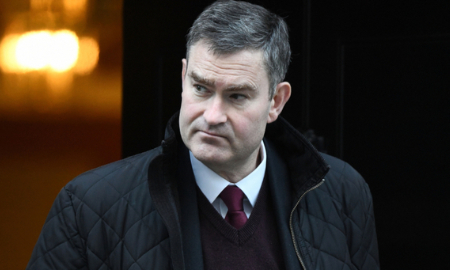
The rule of law panel was chaired by A&O Shearman partner Maeve Hanna and featured former Downing Street chief-of-staff Fiona Hill, Macfarlanes advisor and former Lord Chancellor David Gauke and Covington & Burling partner Dan Feldman, a former US ambassador and counsellor to then Secretary of State John Kerry.
The panel agreed that the legal profession and international business community have a key role to play in helping to promote the long-term benefits of the rule of law at a time when it is being characterised as an obstacle to progress by populist politicians.
“I think to some extent you have to go back to first principles and make the argument that it is the rule of law that constrains arbitrary power that we all benefit from societies in which certainty and stability is provided by the rule of law,” said Gauke.
He added that argument “hasn’t been made as clearly, as forcefully as it might have been, partly because… we all took it [the rule of law] for granted, it wasn’t contentious, no one could see that there was a link between the rule of law being undermined and economic prosperity being harmed, but there is a link, and we have to assert it”.
Feldman said the second Trump administration’s attacks on the rules-based international order that the US had played such a key part creating had led to a state of “flux, fragmentation and instability” for businesses.
He identified a convergence of law, politics and geopolitics, which meant “general counsels now treat geopolitical risk as legal risk” and were “looking not just through a traditional legal prism of ‘am I compliant now?’” but were were also seeking to identify “potential downstream issues” such as sanctions.
Feldman said this shift had prompted Covington to mirror this approach with integrated teams covering areas such as policy, sanctions and terrorism “because all of these are… part of the basket that clients have to deal with and try to mitigate”.
Email your news and story ideas to: [email protected]