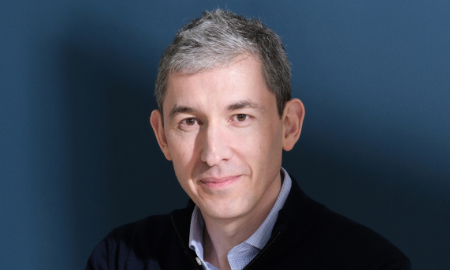
Matthew Bassiur received the Global Leadership in IP award at the Luxury Law Awards, part of Luxury Law Summit London, which took place on 9 June. He is vice president and head of global IP enforcement at Alibaba.
He began his career as an assistant district attorney at the New York County District Attorney’s Office and later served as a prosecutor in the computer crime and IP section of the US Department of Justice. He held senior roles at Apple and Pfizer before joining Alibaba in 2016.
He spoke with the Global Legal Post about his career, issues of online enforcement and hidden sales, the importance of anti-counterfeiting protections and his early desire to be an astronaut.
What was your path to becoming head of global IP enforcement at Alibaba?
My path to Alibaba has been shaped by seeing IP enforcement from every angle.
I began as an assistant district attorney in the Trial Division of the New York County District Attorney’s Office under Robert Morgenthau, where I specialised in prosecuting trademark counterfeiting and Asian organised crime. That gave me a ground-level understanding of how counterfeit networks operate and how law enforcement can dismantle them.
From there I became a federal prosecutor in the Computer Crime and Intellectual Property Section of the US Department of Justice, prosecuting large-scale, multi-jurisdictional IP crimes and coordinating domestic and international enforcement training and outreach. That experience taught me how to build cross-border cases and how to best partner with foreign governments.
I then moved to the private sector. At Apple, as senior director, Americas region and counsel for IPR Enforcement, I built and oversaw investigations into theft, fraud, cybercrime and counterfeiting; and at Pfizer, as vice president and deputy chief security officer, I oversaw anti-counterfeiting operations, criminal investigations, physical security and crisis management for North, Central and South America.
Each role gave me a different lens – government and private sector. When Alibaba asked me to lead global IP enforcement, that combination and insight were essential. Alibaba hosts billions of daily active listings across vastly different markets. Keeping those marketplaces clean requires not only enforcement expertise and brand-protection knowledge, but also a practical understanding of global commerce, technology and public-private collaboration.
I report directly to the hierarchy of the company, and my team works every day with brands of all sizes, law enforcement, industry groups and regulators to keep our platforms safe for consumers and rights holders alike.
What are some of the most pressing issues in IP enforcement today?
Two issues stand out: the promise and limits of artificial intelligence, and the rise of hidden sales.
AI has transformed how we detect counterfeits at scale. At Alibaba, we use large language models, OCR (optical character recognition), image recognition and multimodal deep learning to screen listings as sellers create or modify them, often removing suspected infringements before a single sale takes place. AliExpress proactively removes 4.5 times as many suspected infringing listings as it removes in response to rights-holder notices. AI chatbots guide rights holders through the notice-and-takedown process, and AI-assisted review helps human moderators make faster, more consistent decisions. We are also testing Qwen, Alibaba’s proprietary large language and multimodal models, on trademark-misuse determinations, with accuracy topping 90% in some cases.
But AI is not a silver bullet. It excels at repetitive, pattern-based infringements, but cannot replace the contextual brand knowledge that rights holders bring or human judgement in close cases. Scaling our most advanced models also remains cost-prohibitive, so we deploy them judiciously and keep people in the loop.
The second challenge is hidden sales. Counterfeiters promote infringing goods on social media, standalone websites and chat applications, then direct buyers to seemingly innocuous listings on e-commerce platforms. Because the infringing conduct happens off-platform, it evades our proactive monitoring.
We are fighting back on three fronts. First, criminal enforcement. We supported what we believe is the only criminal investigation and prosecution of hidden sales to date. In summer 2024, AliExpress proactively referred a group of sellers using hidden sales to market counterfeit goods to Chinese law enforcement. The resulting investigation led to an August 2024 raid in which the authorities arrested 10 suspects and seized more than 50,000 infringing items targeting over 15 brands, most of them well-known luxury and sports labels.
Second, online enforcement. We have hired a third-party monitor to identify hidden sales and have closed thousands of stores for hidden-sales activity.
Third, stakeholder engagement. We chair the hidden-sales committee of the International Anticounterfeiting Coalition’s Marketplace Advisory Council, where we collaborate with rights holders and others to eliminate hidden sales.
Hidden sales are the latest in a long line of tactics sellers have used to evade our proactive monitoring technologies and rights holders’ enforcement efforts. But hidden sales differ in one key way: much of the criminal activity occurs off our platforms, so we cannot stem it without the cooperation of the social networking platforms, third-party websites and chat applications where these sales originate. We also welcome the support of government agencies in encouraging those third parties to target hidden sales.
You were awarded the Global Leadership in IP award. What’s important to you about this award?
This award means a great deal to me because it reflects work I have done alongside extraordinary colleagues, law enforcement partners, rights holders and industry associations around the world. The award noted that it is a tribute to “exemplary leadership and distinguished contributions to anti-counterfeiting and anti-piracy initiatives”, as well as a “steadfast commitment to the protection of intellectual property rights throughout service in both government and industry, including [my] ongoing role as Alibaba’s head of global IP enforcement”.
What makes it meaningful is that anti-counterfeiting protects people. Counterfeit goods can threaten health and safety: fake bicycle components, unsafe cosmetics, counterfeit spirits. They also undermine the creativity, design and artistry behind the world’s greatest luxury brands, brands that drive innovation, investment and global commerce. The award is not just a personal honour. It validates the mission my team and I pursue every day at Alibaba International.
It also reminds me that effective IP enforcement has always been a team sport. From the prosecutors I worked with in the Manhattan D.A.’s office and at DOJ, to the brand-protection professionals at Apple and Pfizer, to my colleagues across Alibaba and our other platforms, this work depends on collaboration. I am grateful for the alliances we have built, and I will keep doing my part to make a difference.
Most of all, the award reinforces my commitment to keep improving: using technology responsibly, sharing intelligence and making our marketplaces safer for consumers, rights holders and businesses everywhere.
What advice would you give to a young lawyer wanting to begin a career in intellectual property law?
My advice is to build a broad toolkit early. IP law sits at the intersection of law, technology, commerce, government and enforcement, so the lawyers who thrive are comfortable moving between those worlds.
Start by mastering the fundamentals – trademark, copyright, patent and trade-secret law – but do not stop there. Spend time understanding how businesses actually use IP: how brands are built, how products move through global supply chains and how counterfeiters exploit gaps. If you can, get experience on both sides of the table – government and private practice, or a rights holder and a platform. That dual perspective will make you far more effective.
Technology literacy is now essential. AI, large language models, image recognition and blockchain are reshaping enforcement. You do not need to become an engineer, but you do need to ask the right questions and understand what these tools can and cannot do.
Develop strong relationships. The best enforcement outcomes come from collaboration among platforms, brands, law enforcement and industry groups. Be the person who connects dots, shares intelligence and solves problems.
Finally, keep the human purpose in mind. IP enforcement protects consumers from unsafe products, safeguards jobs and innovation, and helps small businesses compete. If you approach the work with curiosity, integrity and a commitment to partnership, you should find it endlessly rewarding.
If you weren’t a lawyer, what would you do?
If I were not a lawyer, I suspect I would have ended up as either a professor or a criminal investigator – and, in a sense, I have been fortunate enough to do both.
I was awarded a Fulbright Specialist position in 2008 and taught IP law at Renmin University in Beijing, and I have loved every classroom experience since. Teaching forces you to clarify what you know, and it is deeply satisfying to help someone else master a complex subject.
At the same time, my years as an assistant district attorney in Manhattan and as a federal prosecutor at the Department of Justice gave me a taste for investigations: following the evidence, understanding how criminal networks operate and working with a multitude of law enforcement agencies to disrupt them. That investigative instinct still drives a lot of what I do today.
My current role blends those two paths. I spend much of my time explaining how counterfeiters evade detection, training teams and partners around the world, and helping investigators and rights holders connect the dots across platforms and borders. So, while I am glad I chose law, I like to think I would have found my way to similar work – just from a slightly different angle. Come to think of it, I might trade both of those to be an astronaut.
Luxury Law Summit New York, which is hosted by The Global Legal Post, takes place at The Metropolitan Club on 10 November. Click here to read the programme and here to book a delegate place. For sponsorship enquiries, email [email protected].
Email your news and story ideas to: [email protected]