
African law firms must create sustainable career paths for women lawyers if they are to retain their best female talent as work pressures continue to increase, delegates at the International Bar Association’s African Regional Forum Conference heard today.
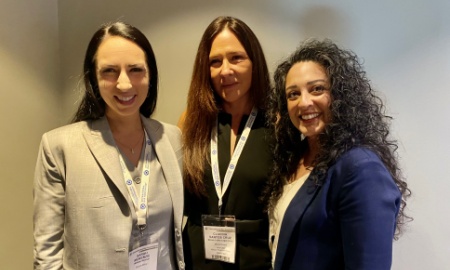
Moderating the Women Lawyers keynote address and fireside chat, Claudia Santos Cruz, a partner at Morais Leitão Legal Circle in Maputo and vice-chair of the African Regional Forum, said the 24/7 culture of modern law was putting an increasing strain on lawyers.
Addressing the topic ‘Thriving, not surviving: the path to sustainable legal careers’, she said law firms needed to develop working environments that allowed lawyers to maintain a sustainable balance between their work and other commitments.
“It’s not just about compensation; I think that is the novelty of the last 10 years. People used to join the profession because it was intellectually challenging and also very well remunerated. It’s not enough anymore.”
Santos Cruz said many law firm leaders, as well as lawyers, still believed working around the clock was “a given”. “It’s unlikely the culture will change radically in the short term, but we do need to manage the consequences of some of these issues. We can’t go forward as a profession and keep losing the talent and experience of those who want to enjoy a family and a career.”
Sarah McKenzie, head of disputes at Webber Wentzel in Johannesburg, noted that while there were more women law school graduates in South Africa than men, the proportion of women in the profession declined consistently from that point, with a particularly sharp decline leading up to the equity partner level.
She highlighted the need for firms to focus on retention as “the research into organisational transformation shows when a minimum threshold is reached – that’s usually about 30% – a shift occurs and everything changes”.
McKenzie said firms needed to conduct an honest assessment to identify the barriers to retaining women and then implement “a series of targeted solutions throughout a woman’s career to address these challenges and actively retain her”.
“According to conventional wisdom, breaking the so-called glass ceiling is the key challenge for women,” she said. “But research indicates that in reality, there are many speed bumps along the way that women face.”
Measures she identified include a maternity support programme to help women transition successfully back to work and flexible working policies, allied to a conscious effort to remove any stigma associated with taking advantage of them. That included a shift away from billable hours to measuring outputs and a recognition that careers are not linear.
She also pointed out that young male lawyers were “just as concerned about achieving an integrated life”.
“This is certainly not to say, that we shouldn’t expect excellence of our employees, nor is it to say that they shouldn’t expect to work hard,” she added. “It’s simply to say that we need to have a flexible enough approach to allow for agile responses to a need for balance in a person’s life.”
McKenzie also highlighted the importance of role models at every level of an organisation, enhanced by a conscious effort to encourage women to take up leadership positions.
“We need to be mindful of the fact that many talented women will only take on a challenge when they feel that they are 100% ready and able to do it perfectly. We’ve been socialised as women not to take risks, but career development requires leaps of faith, and we need to encourage one another to take those leaps.”
Feizin Amlani, co-founder and CEO of Excellent Consulting in Lisbon, urged lawyers to take ownership of their careers by setting and regularly revisiting strategic goals, based on their “passions”, “ambitions” and “aspirations”.
She also advised lawyers to share their goals openly with peers and mentors, as well as asking for help in achieving them. “If people don’t know what it is you are aspiring for, how can your support network help you?” she asked.
Amlani also stressed the importance of managing stress through mindfulness and reframing negative narratives. “How can we bring a much more positive narrative, a much more positive energy into how we approach our lives?” she asked. “And if you really do feel that you are stressed, what are you doing about it? How are you managing that stress?”
The Global Legal Post is a media partner for the International Bar Association's 2025 Annual Conference in Toronto in November and will be publishing the IBA Daily News during the event. Click here for further details.
Email your news and story ideas to: [email protected]