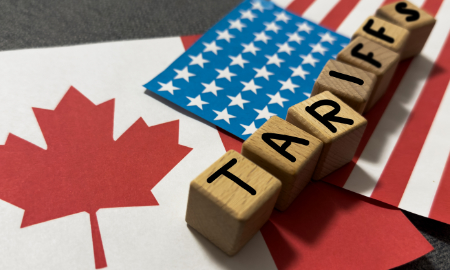

More than three-quarters of Canadian employers have been forced to make workforce changes amid a weaker economic backdrop and US tariff strains, according to a Littler survey.
Littler’s 2026 Canadian Employer Survey Report found that 77% of Canadian companies needed to take at least one workforce-related action in response to business or economic pressures over the past 12 months. Almost half of respondents (46%) said that response was pausing or reducing hiring, followed by layoffs (35%) and increased use of automation or AI to reduce labour needs (28%).
A majority of respondents (83%) said US tariff-related disruption factored into those decisions, with 54% saying they contributed to a large or moderate extent.
Stephen Shore, managing partner for Littler’s Canadian offices, said: “Economic uncertainty and trade disruption are clearly influencing workforce decisions, and those impacts could intensify if US-Canada trade tensions escalate further. Employers must remain flexible as conditions change, while carefully considering the legal and workforce implications of AI adoption, layoffs and other cost-saving measures.”
On top of these economic challenges, Canadian companies are also dealing with a wave of new regulatory requirements at both a federal and provincial level. More than half of respondents (55%) have had to update job postings to comply with pay transparency requirements, while 37% have conducted pay-gap reviews.
Paul Pulver, a Littler partner in Vancouver, said: “Whether the issue is pay transparency or other emerging requirements, it’s important for businesses to do more than just monitor developments. Employers should be evaluating what the rules mean for their own policies and practices and considering practical changes to guide compliance.”
The survey also showed that AI is influencing hiring-related decisions. Some 44% of respondents said they have reassessed or are reassessing job responsibilities related to AI use, while 36% said they have reduced or are reducing hiring and another 33% have cut or are cutting jobs.
Canadian companies are also still lagging on formal AI governance compared to US organisations. Only 49% said they have a formal AI policy, compared to 68% in the US. Meanwhile only 42% of Canadian companies said they had a formal review or approval process for AI tools or use cases, compared to 55% in the US.
The report was based on responses from 200 in-house lawyers, C-Suite executives and HR leaders at organisations in Canada.
Email your news and story ideas to: [email protected]