The 2025 King’s Counsel appointments round has seen 96 advocates awarded silk by His Majesty the King – all of them barristers, according to the Ministry of Justice.
Announcing the new cohort, the KC Appointments (KCA) Selection Panel reported that 325 advocates applied this year, with an overall success rate of 29.5% and 146 being interviewed.
Last year, 105 King’s Counsel – known as silks for the silk gowns they wear in court – were chosen from 326 applicants, a 32% success rate. The success rate has declined steadily from 2018, when the pass rate was 45%.
Nine solicitors applied for KC status, but none were interviewed and no appointments were made, which the Law Society said was “extremely disappointing”. Only one solicitor was appointed last year.
Law Society president Mark Evans said: “While the number of solicitors applying for KC status reflects the historic division of advocacy work between the Bar and solicitors, the proportion of successful appointments among solicitors – particularly from diverse backgrounds – must increase.”
Evans added: “We are committed to seeing an improvement in these statistics and will continue to work with the KCA on increasing awareness of the steps involved in applying for KC status” for solicitors.
The 2025 round marks only the second time since 2012 that no solicitors were appointed, leaving the number of solicitor silks at 66 out of 231 applicants.
One successful employed barrister was Norton Rose Fulbright partner Duncan Bagshaw, who was appointed King’s Counsel after joining from Howard Kennedy last year and who recently joined the board of the Scottish Arbitration Centre. Last year, no employed barrister was appointed.
Bagshaw said: “I am delighted to have been appointed King’s Counsel. I owe a huge amount to many colleagues who have supported me over the years and provided kind feedback on my work [to the panel], and I am so grateful to all of them.”
From the established commercial sets, One Essex Court welcomed four new silks, as did Brick Court Chambers. Fountain Court welcomed two new silks – Adam Sher and Richard Power – while Amy Sander was the sole silk success at Essex Court Chambers.
Quadrant recorded two silks – Caroline Pounds and Gemma Morgan – while 7 King’s Bench Walk welcomed Michael Ryan to the Inner Bar. Chancery sets Wilberforce Chambers and Maitland Chambers welcomed two silks each.
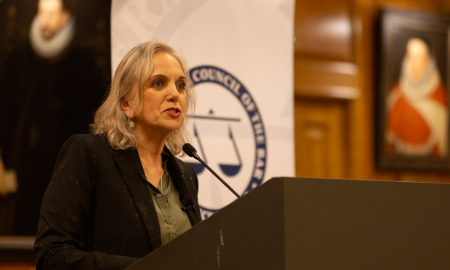
Chair of the Bar Kirsty Brimelow KC congratulated the successful applicants and said the award was “truly a mark of excellence in advocacy”.
She added: “I also offer commiserations to those who were unsuccessful this year. I wasn’t successful on my first application. I do hope you will try again in future.”
There was mixed news on diversity. While men made up a larger share of applicants, women achieved a higher success rate – 34% compared with 28% for men. However, the overall number of women appointed fell short of last year’s round.
Some 29 women were appointed, making up 30% of the cohort, down four on last year when 33 women were appointed from 84 women applicants.
Meanwhile, 11 applicants identifying as from an ethnic minority background were successful, equating to a rate of 21% among the 52 who declared their ethnicity as other than white. The success rate for applicants that self-declared as white was 31%. In 2024, the success rate was 30% for ethnic minority backgrounds and 33% for white.
Those from ethnic minority backgrounds represented around 16% of all applicants in 2025, a fall of 8% from the 2024 round. Of those 52 applicants, 37% were interviewed compared with 45% of white applicants, although 15 applicants didn’t state an ethnic origin, compared with eight last year.
Brimelow sounded a warning note, saying: “Any differences in success rates relating to protected characteristics are of concern to the Bar Council, Law Society and KCA.”
She said that given poorer outcomes for those from minority groups over the years, “there remains more work to do”, adding: “We’ll continue to investigate where there are barriers to appointment, including at the employed Bar, and we’re keen to support further improvements.”
Monisha Shah, chair of the selection panel, emphasised its commitment to inclusivity and accessibility throughout the process.
Shah explained that the panel had made significant efforts to improve engagement with prospective applicants, adding: “We have also engaged extensively with clerks, heads of chambers, early and mid‑career barristers, circuits, solicitor groups, specialist bar associations and various EDI networks within the profession to offer information, guidance and resources.”
Email your news and story ideas to: [email protected]