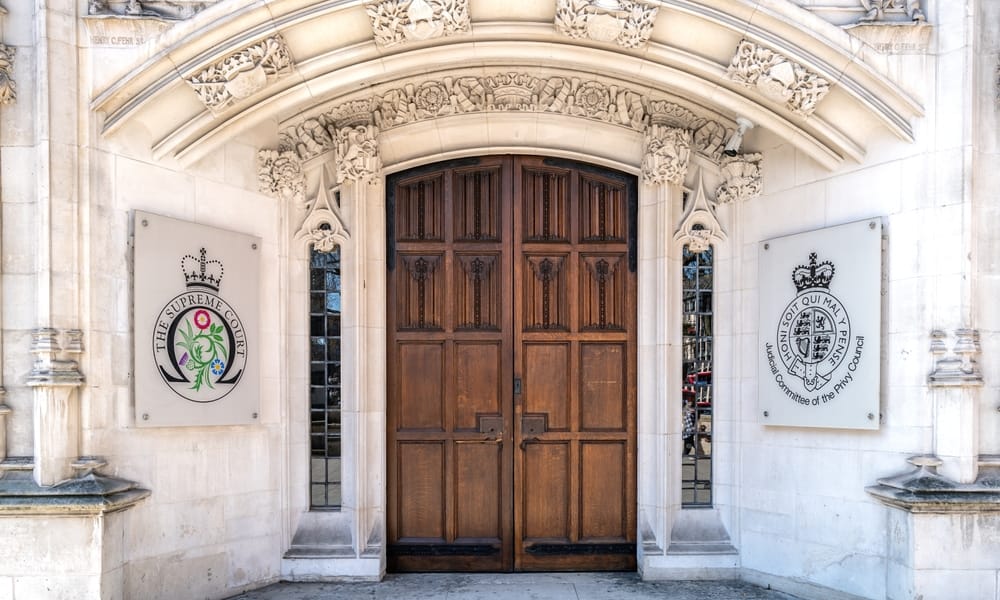
In Saxon Woods Investments Ltd and others v Francesco Costa [2026] UKSC 21, the UK Supreme Court considered an unfair prejudice petition raising important questions about directors’ duties and the practical enforcement of remedies in cross-border corporate structures.
The court unanimously dismissed Mr Costa’s appeal and held that his covert pursuit of his preferred strategy was manifestly disloyal to Spring Media Investments Limited and breached section 172 of the Companies Act 2006. A director cannot rely on a sincere belief that they are acting in the company’s best interests where their conduct circumvents collective board decision-making: “The individual director cannot go it alone.”
The case in short
The dispute arose from a shareholders’ agreement under which the shareholders agreed to work together in good faith towards an ‘exit’ by the end of 2019 or, failing that, appoint an investment bank to procure one. Saxon Woods, a minority shareholder, alleged that the sale process was not conducted in accordance with the shareholders’ agreement, because Mr Costa believed that retaining the business beyond the 2019 deadline would ultimately generate greater value. Unfortunately, the benefit of any delay of the sale beyond 2019 was destroyed by the adverse impact of the Covid pandemic. Saxon Woods therefore alleged that Mr Costa was personally responsible for Spring Media’s failure to comply with the exit strategy in the shareholders’ agreement, and that Mr Costa should be ordered to buy out Saxon Woods’ shares in the company at a price that reflected the value which they would have had if the correct strategy had been followed and an exit achieved in 2019 before the Covid pandemic.
At first instance, the court found that Mr Costa had caused Spring Media to breach the shareholders’ agreement and that Saxon Woods had suffered unfair prejudice, but did not find a breach of fiduciary duty. The Court of Appeal reached the opposite conclusion on duty and ordered Mr Costa to buy Saxon Woods’ shares unconditionally.
Requirement of good faith extends to conduct as well as a director’s thinking
Mr Costa argued that section 172 is essentially subjective: if a director honestly believes a course of action will promote the company’s success, the court should not second-guess the means used. The Supreme Court rejected that argument. Although courts will generally respect commercial judgement, section 172 operates within the wider fiduciary framework and requires directors to act loyally and in good faith towards the company.
The issue is therefore broader than dishonesty. The question is whether the director’s conduct is consistent with the duty owed to the company. A director who disagrees with colleagues cannot secretly pursue an alternative course, conceal material information or subvert the board’s decisions. Good faith extends beyond the director’s thought process to the way in which the objective is pursued.
Beyond the judgment: securing recovery across borders
The case also illustrates a practical issue in cross-border disputes. Mr Costa’s interest in the company was held indirectly through Greencage, a Luxembourg company with interests in the respondent companies. Although that structure did not affect the assessment of his duties under English law, it may matter when implementing the remedy. The buyout order was made against Mr Costa, not Greencage, even though he was not the direct shareholder.
Where shares, assets or control rights are held through an international structure, parties should investigate recognition, enforcement and recovery at an early stage. Local law may determine whether a compulsory purchase order can be enforced against an individual who is not the direct shareholder. A successful petitioner may also need to identify assets, seek recognition overseas or obtain local advice on implementing the remedy. These questions should inform the litigation strategy rather than be left until judgment.
Implications for directors and shareholders
The judgment provides five practical reminders, particularly for companies in which founders or significant shareholders also sit on the board.
To start with, an honest belief that a strategy will benefit the company does not give a director free rein over how it is pursued. Good intentions cannot justify concealment, misleading colleagues or bypassing decision-making structures.
Secondly, directors may challenge strategy and seek to persuade colleagues, but decisions allocated to the board must be taken collectively. Relevant information should be disclosed and concerns raised through the company’s governance procedures.
The third is that transparency is part of good governance. Accurate reporting enables the board to exercise its judgement. Withholding material information or presenting only part of the picture can itself become a governance failure and expose a director to a breach of duty claim.
Another reminder is not to lose sight of shareholders’ agreements. Contractual commitments, including agreed exit mechanisms, should not be disregarded because a director prefers a different commercial outcome. Companies should ensure that shareholders’ agreements and corporate decision-making processes work together and that the drafting of the contractual arrangements thoughtfully addresses possible divergence of interests.
Finally, enforcement must be planned for, and arbitration considered as part of this. Before proceedings begin, parties should identify where relevant shares and assets are located, how they are held and whether the relevant jurisdictions will recognise and enforce an English order. Where cross-border enforcement is a priority, parties should also consider at the drafting stage whether arbitration is appropriate. Arbitral awards may be easier to enforce internationally than court judgments because the New York Convention provides a widely adopted framework for recognition and enforcement. However, parties should take advice on whether the dispute and the remedies likely to be required are suitable for arbitration in the relevant jurisdictions, particularly where relief may affect third parties or the company’s corporate status. Local advice, interim protection and early enforcement consideration can help determine suitable relief and avoid securing an order that is difficult to enforce.
Looking forward
The decision confirms that the good faith requirement in section 172 concerns not only what a director believes will promote the company’s success, but also how the director acts. A genuine commercial conviction will not protect conduct involving concealment, misinformation or the circumvention of collective decision-making.
For disputes practitioners, the wider lesson is to look beyond liability and the form of relief. Where ownership, assets or control rights span jurisdictions, recognition, enforcement and recovery should be considered from the outset. Good governance may prevent a dispute; effective enforcement planning helps ensure that a successful claim produces a practical result.
Sophie Ashcroft is a commercial litigation partner and Miranda Joseph is a senior knowledge lawyer at Stevens & Bolton.
Email your news and story ideas to: [email protected]