
African lawyers will have a key role to play in helping their business clients respond to the disruption caused by US President Donald Trump’s tariff regime, the International Bar Association’s African Regional Forum Conference heard today.
The opening plenary panel at the two-day conference, which is taking place in Johannesburg, agreed that the new tariffs had transformed Africa’s longstanding trading relationship with the US and would force businesses to seek out new markets, including by boosting intra-African trade and localising their supply chains.
“Lawyers will need to deepen their knowledge in this environment because they are going to be very much at the centre of deciding how the world moves forward from a trade point of view,” said Wellington Chimwaradze, general counsel Africa at AB InBev.
How lawyers can be at the ‘cutting edge’ is the theme of the biennial conference, which, with nearly 200 representatives from more than 20 countries, is the largest yet to have been held in Africa by the IBA, whose president Jaime Carey opened the conference ahead of a welcome speech by Nkosana Francois Mvundlela, president of the Law Society of South Africa.
“When I started my mandate at the beginning of the year as president, one of my priorities was to have a stronger focus on Africa,” said Carey, who is senior partner of Carey, Chile’s largest law firm.
Themes being tackled by the conference include women in law, how ESG is impacting the legal backdrop, the legal complexities of doing business across African regions, sustainable finance, the potential impact of AI on in-house legal practice and Africa’s carbon agenda.
Today’s plenary panel on the impact of US tariffs saw Michael Sudarkasa, chief executive of Africa Business Group, warn that they had effectively accelerated the demise of the US African Growth and Opportunity Act (AGOA), which was enacted in 2000 and boosts access to the US market for sub-Saharan African countries. It is due to expire at the end of the month with little prospect of it being renewed.
“Where you had for almost three decades Africa being touted as a manufacturing platform, with South Africa being one of the strongest of those, to export to the US, that has been turned on its head,” he said.
Sudarkasa predicted that one impact of this would be a boost to intra-African trade, which currently stands at just 20% of Africa’s global trade.
“I’ll argue with you that in the next five years, that will probably increase to 30%, which will be much faster than it has grown in the past three decades.”
The delegates heard how the impact of the tariffs was already prompting other global trading partners to exploit the opportunity to fill the gap left by the US, notably China, which has removed tariffs on 98% of imports from African countries, but also less established trading partners like Japan.
The panellists pointed to the influx of new laws designed to reduce the impact of the tariffs, including anti-dumping measures on the one hand, and policy initiatives designed to help businesses on the other, including South Africa’s Export Block Exemption, which allows companies to coordinate their response.
Asked to identify a key takeaway, Nkonzo Hlatshwayo, a director at Werksmans Attorneys, said lawyers would have to consider how sudden shocks caused by tariffs can be anticipated during the negotiation of contracts, for example, with new definitions of force majeure.
“There’ll be a fair amount of litigation… that will arise as a consequence of these tariffs,” he added.
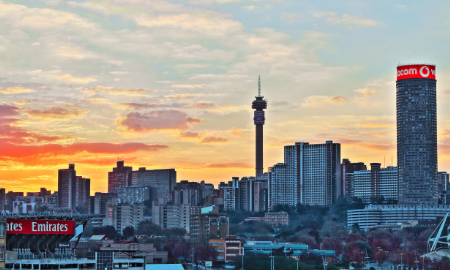
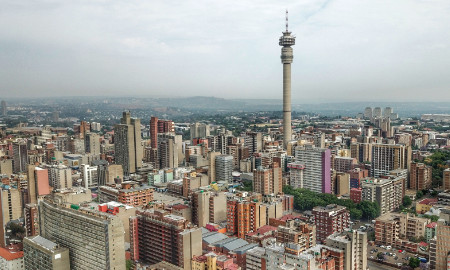
The conference, which is supported by the Law Society of South Africa, is being held at the Southern Sun Rosebank Hotel in Johannesburg.
The welcoming ceremony also included contributions from co-chairs of the IBA’s African Regional Forum, Alexis Apostolidis, head of competition law at South Africa’s Adams & Adams, and Emma-Jean Markin, managing partner of Markin & Associates in Ghana. Pascale Lagesse, vice-chair, IBA’s Legal Practice Division, and partner and founder of the employment law practice at Bredin-Prat in Paris, also spoke.
The local host committee is made up of Bowmans, ENS, Primerio, Spoor & Fisher and Webber Wentzel.
The Global Legal Post is a media partner for the International Bar Association's 2025 Annual Conference in Toronto in November and will be publishing the IBA Daily News during the event. Click here for further details.
Email your news and story ideas to: [email protected]