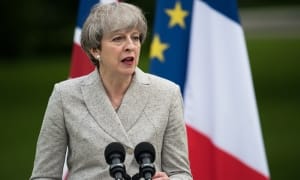
The UK Prime Minister, Theresa May, gave her much heralded speech on Brexit in Florence on 22nd September seting a conciliatory tone which was clearly designed to break the deadlock in the negotiations with the EU. However, it also set out a roadmap for the Brexit process seeking to buy time with a two year transitional period through continued UK contributions to the EU budget up to 2020. The effect of her proposal was designed to ensure that no member state is disadvantaged by the UK’s departure by the need to reopen the EU long-term budget plan. The Prime Minister’s stance appears to be a candid admission for the first time that there is not enough time for a comprehensive deal to be negotiated on both the exit terms and any future trading relationship before March 2019, when the UK is due to leave the EU.
Certainty for business
Her speech was greeted with relief by the business community. Business wants certainty and so anything that helps to diminish or resolve the current uncertain climate will be seen as good news. In seeking a two year transitional period in return for continuing the UK budget contributions she was trying to reassure business and other stakeholders in the UK economy that there will be no cliff edge to Brexit and that a trade deal will be negotiated in an orderly manner during the transitional period. This will allow the business community plenty of time to prepare for a post-Brexit world and restructure their operations, if necessary.However, she signalled clearly in her comments that whilst she wanted to break the current deadlock, her presence in Florence was no EU “love in”. Her demands for an impartial tribunal for dispute resolution under any EU/UK Exit deal and the fact she was holding out for a bespoke trade deal unlike the Norwegian or Canadian models will no doubt warm the cockles of Brexiteer hearts.
Watershed?
So was this speech the highly significant watershed in the negotiations that was predicted? In political and business terms it was a step in the right direction. For the UK it allows them to have enough time to negotiate an orderly trade deal. At the same time it allows the EU 27 to maintain their long held position that there must be significant progress on the divorce terms before trade talks can begin. In this way neither party loses face. Even the usual hard-nosed EU Chief negotiator Michel Barnier conceded in a rare positive statement that May’s speech made it possible to unblock the Brexit negotiations to some extent. It should be noted however that the proposal for a two year transitional period is still only a proposal until it is accepted by the EU 27.
EU demands
There is unlikely to be any talk on a future trade deal or a transitional period until there has been sufficient progress on the EU 27’s key demands which are:
- Adequate safeguards over the status of EU nationals in the UK and UK citizens living elsewhere in the European Union including their supervision by the European Court of Justice;
- An open border between Northern Ireland and the Republic; and
- An agreement on the size of the Brexit bill the UK will shoulder to meet its accrued liabilities as a member of the European trading bloc.
Future role of European Court of Justice
The more conducive atmosphere ushered in by May’s Florence speech was short-lived. It has already been significantly diluted at the latest round of Brexit talks in Brussels with clashes over the EU’s insistence that the European Court of Justice must police EU citizens’ rights in a post-Brexit world and the reluctance by the UK to name figures they will pay for the Brexit bill. Many had hoped that the EU 27 would signal their willingness to open talks on the form of a trade deal and the transitional period in October. However this optimism seems to have been misplaced with sources in Brussels saying this step is unlikely to happen until December at the earliest.
EU citizens
Frustration outside Government is now beginning to spill over in the UK with the lack of progress especially on EU nationals’ rights. The CBI and the TUC attacked the “human poker” which UK and European politicians were indulging in over EU citizen’s rights and urged them to seek a speedy resolution of the issues. Meanwhile the leaders of several London councils have taken the highly unusual step of writing to Michel Barnier to appeal to him directly to end the standoff over the role of the European Court of Justice in securing EU nationals’ rights. They stated that EU nationals make a significant contribution to the UK economy and local communities and the delay in setting their minds at rest as to their status post Brexit was unacceptable. Well nobody said Brexit was going to be easy!
Robert Bell is a partner and head of the EU & UK competition team at international law firm Bryan Cave.
Email your news and story ideas to: [email protected]