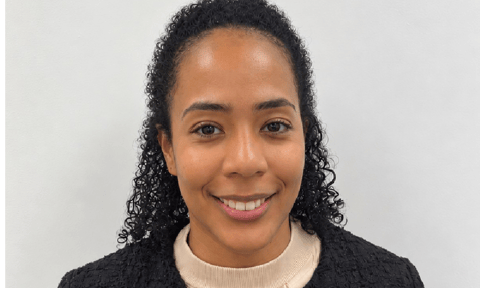

Volvo Cars general counsel and chief corporate affairs officer Helen Hu joined the Swedish carmaker more than a decade ago from luxury eyewear brand Luxottica, where she was GC for its Asia business. Initially joining Volvo Cars as head of legal for the Asia Pacific region, she worked her way up the ranks to become GC in 2024, adding the chief corporate affairs role to her remit a year ago. The Global Legal Post spoke with Hu about her role and navigating the complex legal and regulatory landscape for European automakers.
What are your key responsibilities as general counsel and chief corporate affairs officer at Volvo Cars?
As general counsel, I manage all the legal and compliance matters across all the markets Volvo Cars operates in around the world, and that includes general legal matters, compliance, intellectual property and, as a public company, corporate governance. As chief corporate affairs officer, I am also responsible for leading public affairs and communications.
How do you balance those two roles?
It actually works very well because in a lot of companies, public affairs is part of the responsibility for general counsel, so that part is quite naturally included. When I took over that function, I was personally acting as the head of public affairs for a while until I restructured it and brought public affairs and communications together. And then, for communications, it is a very different area, but given my past experience managing a sales company in Switzerland, I am familiar with commercial operations. From that perspective, communications is quite close to the area I’ve worked with before.
How is your legal department structured?
We don’t have associate GC or deputy GC roles like some other companies do. Instead, regional and central teams are led by different ‘heads’. For example, we have a head of legal for Greater China and the Americas, respectively, and there are functional heads who manage the teams at headquarters, such as head of compliance, head of IP and head of industrial operations. They all report to me directly. So, generally speaking, my team is divided by region and also the central functions.
What initiatives have you introduced in your department since becoming GC?
We recently created a new legal operations team, which I think is very important in today’s environment. That function is to enhance collaboration, but more importantly, to help the legal department adapt to [and] make better use of new technologies. So that is one of my new initiatives. I also brought out the data team and made it a standalone independent team that reports directly to me. I have been focusing quite a lot on technology and data protection, where we can have an influence in today’s highly competitive environment. I have also moved people across different jurisdictions just to make sure we are passing knowledge around and also to increase engagement.
What are your legal team’s key operational priorities over the coming year?
Some people would say legal priorities should follow the needs of the business. That is partially correct. In my function, I want my people to also focus on the areas which can gain the company competitive advantage. Volvo Cars is growing as a leading technology-based BEV (battery electric vehicle) company. So that requires the protection of the technology. In addition to the traditional legal functions, we are also very focused on areas like data protection and export control, for example, to make sure that we protect the company in a good way so we can operate and grow in a complex legal environment.
You previously worked in-house at Luxottica – what attracted you to the auto industry and how different is it to your previous role?
Luxottica is a wonderful company, and I loved the brands it had. It was a great experience and it was my first in-house job. I still very much stay connected with my friends there. The reason I moved into Volvo Cars was simply because the scope of the job was broader and I’ve always loved cars. I was attracted to the Swedish brand, and I wanted to understand how a car company operates, which would involve much more technology and a very different supply chain. So all those triggers really motivated me to make the move at that time. The auto industry is also a great industry for lawyers to gain a lot of insight in many different legal areas, including competition and consumer-related laws like GDPR in Europe. It creates a lot of interesting work, and it’s both challenging and also incredibly rewarding.
What are the biggest legal issues impacting automakers in Europe today?
One of the biggest issues is regulatory complexity, particularly for European automakers. For example, the CO2 emission rules, there are still a lot of uncertainties around that. So for any companies that produce BEVs, you need to think very carefully about how to prepare for the future, especially because vehicle development cycles are so long. Geopolitics also has a direct impact on our daily operations, such as tariffs. So we are operating under quite a high level of complexity.
What was the best piece of career advice you ever received?
The one that really benefits me the most is in order to make your life interesting, treat everything as a learning opportunity. So whenever you take on a new job, you don’t treat it as a bread-making role, but instead make it a learning opportunity. With that attitude, you get to learn from your colleagues, your managers, as well as the people who report to you. You can learn from everybody, and I think that’s an incredibly rewarding process. As a lawyer, your role can be very narrow or very broad, depending on how you view your task or assignment, so the learning mindset I would probably say is the best piece of career advice I’ve ever had.
If you hadn’t pursued a career in law, what would you have done instead?
I wanted to be a sports journalist; that was my dream as a girl. I grew up watching Maradona play soccer, and I just loved it. I’ve always loved sports in general. When I was younger, I trained seriously in track and field for many years and competed in the 100 metres. I still run almost every day, although I now do long-distance running, and it gives me a clear mind. Where I live here in Sweden, we have a lot of beautiful forests, so I usually get up in the morning, and if it’s not raining, I’ll go for a run in the forest; it’s a fantastic experience. It’s almost my meditation. I can think and prepare myself to start a really demanding day.
Helen Hu was interviewed for The Global Legal Post's special report, Bridging the competition law gap, produced in association with LexisNexis, which explores how law firms and in-house teams are managing the growing complexity of cross-border deals and the potential for AI to improve coordination.
Email your news and story ideas to: [email protected]