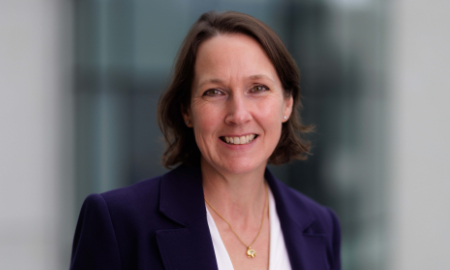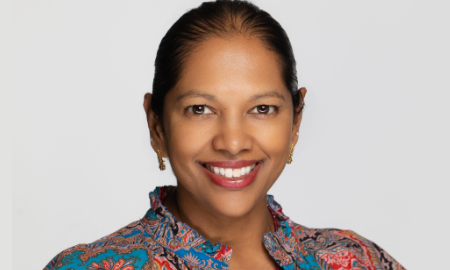

Following in-house spells at NBCUniversal and Gizmodo Media Group, and nearly seven years in litigation at Boies Schiller Flexner, Kavi Reddy swapped the media world for high-stakes global advisory work in 2019 as general counsel and chief compliance officer at Brunswick Group in New York. The Global Legal Post spoke with Kavi about her role, managing a small in-house team and the potential for AI to help mitigate some of those resource constraints.
What are your key responsibilities as GC and chief compliance officer at Brunswick Group?
It is everything from our core work, which is commercial contracts with our clients, but also anything else that comes up. That could be, on the less interesting side, real estate leases and expansions, and on the more interesting side, considering whether a new piece of work for a client constitutes lobbying, or has any implications under the Foreign Agents Registration Act or similar schemes in any of the jurisdictions that we operate in. I also look at issues around conflict and exclusivity – does taking on a piece of work for an existing client create a conflict with another existing client, and therefore should we or should we not take on a particular mandate for a client? We have a terrific specialist team that handles all those questions, but I serve as an adviser to that team, advising on the laws around lobbying and disclosure around the world. It is some of the most interesting work that I get to do, because it gives a front-row seat to some of the most critical issues that our clients are facing.
In a business where we don’t physically make anything, people are really our only asset, so I also spend a fair amount of time on labour and employment matters. And then everything else, such as IP and copyright; we have an in-house creative studio, so they come up with a lot of really interesting questions around preparing for and shooting radio and television commercials, involving talent, licensing of IP, and so on. It is a really broad mix on any given day.
How is your legal department structured?
When I first joined Brunswick, we were structured as having two co-general counsels, myself and another co-general counsel who sat in London, but that has changed, so I now oversee all of legal globally and have done this since 2024. We have a very small but mighty legal team: we’ve got two excellent lawyers that focus on commercial contracting that sit with me in New York, and we’ve got another lawyer – who is out on maternity leave – who also focuses mostly on commercial contracting. In fact, she’s a great Brunswick story because she started as an administrative assistant and then took on a paralegal role, and then she went to law school part-time while working for us full-time, before she became a lawyer.
We also just had another staff member join us, who was our legal intern last year. And we have a great ops person in the US and a wonderful deputy GC, who is a former litigator like myself, who sits in DC and picks up a lot of labour and employment and thorny IP issues. And then in London we have a strong commercial lawyer and two terrific paralegals. Though we are a tiny team, we punch above our weight, covering all time zones in our 27 offices, handling most work in-house. What I love is that we work really cohesively as a team.
What are your legal team’s key operational priorities over the next 18 months?
Getting to the right size. Our team is stretched pretty thin, so if somebody’s sick or somebody’s on vacation, the rest of the team is essentially paddling like ducks frantically. So, it will really be about making sure that we have the right number of people doing the right things for the team. We are also trying to figure out AI. We really want to harness AI like everybody else, but using it in a way that makes sense for us. Whether that is tackling low-value work to get it off our plates, or providing us with valuable intel and a good first run at other work we are doing, we want to really test drive and see what fits our needs. I also want to make sure that we’re still taking the time to do a lot of mentoring and providing growth opportunities, particularly for our junior lawyers. My goal for this team is for every junior lawyer to have the confidence and training to go be a GC or a deputy GC somewhere else, and really have the tools that they need to do that well.
What originally attracted you to joining Brunswick Group?
This is the most grown-up and straight-laced job that I’ve had since I became a lawyer. I came to this from the chaotic world of media and tabloid journalism. I learned a lot from doing that work, but I thought it would be really interesting to try something new. I love that I am working with very smart, talented and driven people who are incredibly committed to helping their clients through their most critical moments. That is almost infectious. You can’t not be excited about trying to help them do that for their clients and help them in whatever way you can.
What are the biggest legal issues impacting your business at the moment that you are most focused on?
We’re well-tuned to what’s happening in Washington and London and changes in global leadership across the world, because anything that affects our clients is something that, in turn, is going to be top of mind for us. We’re really just living and breathing those issues along with them and figuring out how to help them through their tough moments. And given that we’re a business that’s really focused on people, any changes to the labour and employment landscape throughout the world – because we are a global organisation – are really going to be important and have my focus.
How important will AI be in solving some of those resource constraints as a small team?
It’s something that’s going to be helpful to us, and we’re in the process of figuring out which tools we’re going to use for what purpose, whether it’s creating a playbook that we can use to compare contracts and have it do a first draft, or reviewing contracts and edits, or wholesale drafting of unusual contract clauses or agreements. But, especially for junior lawyers, it’s important to understand that they still need to have a good concept of fundamentals and what certain clauses mean. It’s one thing to say to AI, 'Ok do a markup of this indemnity clause,' but it’s quite another to really understand what that indemnity clause means and what the risks are behind it that it’s intended to solve. You can’t really delve into AI and be able to use it well without having that fundamental understanding.
Who would be your top three dinner party guests and why?
First would be Francesco Clemente, my favourite living artist, a painter who's had such a long career across many geographies. I would really like to hear his stories, and I think he’d have some incredible ones. Next would be Leo Strine [former chancellor of the Delaware Court of Chancery] because I’m a huge Delaware Chancery Court nerd. Finally, Rahm Emanuel [former Chicago mayor and ambassador to Japan], because what dinner party wouldn’t be better with Rahm Emanuel? As a born and raised Chicagoan – yes, that is a word – I admire his no-nonsense attitude. I once read that the Japanese public used a word to describe him that translated into something like, “speaking honestly to the point that worries one’s boss”. In any case, what a legend.
Email your news and story ideas to: [email protected]