
Almost one in five women lawyers are considering switching career roles due to dissatisfaction at work, according to the IBA’s latest report on gender equality.
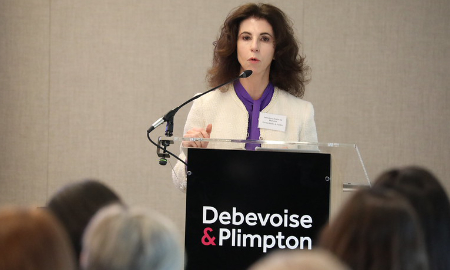
The new report – Raising the Bar: Women in Law – was launched at an event on Friday (13 March) hosted by the IBA’s Legal Policy & Research Unit at Debevoise & Plimpton’s London office.
The data showed that while 62% of survey respondents planned to remain in their current workplace, many were considering a change, either by moving jobs or firms (25%) or by leaving the profession and working in academia or consulting (19%).
The most common reasons cited for leaving the profession were dissatisfaction with workplace culture, a need for better mental or physical health support and experiences of bias or discrimination.
The report was based on a survey of 5,000 women lawyers across 100 jurisdictions and all legal sectors.
Many respondents said they shoulder significant responsibilities outside the law: 52% reported having dependent children, and 38% held additional caring responsibilities beyond childcare. These dual pressures shaped women’s professional experiences and frequently influenced their career choices.
Although 60% reported increased availability of flexible working arrangements after Covid-19, other types of support remained scarce. Only 40% had access to coaching and mentoring programmes, and just 20% could access leadership training.
Respondents also highlighted deficiencies in parental and carer support, mental health resources, unconscious bias training, pay equity and transparency, and support tailored to various life stages. Flexible working (33%) and coaching/mentoring (20%) were seen as the most impactful initiatives for career growth.
The report outlined six thematic recommendations for action. These included structural and cultural reform to increase the visibility and accessibility of workplace initiatives and reduce the stigma often associated with their use.
Second, it called for law firms to embed flexible work practices by normalising such schedules to enhance workplace retention. Third, it asked the profession to develop sustainable career pathways through formal coaching and mentoring programmes, expanded targeted training and greater transparency in advancement opportunities.
Fourth, organisations – both bar associations and employers – should support women’s wellbeing by recognising and addressing stress, vicarious trauma and other wellbeing challenges prevalent in legal work.
Fifth, the sector should acknowledge and accommodate life‑stage and caring responsibilities, such as menopause, fertility treatment and caring for a relative. Finally, the report called for improved support for sole practitioners, smaller law firms and women advocates – ensuring all women lawyers have the resources they need to succeed.
The report’s launch marked the second phase of the IBA’s ‘Raising the Bar: Women in Law’ project, previously known as ‘50:50 by 2030: a longitudinal study into gender disparity in law’.
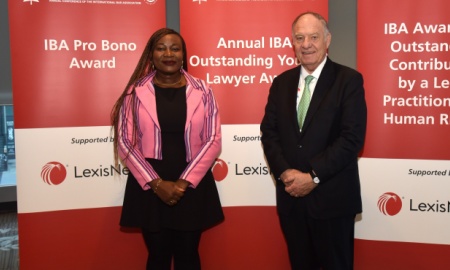
Speaking at the event, IBA president Claudio Visco said the second phase would “centre women’s lived experiences within the legal profession”, adding that its findings provided “a critical evidence base for meaningful, lasting change”.
Visco spoke alongside Almudena Arpón de Mendívil Aldama, one of his predecessors, who shared her own experiences with the invited audience of senior women partners, Bar leaders, IBA staff and others.
She said that, despite good intentions, women “still don’t reach the most senior positions across the legal sector, mainly due to discriminatory obstacles placed in our paths”, adding: “The legal sector cannot afford this contradiction and should lead by example. With the benefit of raised general awareness around discrimination, it is time for increased action.”
The project, conducted in two phases, collected both quantitative and qualitative data on women lawyers’ representation at senior levels and on policies that support career growth and gender equality, for which it was recognised at the Women and Diversity in Law Awards in 2024.
The report drew on responses from private practice, in‑house roles, government, academia, NGOs and those who had left the profession within the preceding five years. Respondents represented a broad cross‑section of legal work: 55% from private practice, 11% from government or public sector roles, 11% were barristers or advocates, while 10% were in‑house counsel and 9% were judges or judicial officers.
The Global Legal Post is the official publisher of the IBA Daily News, a daily newspaper distributed at the IBA's annual conference. GLP is also the host of the 2026 Women and Diversity in Law Awards, which will take place on 28 April at the London Marriott Hotel, Grosvenor Square. Click here to read the shortlist and here to book a table. For all enquiries, email: [email protected]
Email your news and story ideas to: [email protected]