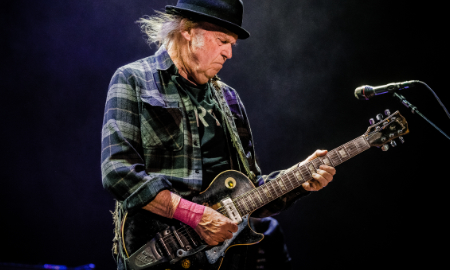



Music and fashion intersected when luxury clothing and accessories company Chrome Hearts filed a trademark infringement action against musical artist Neil Young, his Chrome Hearts rock band and their record label.
The lawsuit claims that Young’s use of ‘Chrome Hearts’ in the title for his ‘backing band’ as well as on t-shirts and other products infringes the clothing company’s registered trademarks. While the suit is still in its very early stages, the case presents a classic example of how a 2023 US Supreme Court decision could benefit the clothing brand even though Young is engaged in First Amendment-protected expression of making and distributing music.
Historical standard
Before the Supreme Court’s decision in Jack Daniel’s Properties, Inc. v. VIP Products LLC, many courts broadly applied the so-called ‘Rogers’ test to cases where the defendant’s potentially trademark-infringing product or service involved First Amendment-protected expression. While the results varied depending on the court and the factual circumstances, the Rogers test often favoured the defendant engaged in some creative activity under the First Amendment, resulting in the dismissal of what might otherwise have been a meritorious trademark infringement claim.
The Rogers test was derived from a case involving actress and performer Ginger Rogers – Fred Astaire’s long-time dance partner – who sued under the Lanham Act (the US federal statute regulating trademarks) regarding a Federico Fellini film entitled Ginger and Fred, but which featured a story about fictional Italian dancers of the same names who imitated them.
In Rogers v. Grimaldi, the appellate court ruled that when trademark law and expressive works collide, courts must balance protecting consumers from confusion and trademark owners from misappropriation with free speech interests, allowing artists to reference real-world people or trademarks in expressive works. Under the Rogers test, use of a trademark in an expressive work (like a movie, book or music) is legally protected unless: (1) the mark has no artistic relevance to the underlying work at all, or (2) even if artistically relevant, the use explicitly misleads consumers as to the source or content of the work.
Applying this test, many courts dismissed otherwise potentially valid trademark infringement claims because the defendant’s use of the plaintiff’s trademark was artistically relevant and not explicitly misleading – a much more lenient standard favouring defendants than the traditional likelihood of confusion standard used in typical trademark infringement lawsuits. For example, the trademark infringement claims of the record label Empire Distribution were dismissed under the Rogers test when it sued the producers of the television show Empire for using the Empire trademark as a title of its show, as well as to promote and sell music and other commercial products.
The Jack Daniel’s case involved a company that makes novelty dog toys known as ‘Bad Spaniels’ chewable toys that were shaped to mirror a Jack Daniel’s whiskey bottle, but with a humorous twist that it claimed was simply a parody of the real thing. While the Ninth Circuit Court of Appeals held in favour of the dog-toy maker under the Rogers test and dismissed the trademark infringement and other claims, the Supreme Court reversed and remanded the case back to the lower courts for further proceedings.
Narrowing the scope
In so doing, the Supreme Court effectively narrowed the scope of when the Rogers test could be applied. It arguably gave trademark holders greater protection when they clash with defendants denying trademark infringement because their work involves First Amendment expression. The Supreme Court held that the Rogers test does not apply when an alleged infringer uses a plaintiff’s trademark at least in part as a trademark – namely, to identify the source of a defendant’s goods or services.
However, if a defendant uses a trademark only in a non-trademark manner, then the Rogers test applies. As an example, it cited as a proper dismissal under Rogers the classic case of where the Mattel toy company sued a band over the song ‘Barbie Girl’. Following the Jack Daniel’s decision, several courts have taken a narrower view of the applicability of the Rogers test and determined that titles of expressive works like video games, films and toys do not warrant Rogers-protection and were analysed under the likelihood of confusion standard applicable in a typical trademark infringement dispute.
Applying standards to Chrome Hearts
How principles of the First Amendment and trademark law are applied to Neil Young and the Chrome Hearts and their creative expression inherent in a classic rock-and-roll band as well as their related merchandise, has yet to be determined. But one thing is for sure – he would have been better off having his Chrome Hearts-titled backing band earlier in his storied career and well before the Supreme Court issued its Jack Daniel’s decision.
If Young and the other defendants raise a First Amendment defence, Chrome Hearts will certainly argue that their use of its clothing and accessories company’s trademark-protected brand is at least in part a trademark use. While Young and his fellow defendants may contend that the alleged use of Chrome Hearts on t-shirts is merely a decorative element and not a trademark use, a court could determine that the use on clothing and potentially as the name of a band is at least in part a trademark use intended to signify the source of the merchandise and the music.
Although Young may try to “keep on rockin’ in the free world”, he may discover that there is a price he did not anticipate for having a backing band with the same name as a well-known luxury clothing brand like Chrome Hearts.
Fred H. Perkins is a partner and co-chair of Morrison Cohen’s technology, data and IP practice, focusing on intellectual property and complex commercial litigation, mediation and counselling clients on protecting and managing their IP portfolios. He can be reached at [email protected].
Keith A. Markel is a partner and chair of Morrison Cohen’s labour and employment practice, with more than two decades of experience in mitigating employment-related risks, negotiating disputes and defending claims in court. He is also co-chair of the firm’s luxury brands practice. Keith can be reached at [email protected].
Morrison Cohen associate Nicole P. Rallis focuses her practice on technology transactions, data issues and a broad range of intellectual property matters. She can be reached at [email protected].
Email your news and story ideas to: [email protected]