
Singapore’s Ministry of Law and the National University of Singapore (NUS) are planning to open an arbitration and dispute resolution research centre at the NUS Faculty of Law to help reinforce the city state’s position as a leading destination for international dispute resolution.
The centre is designed to complement Singapore’s existing dispute-resolution institutions and infrastructure by providing a dedicated platform for independent research, thought leadership, international engagement and post-tertiary education, helping develop “trusted, credible and sustainable dispute resolution frameworks”.
The Centre for Arbitration and International Dispute Resolution will be led by Professor Stavros Brekoulakis. The announcement comes amid Singapore Convention Week 2026, a global dispute resolution event organised by Singapore’s Ministry of Law.
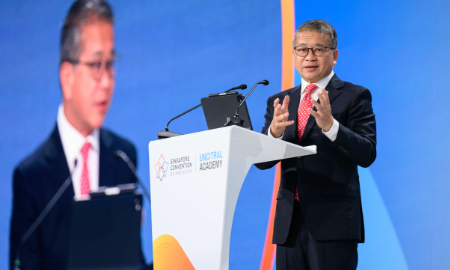
In a welcome address at the United Nations Commission on International Trade Law (UNCITRAL) Academy Conference on Tuesday (25 August), Minister for Law Edwin Tong SC said: “International dispute resolution does not, and cannot, stand still... The system itself has evolved over decades in response to changes in global trade as well as commerce. Law follows business, so we have to respond to the mercantile and commercial needs.
“Today, it faces another period of change. In fact, I would say a significant period of change. Geopolitical tensions, shifting economic power, increasingly complex regulatory regimes, rapid advances in AI and technology, new forms of commerce and assets, new ways of doing business, for transacting new currencies, and disputes that regularly, increasingly cut across jurisdictions, legal systems, as well as areas of public policy.”
He added: “Singapore has benefitted greatly from an international system in which disputes can be resolved according to rules, rather than power. We want to contribute to keeping it strong, trusted and relevant. It needs to continue to evolve, to build thought-leadership as well as engage in forward thinking research on how to sustain the rules-based framework. We need for this to be strong, trusted and relevant.
“These are words which sometimes comes across as cliché because we use it so often, but they undergird the system as we know it to be, and it must continue to be a feature of the system that we evolve it to become.”
That is the purpose of the centre, he said. It will build on NUS’s expertise in international law and arbitration, connecting academics, arbitrators, practitioners, policymakers, judges, institutions and dispute resolution users globally. Some of the issues it intends to focus on include transparency and accountability of international arbitration, ethics and professional governance and investor-state dispute settlement, among other areas.
Brekoulakis said: “International arbitration is entering a period of significant change. The challenges facing the field require fresh thinking about how the system can remain effective, credible and responsive to a changing global economy. I look forward to working with colleagues across academia, practice and policymaking to address these challenges and contribute to shaping the future of international arbitration.”
He said the centre will bring together rigorous scholarship with the ambition of establishing Singapore as a leading global centre for thought leadership and advanced education in international dispute resolution.
Email your news and story ideas to: [email protected]