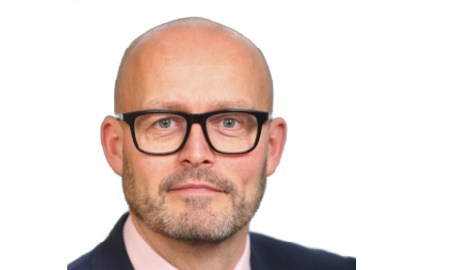

John Flint, director of global brand protection at Kenvue, whose brands include Tylenol and Neutrogena, is a panellist at the Anti-Counterfeiting World Law Summit, which takes place next Monday (15 September) at the Caledonian Club in London.
He will be discussing Turkey’s emergence as a hub for counterfeit production with Nikki Consterdine, IP protection manager, Epson Europe, and Maxence de Vains, legal counsel - brand enforcement Middle East/Africa, MF Brands Group, in a session moderated by Ronald Brohm, managing director, the European Anti-Counterfeiting Network (REACT).
Ahead of the event, he spoke to The Global Legal Post about his priorities and what to expect from the discussion.
What aspects of the session are you most looking forward to?
For someone dealing with brand protection and counterfeiting issues, the entire agenda is very relevant. Personally, I am looking forward to hearing from other industries that are facing similar challenges and potentially finding different solutions. Apart from the session I am participating in regarding Turkey, two stand out for me: first, China’s made-to-order fake goods problem, because this is an issue that affects the consumer health industry. Second is the cross-border trade in counterfeit packaging because the diversification of counterfeit supply chains is an increasing challenge across multiple sectors.
What are the key takeaways you hope to convey to delegates?
I would want delegates to gain an understanding of the threats we face from counterfeits in the consumer health industry. Counterfeits were traditionally associated with high-value products, but the growth of e-commerce and the associated third-party selling model operated by most platforms has driven an increase in counterfeiting lower value products. This includes everyday FMCG goods, like the everyday personal items that form part of most people’s daily care routines. The lack of transparency about who is fulfilling your online order when compared to a similar purchase at a bricks and mortar store is the key issue here.
Why do you think Turkey has emerged as a key originator country for counterfeits?
This might come as a surprise, given the panel that I am participating on, but we do not have a huge amount of evidence to show that this is where counterfeited Kenvue products originate. We have had some cases of production of counterfeits in Turkey, but perhaps not on the same scale as some of our competitors. But that said, there are several reasons why Turkey is a key originator country for counterfeits. First, the fact that geographically Turkey straddles East and West meaning that it is the gateway for both the European and Middle Eastern markets. Second, because organised crime networks have long-established smuggling routes from Turkey into Europe, which were previously used to smuggle drugs and people, they can be easily re-purposed to smuggle counterfeit goods, with less risk to the organised crime groups. Third, Turkey has established itself as a highly sophisticated manufacturing base with the necessary infrastructure to facilitate both genuine and counterfeit production. Kenvue continues to investigate whether Turkey is, in fact, a production centre for counterfeiting of our goods because of the above factors, but thankfully, at the moment, we don’t see many incidents.
Considering that Kenvue operates in the consumer health space, how do you think the public health threat of counterfeiting should be conveyed to consumers?
There is a balance to be found between providing consumers with the necessary information for them to make informed choices about where they can source and buy their products securely and creating a potentially damaging panic around a particular product. Kenvue investigates all consumer complaints about our products and will investigate every confirmed counterfeit incident. When we see a particular counterfeit trend, we will engage with our customers – be that brick and mortar stores or online platforms – to try and prevent these products from ever reaching consumers. We have a comprehensive global programme of online screening, which seeks to take down counterfeit and non-compliant listings as quickly as possible, and we utilise all of the tools provided by the platforms to prevent these listings from appearing in the first place. We conduct market surveys in multiple physical locations to check brick and mortar stores and engage with enforcement authorities when we find any counterfeit goods. We also support existing and developing legislation to protect consumers when shopping online and encourage our consumers to shop as safely as possible.
What do you think is the biggest emerging threat in the counterfeit space in your sector?
I believe that the growth of e-commerce platforms which operate across multiple sectors (eg, fashion, cosmetics, FMCG, etc) provides counterfeiters with opportunities to establish shadow or alternate supply chains because the inventory remains under the control of the third-party seller and they fulfil their own orders. This is a big vulnerability of the third-party selling model operated by most e-commerce platforms because it enables counterfeiters to avoid detection, to avoid getting their goods sequestered by the e-commerce platform and they can move around and fulfil orders from anywhere. This makes investigation and detection of the bad actors involved in this illicit trade much more challenging for all parties, including brand owners, platforms and law enforcement. Long-established platforms have relatively sophisticated tools to assist companies in protecting their brands and their consumers. But the emerging platforms take time to develop these tools and are vulnerable to exploitation by organised criminal gangs involved in counterfeiting.
The second threat is the increasing quality of the appearance of the counterfeited goods. Counterfeiters correct mistakes very promptly and can adapt to replicate new packaging and even some security features incredibly quickly. If our consumers report an issue with a product because it is obviously a counterfeit, we can respond. But if the consumer believes the product to be genuine because of its appearance, but just not very good, we cannot respond, and we lose the consumer.
Click here to read the agenda and here to book a delegate place. For delegate enquiries, email [email protected] and to discuss sponsorship opportunities, contact [email protected].
Email your news and story ideas to: [email protected]