
The International Bar Association (IBA), the Law Society of England and Wales and the Bar Council have criticised the US government’s decision to sanction ICC president Tomoko Akane and senior ICC prosecutor Abdoulaye Seye.
US Secretary of State Marco Rubio said the sanctions were imposed because Akane, of Japan, and Seye, of Senegal, had engaged in efforts to “prosecute officials whose government has not consented to ICC jurisdiction”.
The measures were announced on 18 August by an executive order issued by President Donald Trump following earlier statements in February 2025 that the ICC had “without legitimate basis, asserted jurisdiction over… the United States [and Israel]”.
Rubio described the ICC as “a corrupt and fatally politicised supranational court that has maliciously abused its authority and exceeded its mandate. We will not tolerate its assault on state sovereignty”.
The ICC, which investigates and prosecutes genocide, war crimes, crimes against humanity and the crime of aggression where national systems are unwilling or unable to act, rejected the sanctions.
It said measures targeting judges, prosecutors and staff carrying out the court’s mandate “undermine the rule of law”, adding: “When judicial actors are threatened for applying the law, it is the international legal order itself that is placed at risk.”
The latest designations mean nine of the ICC’s 18 judges, both deputy prosecutors, a former prosecutor and one staff member, are now subject to US sanctions.
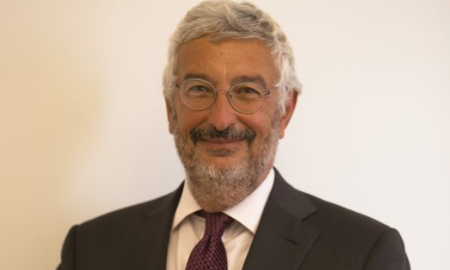
IBA president Claudio Visco said: “The ICC is the court of last resort for victims of atrocity crimes. The US’s continued, unilateral, coercive measures against the ICC threaten the court’s ability to fulfil its mandate for these victims who deserve justice for the grave harms they have suffered.”
He added: “The ICC is a critical component of the international rules-based order, and its states parties must take concrete actions to defend the court and its officials.”
IBA executive director Mark Ellis said the association condemned “in the strongest terms” political threats and attacks against the court. “Such actions are unacceptable attempts to interfere with the independence of judges and lawyers and represent a serious threat to the global rule of law,” he said.
“The international legal order depends on the independence of courts and those who serve them, and it must be defended,” Ellis concluded.
The IBA’s opposition to US sanctions against the ICC stretches back to Trump’s first term, when it condemned a 2020 executive order authorising asset freezes and entry restrictions against ICC personnel and others cooperating with the court, after the ICC authorised an investigation into Afghanistan that could encompass alleged crimes by US personnel.
In September that year it again protested after chief prosecutor Fatou Bensouda and others were sanctioned; it later welcomed President Biden’s 2021 revocation of the sanctions calling it an important step towards renewed US commitment to the rule of law.
When Trump returned to office, however, the IBA denounced his February 2025 executive order and successive designations: four ICC judges in June; judges Nicolas Guillou and Kimberly Prost and two deputy prosecutors in August; and judges Gocha Lordkipanidze and Erdenebalsuren Damdin in December.
Last month the ICC called on all 125 Rome Statute states to reaffirm support for the court amid what it described as a US campaign to discredit and dismantle it.
The latest measures also drew criticism from Law Society president Mark Evans, who said sanctioning ICC lawyers undermined their independence and “puts up barriers to justice for victims of the world’s gravest crimes”.
He called on the US administration to lift the sanctions and respect international standards protecting the independence of the legal profession.
Bar Council chair Kirsty Brimelow KC said disagreements over the jurisdiction or decisions of international courts should be resolved through law and diplomacy rather than sanctions.
“There will inevitably be disagreement about the jurisdiction and decisions of international courts,” she said. “Such disagreements should be addressed through legal and – where appropriate – diplomatic channels, not through measures which target those charged with carrying out their judicial and prosecutorial functions.”
The Global Legal Post is a media partner of the IBA, and publishes its conference magazine, IBA Daily News, which will cover developments at its annual conference in Copenhagen this October.
Email your news and story ideas to: [email protected]