
The International Bar Association (IBA) has urged states parties to the International Criminal Court (ICC) to act urgently to protect the institution after the US imposed sanctions on the court.
The measures, announced last week under an existing executive order, add the ICC to the list of specially designated nationals. Previous sanctions targeted individual officials and judges.
The IBA warned the designation threatened the court’s ability to operate and fulfil its mandate, with consequences for victims, judicial independence and those cooperating with the institution.
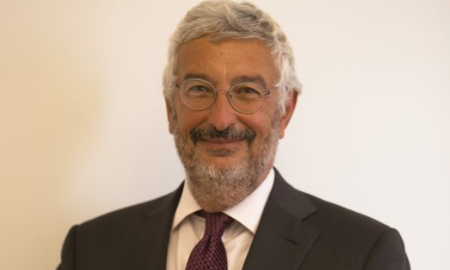
IBA president Claudio Visco said: “The IBA is deeply concerned that use of sanctions against the ICC, the world’s only permanent international criminal court, will put at risk the ICC mandate and frustrate victims’ hopes for justice. Beyond obstructing justice for victims, these sanctions impose an unacceptable burden on the independence of judges and lawyers who are working on their behalf.”
The Italian lawyer added: “The IBA stands firmly in support of the court and calls on all states to respect the ICC’s independence and the global rule of law.”
The association called for swift, concrete measures to limit the sanctions’ impact and protect the court, its personnel and those working with it.
IBA executive director Mark Ellis said: “The sanctioning of the court itself is an escalation that would have previously been unthinkable, and a move that shows the total rejection of the rule of law on the part of the Trump administration. For many victims of genocide, war crimes, crimes against humanity and aggression, the ICC is the only hope for justice.”
Ellis described the ICC as central to the Rome Statute system for holding perpetrators of serious crimes accountable. He argued that sanctioning the institution sought to obstruct justice for victims and sustain impunity.
“This is a dark day for international justice and global rule of law,” he said. “ICC states parties must act with resolve and use all the measures at their disposal to push back on this action and provide support to the ICC.”
The sanctions could hamper investigations and trials, witness protection, reparations for victims and the detention of defendants, according to the IBA. The court is investigating 13 situations, including Darfur and Libya, both referred by the UN Security Council. Three cases concerning alleged crimes in the Philippines, Libya and Sudan are at trial, with two cases at the appeals stage.
Reparations are ongoing in four cases arising from the Democratic Republic of Congo, Mali and Uganda. Seven individuals are in ICC custody. The measures follow sanctions against ICC president Judge Tomoko Akane, eight other judges, two deputy prosecutors and other staff, including former prosecutor Karim Khan KC.
The US State Department said the sanctions so far relate to investigations in Palestine and Afghanistan, dating back to the first Trump administration.
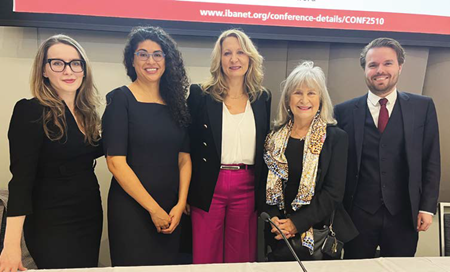
The designation also follows a warning from former Danish prime minister Helle Thorning-Schmidt at the IBA’s annual conference, held in Copenhagen last week and covered by IBA Daily News, which is published by Global Legal Post.
She said: “Attacking the court is something that can be done without congress… it can be done by the president on his own. I don’t want to be pessimistic, but it is very hard to survive… because if you’re sanctioned as an institution by the Americans, you can’t work with anyone.”
Ellis also anticipated the move in a Q&A published in IBA Daily News last week, warning that “the entire institution will soon be sanctioned” and calling it “a deliberate attempt to intimidate an international judicial institution into paralysis”.
The IBA has repeatedly opposed US sanctions against the court and its officials, including criticising Secretary of State Marco Rubio’s campaign against the ICC in July. Rubio said the restrictions sought to “defend US sovereignty” and accused the court of prosecuting Americans.
Former ICC judge Navi Pillay, who was awarded this year’s Nobel Peace Prize last Friday, as the IBA met for its Rule of Law Day in Copenhagen on 9 October, called the sanctions “unheard of” and “unacceptable”.
The South African was recognised “for her efforts to promote peace and international law”, which paved the way for a “more comprehensive global legal order”. The UK government joined Canada, Denmark, Germany, France, Italy, Japan and the Netherlands as states that firmly opposed the measures.
Email your news and story ideas to: [email protected]