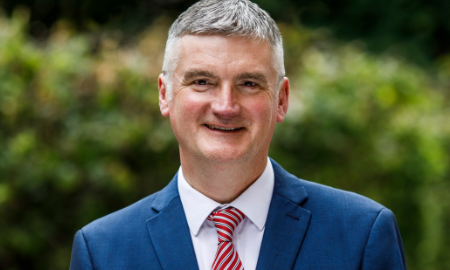

Brett Dixon has been appointed president of the Law Society of England and Wales, succeeding Mark Evans.
Admitted as a solicitor in 1999, Dixon has extensive experience in civil litigation and is an accredited mediator. After training and qualifying in general practice in Manchester, he worked for firms across North West England and previously acted as a consultant solicitor at Scott Moncrieff & Co, specialising in strategic litigation.
He also runs a successful business delivering training and consultancy to law firms throughout the UK.
He is currently an honorary professor of law at the University of Leicester, a mediator with Trust Mediation and a member of the Online Procedure Rule Committee.
Previously, Dixon served as president of the Association of Personal Injury Lawyers and joined the Law Society Council in 2019 as the representative for personal injury lawyers, where he served as a past chair and current member of its Civil Justice Committee.
He also served six years on the Civil Procedure Rule Committee, where he implemented policies to help vulnerable people in the civil court system, especially the County Courts and Small Claims Courts.
Dixon said: “I am honoured to serve as Law Society president at a pivotal point for the profession. As artificial intelligence transforms legal practice and digital justice, I will advocate for clear standards, appropriate regulation and responsible innovation.”
Ahead of proposed reforms to criminal justice in the Courts and Tribunals Bill, he added: “I will champion a criminal justice system that is fit for the future, backed by long-term investment, earlier intervention and responsible innovation to break the cycle of crisis management and deliver safer communities.”
Writing on LinkedIn, he said he had identified three areas he would focus on personally, alongside his other duties, namely modernising civil justice, leading on digital justice and technology adoption, and improving access to the profession.
On civil justice, Dixon said the civil justice system remained an important economic asset and supported the UK’s reputation as a global centre of dispute resolution, arbitration and litigation, having championed that work at the IBA annual conference in Copenhagen.
He will continue to call for stronger domestic access to justice and to address key structural challenges, including court delays, judicial capacity, possession processes and wider court modernisation.
On digital access, he promised to champion the ethical and effective use of technology while keeping the solicitor’s role central.
Dixon said he would help members adapt to technological change, promote discussion on the evolving role of solicitors in an AI world, and push for greater clarity on how regulatory standards apply when AI is used.
Lastly, in line with Bar Council chair Kirsty Brimelow KC – who also hails from the North West, in her case, Chorley – Dixon said he would make supporting people from disadvantaged and lower socio-economic backgrounds entering the profession a key focus of his presidential year.
Dixon said he would also bring disabled members’ voices to the centre of his work through roundtables across England and Wales, using the insights gathered to shape the Law Society’s resources and support for disabled solicitors.
Dixon concluded: “There is a real opportunity in the forthcoming year to shift the dial on these important topics, and I will be sharing a post over the next week or so on each of those three themes.”
Dixon will be supported throughout his year in office by vice president Dana Denis-Smith OBE, founder of Obelisk Law and a former judge of the Women and Diversity in Law Awards, and deputy vice president Jeff Lewis, a partner at Brabners and fellow Mancunian.
Nominations for the Women and Diversity in Law Awards, which the Law Society has previously won for its work, close on 16 October.
Email your news and story ideas to: [email protected]