

Chapters in this guide
24














Belgium has a long-standing legacy in the fashion industry as the cradle of the iconic Antwerp Six — world-renowned designers considered to be one of the most prominent groups to have existed in the fashion industry. According to the 2023 IBISWorld statistics, Belgium’s clothing retailing industry is ranked seventh in Europe. The market size of the clothing retailing industry in Belgium was estimated at EUR 9.2bn in 2025.
The legal framework available to protect fashion products is provided by European, Benelux and Belgian laws and regulations. The main legal provisions concerning intellectual property rights relate to trademarks, designs and models, copyright, patents, trade secrets, geographical indications and domain names, as discussed below.
| IPR | Duration | Time and modalities for grant | Pros and cons in the fashion sector |
| Trademarks | 10 years (renewable indefinitely). | Filing with European Union Intellectual Property Office (EUIPO) or Benelux Office for Intellectual Property (BOIP). Following the publication of a European Union trademark (EUTM) there is an opposition period of 3 months which allows third parties to oppose the registration. Following the publication of a Benelux trademark there is an opposition period of 2 months which allows third parties to oppose the registration. | Pros: Perpetual protection if renewed, as well as low costs (the fees cover protection for 10 years). Con: Trademark rights can be challenged or revoked if not genuinely used. |
| Design | 5 years registered Community or Benelux design (renewable up to 25 years). 3 years unregistered Community design, with a 12-month grace period to file for a registered Community design after the first disclosure. | Filing with EUIPO or BOIP. Time for grant of a Community design is estimated at 1 month. Time for grant of a Benelux design is estimated at 1 week. No registration needed for unregistered Designs, but it is recommended to file an i-Depot with the BOIP for evidence purposes. | Pro: Low costs (the fees cover protection for 5 years). Con: No substantive examination of the application. |
| Trade secrets | As long as it is kept “secret”. | No formalities for grant. It is recommended that an i-DEPOT is filed for evidence purposes. | Pro: No cost. Con: Once revealed, no protection. |
| Domain names | 1 year, renewable indefinitely. | Registration with Domain Name System (DNS). Immediate grant of protection. | Pro: Supports brand protection online. Con: Cybersquatting. |
| Patents | 20 years (with no possibility of renewal). | Filing with European Patent Office (EPO) or the Belgian Intellectual Property Office (IPObel). Time to grant a Belgian patent is estimated at 18 months. | Pro: Very strong exclusivity. Cons: High threshold for grant and high costs.
|
| Copyright | 70 years after the death of the author. | No registration needed, but it is recommended to file an i-DEPOT with the BOIP for evidence purposes. | Pro: No registration. Con: No public register. |
According to Article 2.1 of the Benelux Convention on Intellectual Property (BCIP), “a trademark may consist of any signs, in particular words, including personal names, or designs, letters, numerals, colours, the shape of goods or of the packaging of goods, or sounds, provided that such signs are capable of:
- distinguishing the goods or services of one undertaking from those of other undertakings; and
- being represented on the register in a manner which enables the competent authorities and the public to determine the clear and precise subject matter of the protection afforded to its proprietor”.
This provision reflects Article 4 of the European Union Trademark Regulation on the European Union trademark.
A protection of 10 years is granted, which is renewable indefinitely. Therefore, a trademark is a very strong protection tool. The proprietor is granted protection as long as the proprietor uses the trademark for the designated goods and services within a five-year time period and the use is not discontinued for five consecutive years.
Frequently, designers trademark their own personal names as a word mark, as for example Dries Van Noten and Christian Wijnants. Designers who trademark their own personal name should, however, be warned to take care when assigning these trademark rights to third parties, and even more to their own companies, if they do not control these companies due to investor shareholding control.
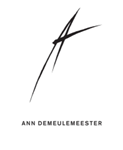
Figurative and semi-figurative trademarks are also commonly used in the fashion industry. For example, the brand ANNE DE MEULEMEESTER is registered both as a word mark (Benelux TM 1397074) and with a stylized capital “A” (Benelux TM: 1397076), which includes a visual element combining text and graphic design.
Another example of a figurative trademark is the “4N” logo of Natan (EUTM 18543366), which visually represents the brand and is legally protected as a distinctive sign in the European Union.

Similarly, so are numbers, initials and slogans, for example “No 5” from Chanel and “CK” from Calvin Klein.

Non-traditional trademarks can be registered in the Benelux, as long as they meet the legal requirement of “being represented on the register in a manner which enables the competent authorities and the public to determine the clear and precise subject matter of the protection afforded to its proprietor” (Cfr. Article 2.1 b BCIP).
The non-traditional trademarks which are mostly used in the fashion industry are the following:
Colour marks. A colour mark is a trademark simply consisting of one or more colours, for example the multi-coloured stripes registered by Fabrimode, a clothing retailing chain in Belgium (EUTM 010780567).

In accordance with the current jurisprudence of the EUIPO, a colour mark is meant to protect the application of that colour to a specific part of that product, for example the specific shade of red as applied to the soles of Christian Louboutin shoes.
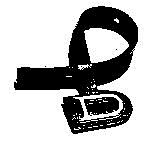
Shape marks. A shape mark is a three-dimensional representation of a shape. The shape of a product or the packaging may be a mark (for example EUTM 001439694 (Delvaux) is described as a mark consisting of “a strip of leather marked with the letter “D” and is riveted on to the shoulder straps and around the handles of the handbags”).
Olfactory marks. An olfactory or smell mark is the unique scent capable of identifying a product. Current practice in trademark offices is not to allow olfactory marks because a smell cannot be clearly, precisely and objectively represented in the register.
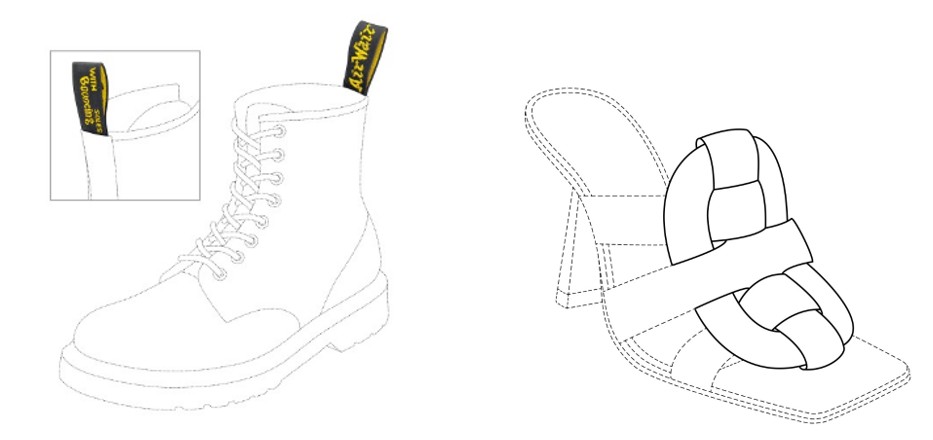
Position marks. A position mark is a trademark consisting of the specific way in which the mark is placed on or affixed to a product, for example the positioning of the label on Airwair boots (Benelux TM 1465202) or the position of the mark on Morobe’s shoe (EU TM 018759833).
Pattern marks. A pattern mark is a trademark consisting exclusively of a set of elements which are repeated regularly, for example the repeat of the letters “T” and “H” in some Tommy Hilfiger textile designs (EUTM 018641422).

Sound marks. A sound mark is defined as a trademark consisting exclusively of a sound or combination of sounds (for example EUTM 011458999 – Zalando).

Certification marks. A certification mark is a type of trademark that is capable of distinguishing goods or services which are certified by the proprietor of the mark in respect of material, mode of manufacture of goods or performance of services, quality, accuracy or other characteristics, with the exception of geographical origin, from goods and services which are not so certified.
The primary difference between trademarks and certification marks is how they function. A traditional trademark:
- indicates the source of products/services; and
- identifies and distinguishes one’s products/services from those offered by competitors.
The purpose of a certification mark is, however, to indicate that the goods and services bearing the mark comply with a given standard set out in the regulations of use and controlled under the responsibility of the certification mark owner, irrespective of the identity of the undertaking that actually produces or provides the goods and services at issue and actually uses the certification mark.
Collective marks. Another way of indicating compliance with certain standards is through collective marks, which are already provided for under Article 7 bis of the Paris Convention for the Protection of Industrial Property (1883). Collective marks are owned by an organisation or association and can be used by any trader that is a member of that association. Some jurisdictions require that applicants must file the regulations of use of the collective mark with the trademark registration authorities as part of the application. Like other trademarks, collective marks can be words or logos.
The provisions regarding Benelux designs are included in Title III of the BCIP.
A design relates to the appearance of a product or part of a product. The appearance may consist of lines, contours, colours, shape, texture or the materials of the product itself or its ornamentation. The design must be novel and have individual character to be eligible for protection, for example the iconic Delvaux handbag (Benelux design 88778-01).

The term of protection is five years and may be renewed to a maximum term of protection of 25 years.
In the Benelux there is no such thing as an unregistered design. However, an unregistered Community design does exist. This design right is established automatically, when a design is made available to the public. An unregistered Community design grants protection for a period of three years, starting from the date the design is first made available to the public within the EU. There is a 12-month grace period during which the designer can still file for a registered Community design without losing novelty. In the meantime, before registration, to preserve the novelty of a design, an i-DEPOT can be filed to establish proof of creation and date of disclosure (see www.boip.int/en/entrepreneurs/ideas/publish-an-idepot).
Copyright consists of the prerogatives provided by law for creators of literary and artistic works. In Belgium the legal provisions are implemented in Book XI “Intellectual Property” of the Belgian Code of Economic Law. In order to be protected by copyright, the work must:
- have a tangible form; and
- be original, resulting from a creative activity.
When a fashion product has a tangible form and meets the required originality, the product falls within the scope of copyright. There are no formal requirements in place to enjoy copyright protection, and thus no registration is required. It is therefore a “cheap” protection tool.
However, it may be useful to complete certain formalities that will provide the author with proof of ownership and the date when the copyrightable work was created, such as filing an i-DEPOT (see www.boip.int/en/entrepreneurs/ideas/submit-an-i-Depot).
In addition, creators can simultaneously hold copyright, which protects the original expression of their work, and a trademark, which protects distinctive signs that identify their goods or services, and a design right which protects the appearance of a product. This means a fashion designer can hold copyright over the print, pattern or design itself, or also a design right while also holding a trademark for distinctive clothing elements, such as brand logos, labels or unique garment features.
A great advantage of copyright is that authors, including fashion designers, enjoy rights and protection for a long period; namely 70 years after their death.
Copyright protects human-created works. Works generated entirely by AI cannot receive copyright protection. However, if a human provides creative input to the AI-generated work, the elements created by a human within such work can still be protected.
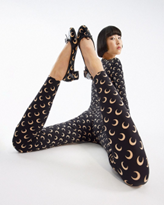
Marine Serre’s prints enjoy copyright protection because they are original works expressed in a tangible form.
Patents
Patent rights play an important role in the fashion industry. We notice a growing level of technical features in the fashion industry, due to the wearable tech phenomenon. Wearable technology relates to electronic devices designed to be worn. These devices can be implemented in jewellery, accessories, clothing or parts of clothing.
To be protected by a patent, an invention must be:
- new;
- inventive;
- susceptible to industrial application; and
- lawful
See Geox S.p.A (EP3838048) for an example of a patent within fashion, in this case for the structure of the sole of a shoe.

Registration is needed. Patents grant a protection for 20 years.
Trade secrets
In Belgium the legal provisions regarding trade secrets are included in the Belgian Code of Economic Law, which entails a transposition of the EU Directive 2016/943 on the protection of undisclosed know-how and business information against their unlawful acquisition, use and disclosure. Article I.17/1 of the Belgian Code of Economic Law provides a definition of a trade secret. A trade secret is any information or know-how that has commercial value based on its secrecy.
No formalities are required to be fulfilled, except for the fact that this information needs to be protected from becoming public.
The protection lasts as long as the secret remains a secret or is otherwise properly protected through enforceable confidentiality obligations.
Trade secrets are also commonly present in the fashion industry in, for example, protecting methods used in manufacturing of products, methods to make lists of key suppliers and/or buyers, software tools for fashion design etc.
All appropriate precautions need to be ensured to keep the information secret.
Geographical indications
A geographical indication indicates that a product has a specific geographical origin and possesses a certain reputation for quality due to that place of origin.
On 9 October 2023, the European Council adopted a new regulation that safeguards geographical indications (GIs) for craft and industrial products. The regulation will broaden the scope of protection to craft and industrial products, such as clothing, in the same way as agricultural geographical indications. The EUIPO has been given the role of the EU competent authority in respect for GIs for craft and industrial products. From 1 December 2025, it will be possible to apply for the registration in the EU of the names of craft and industrial products meeting the necessary requirements through a single GI application covering all EU Member States.
“Made in Belgium”
Due to the globalisation of trade most products are multinational and include parts and pieces from different places. Therefore, there was a need for a legal framework to indicate the origin of goods. The legal basis is found in Article 60 of the Union Customs Code (UCC) and its implementing acts.
The indication of origin “Made in …” is determined by the non-preferential origin rules and these rules are established by EU law.
Belgian fashion products meeting the origin criteria can therefore be marketed as “Made in Belgium”, highlighting both quality and local craftsmanship.
Licence agreements
Licence agreements provide for IP-holders (the licensors), to grant third parties (the licensees), the right to use their IP in return for royalties. The licensor remains the IP-holder. There is no transfer of the IP-rights.
Licence agreements provide IP-holders with the opportunity to expand their activities to new markets (for example clothing designers who are marketing fragrances).
Licensing agreements should, at least:
- be in writing;
- clearly stipulate the IP rights involved;
- state the exclusivity or non-exclusivity mode;
- stipulate the term and termination of the agreement;
- stipulate the exact territories involved;
- define the specific conditions of use; and
- clearly mention the financial compensation.
In the Benelux the licence agreement must be registered with the BOIP to have third-party effect.
Non-disclosure agreements (NDAs)
An NDA is an agreement that establishes confidentiality between parties involved (i.e. the owners of confidential information and the recipients thereof). There is no specific legal framework in Belgium concerning NDAs, and therefore they fall within the scope of general contract law.
By signing an NDA, parties can prevent trade secrets and/or other information being revealed to third parties without consent.
It is advised to at least include:
- a clear description of the confidential information;
- an indemnification clause;
- a non-circumvention clause; and
- the manner of returning the information.
Subcontract agreements with suppliers/in-house manufacturing
In the fashion industry supplier agreements are predominantly used in the context of the manufacturing of goods.
A supplier agreement offers a clear framework to the designer, who orders the creation of goods with the supplier, and the manufacturing thereof, and thus establishes a clear and effective business partnership.
In Belgium there is no specific law governing supplier agreements, which therefore fall within the scope of general contract law.
The supplier agreement should include:
- payment terms;
- delivery warranties;
- quality warranties;
- liability clauses;
- a clause concerning the ownership of IP rights; and
- reference to the exclusivity or non-exclusivity mode.
Agency agreement
An agency agreement provides for the principal and the agent to agree that the agent will intervene in the name and for the account of the principal promoting the principal’s goods. An agency agreement should refer, among others, to:
- the absence of a relationship of subordination;
- the presence of a continuous relationship; and
- a remuneration.
An agency agreement is strictly regulated by law. The statutory regulation on agency agreements is implemented in the Belgian Code of Economic Law, specifically in Book X Title 1.
Attention needs to be given to the termination of the agency agreement and the compensation due upon this termination, the so-called eviction penalty. If the agent developed business for the principal and increased its clientele, the principal will be obliged to pay the agent an eviction penalty. If the amount is not stipulated in the agreement, a judge can determine the amount in a discretionary matter, taking into account the legal maximum. According to Article X.18 of the Belgian Code of Economic Law the legal maximum for the eviction penalty is determined at a year’s amount of compensation calculated at:
- the average of the five years preceding the termination; or
- the average of the preceding years if the agreement did not last five years.
Selective distribution in high-end fashion and trademark protection
High-end fashion brands care for their reputation. The exclusivity of their goods and the quality of their goods should be maintained. This can be provided by applying a “selective” distribution system. This refers to a distribution system where the designer undertakes to sell the goods only to distributors selected on the basis of set criteria, and where these distributors undertake not to sell the goods to unauthorised distributors within the territory in which the supplier has decided to apply that system.
Frequently, parties stipulate a prohibition on promotional discounts, as this can harm high-end reputations. But be aware, this can entail price setting, which is an infringement of competition law.
In the case Newpharma and Pharmasimple v. Caudalie, the Belgian Competition Authority fined the French cosmetics brand Caudalie EUR 859,310 for infringement of competition law in the context of their applied selective distribution system and e-commerce (decision of the Belgian Competition Authority no. ABC-2021-PK-09).
The Belgian Competition Authority explicitly stated that imposing minimum prices cannot be justified by a concern to protect a brand’s image.
Co-branding and co-marketing
Co-branding emerges from the collaboration between two brands to promote and market either a common product, jointly created products, or their respective products. Examples include the Antwerp-based clothing label Arte partnering with Adidas, or Walter Van Beirendonck collaborating with G-Star; for instance, on a hat.
Antwerp based clothing label Arte, together with Adidas
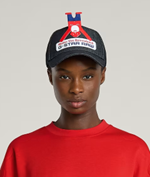
Walter Van Beirendonck with Gstar
This type of collaboration falls within the scope of general contract law. The agreement should address:
- a reciprocal licence for the IP rights;
- allocation of revenue;
- warranties on protection of the reputation; and
- control mechanisms.
Franchising and alternative sales model agreements
Franchising. Franchising is a commercial system of marketing products and/or services, based on a continuous and strict cooperation between distinct and independent companies (being the franchisor and the franchisee), whereby the franchisor grants to its franchisees the right to profit from its brand and concept but also obliges the latter to run a business which is in line with that brand and concept.
The franchisor grants and compels the franchisee a right, for a fee, to use the logo and/or the brand and/or the services, the know-how and other intellectual property, in return for a constant commercial and/or technical support.
Distributorship agreement. A distributorship agreement is defined as an agreement under which a distributor purchases the products from the principal and resells them in its own name and for its own account. It differs from an agency agreement in that an agent does not purchase the products from the principal.
When a distribution agreement meets the requirements of Article X.35 of Title 3 of Book X of the Belgian Code of Economic Law — which is often the case in the fashion industry — it is governed by the provisions of that Title. However, when it does not meet the requirements of the said Article, yet is still qualified as a distribution agreement, it falls under common Belgian law.
The scope of Article X.35 Title 3 of Book X of the Economic Law Code is very limited and can only be applied to:
- an agreement on a sales distribution;
- which grants an exclusive or quasi-exclusive right of sale or imposes important obligations; and
- is concluded for an indefinite period.
Employing fashion models
Fashion models can be represented by an agency or not. In Belgium there are no specific provisions regarding the employment of fashion models. However, it is important to take into account personality and image rights when concluding a partnership with fashion models. Image rights protection arises from the regulations protecting private life and Article XI. 174 of the Belgian Code of Economic Law.
Social media, influencers and brand ambassadors/celebrities
When any advertising is undertaken by influencers, brand ambassadors and celebrities it must be compliant with the advertisement regulations, as implemented in Articles VI. 93 and VI. 97–VI.103 of the Belgian Code of Economic Law.
In Belgium influencer marketing guidelines have been put in place. There is influencer marketing if:
- the online influencer receives a compensation; and
- the advertiser has control over the communication.
Obligations in case of influencer marketing:
- commercial communication must be clearly identifiable by using hashtags/mentions, using clear language and clearly visible, not hidden; and
- commercial communication must be fair, meaning no incorrect information, no deception with false claims and no direct communication to children.
Advertising has to be clearly indicated as such, so it is clear to consumers that what is being published is promotional content. If not properly indicated as such, the influencer, brand ambassador, celebrity and even the brand itself can be held liable for misleading the consumer.
Advertising standards, relevant authorities and advertising practice
As mentioned above, in Belgium the advertising standards are implemented in Articles VI. 93 and VI. 97–VI.103 of the Belgian Code of Economic Law. Advertisements must be compliant with these provisions, including those related to transparency, accuracy and the prohibition of misleading or deceptive practices.
In Belgium, a jury for ethical practices in advertising (Jury voor Ethische Praktijken inzake Reclame or Jury d’Ethique Publicitaire), an independent self-regulatory body of the Belgian advertising industry, ensures the correct and honest character of advertising messages. It grounds its decisions on the one hand on the legal provisions (law on commercial practices, legislation by category of products and services), and on the other hand on the self-disciplinary provisions (codes, rules, recommendations).
Belgium is a federal state with different communities and regions, each with separate competences. At regional level, with regards to media, for the Flemish community there is the Vlaamse Media Regulator and for the French community the Conseil Superiors de l’audiovisuel. These independent authorities ensure that the media regulations established by the media decrees are being adhered to.
The Belgian consumer protection legislation is laid down in various provisions of the Belgian Code of Economic Law and the Belgian Civil Code. With respect to the legal guarantee for consumers, the relevant provisions are set out in articles 1649bis–1649quater of the Belgian Civil Code.
These latter provisions are based on, and have been updated in line with, two European directives: the Sale of Physical Goods Directive (Directive (EU) 2019/771) (which provides an update of the general consumer sales regime) and the Directive for the supply of digital content and digital services (Directive (EU) 2019/770).
Consumers are entitled to a legal guarantee when buying consumer goods, being that the seller must give a guarantee for any lack of conformity in the goods which appears within two years of purchase. For second-hand goods, a period of less than two years may be agreed to, but not less than one year.
Compliance with the application of the guarantee legislation is monitored by the Algemene Directie Economische Inspectie or La Direction générale de l’Inspection économique.
E-commerce, like traditional commerce, is governed by consumer protection laws. However, specific provisions apply, such as the right to withdrawal within 14 days of purchase.
The layout of physical stores can be protected through copyright and/or trademark law and under unfair trade practices law.
Also, the layout of online stores can be protected through copyright and/or trademark law and under unfair trade practices law, as long as the requirements for protection are met.
Article VI.104 of the Belgian Code of Economic Law defines unfair competition as “any act contrary to market practices by which an enterprise harms or may harm the business interests of one or more other enterprises”.
This is a very general and rather abstract definition of what constitutes unfair competition and the Belgian courts consequently have a discretionary competence when rendering decisions about unfair competition practices.
The most relevant unfair competition rules for fashion businesses in Belgium are those related to:
- misleading commercial practices B2C (Article VI. 97–VI.100 Belgian Code of Economic Law);
- acts of unfair competition B2B (Article 104 Belgian Code of Economic Law); and
- comparative advertising (Article VI.17 Belgian Code of Economic Law).
Within the EU, two main directives have been developed for companies regarding sustainability: the Corporate Sustainability Reporting Directive (CSRD) (Directive (EU) 2022/2464) and the Corporate Sustainability Due Diligence Directive (CSDDD) (Directive (EU) 2024/1760). The Belgian Parliament adopted the act transposing the Corporate Sustainability Reporting Directive on 28 November 2024. The Belgian legislator opted for a direct implementation, without adding stricter national requirements. Regarding the CSDDD, Member States have until 26 July 2026 to transpose it into national law. Belgium has not yet done so.
Currently, SMEs are not yet subjected to the European directives.
Besides emerging regulations, there is also a change in mindset. Sustainability is becoming increasingly important to the stakeholders involved.
An increase in so-called “green trademarks” is noticeable. However, brands attempting to convey to consumers that their goods are sustainable by using these “green trademarks” must be sure that any claims can be substantiated.
Customs authorities play an important role in the fight against counterfeiting and piracy within the European Union. This is governed by Regulation (EU) No. 608/2013 of 12 June 2013 concerning customs enforcement of intellectual property rights, which applies uniformly across all EU Member States.
Custom authorities are authorised to intervene when counterfeit and pirated goods are imported, exported or re-exported, and are also authorised to act on the national territory.
Any holder of an intellectual property right can file an “application for action” when they suspect that counterfeit or pirated goods are infringing their intellectual property right and will be imported. This request is valid for up to one year and can be renewed annually.
The “application for action” offers the following advantages for the holder of an intellectual property right:
- Customs will act in case of suspicion of counterfeiting;
- the holder of an intellectual property right will have the right to inspect the goods and take photographs;
- the holder of an intellectual property right has all information concerning the concerned goods (exporter, transporter, consignee, mode of transport, etc.);
- the holder of an intellectual property right has a period of 10 working days to confirm the counterfeit and during these 10 working days the goods remain blocked at Customs.
If Customs suspects counterfeiting during an inspection assignment and there is no application for action, Customs can still act ex officio.
How can businesses enforce their rights on clothing designs which are being copied?
First, identify the IP rights related to the clothing designs. Is it possible to invoke copyright, design and model rights and/or trademark rights?
Once identified, address a strong cease and desist letter to the (supposedly) infringing party.
If the (supposedly) infringing party is not complying with the cease and desist then rights should be enforced through judicial proceedings, for instance starting with a counterfeit seizure procedure.
How can businesses detect online infringement and fight it?
Automated web monitoring tools, specially developed to trace infringement, are useful. They assist businesses in identifying counterfeit products and “lookalike” websites.
In addition, businesses should:
- Apply a global approach in the monitoring of counterfeiting.
- Pay attention to cybersquatters and act accordingly. Cybersquatting is legally punishable in Belgium, when:
- the domain name is identical to or confusingly similar to a brand, trade name, registered name or company name, a geographical indication, a personal name or designation of a geographical entity in which the complainant has rights;
- the registrant has no rights or legitimate interests with regards to the domain name; and
- the registrant’s domain name has been registered or used in bad faith.
An injunction can be sought in summary proceedings to either seize the use of the domain name by the registrant or to transfer the domain name, damages can only be claimed through proceedings on the merits.
DNS Belgium has also developed an Alternative Dispute Resolution (ADR) procedure before CEPANI (the Belgian Centre for Arbitration and Mediation). The dispute will be assessed by an independent third-party decision-maker, who is a legal expert in the matter. In this ADR procedure you can request the seize of use of the domain name or the transfer thereof.
- Consider judicial procedures; for example, the following actions:
- file for a counterfeit seizure;
- file for a prohibitory injunction; or
- file proceedings on the merits.
There is also the option to take extrajudicial measures, such as:
- file an application with the customs authorities;
- participate in an ex officio action by the customs authorities;
- mediation; or
- arbitration
- Inform online customers of the different ways to file a complaint with e-commerce and social media platforms. Most platforms have user reporting mechanisms and takedown processes in place. Encourage users to report infringing content through these mechanisms.
What new EU legislation is going to impact the fashion industry?
The Corporate Sustainability Reporting Directive (CSRD) recently entered into force. This EU directive, which is an integral part of the EU Green Deal, requires companies to publish regular reports on their social and environmental activities, from 2025 for some, and from 2027 for SMEs.
In support of the EU Green Deal targets, the EU has laid out its strategy for sustainable and circular apparel and textiles, mainly through the Digital Product Passport (DPP). The DPP is a tool which intends to provide a product identity and access to product information. The information will be accessible through a QR code on a tag. The DPP will also provide brand protection and enable new business models, such as re-use, recycle, repair and resell.