
The Global Legal Post launches comparative guide to fashion law
Law Over Borders Comparative Guide: Fashion Law Guide
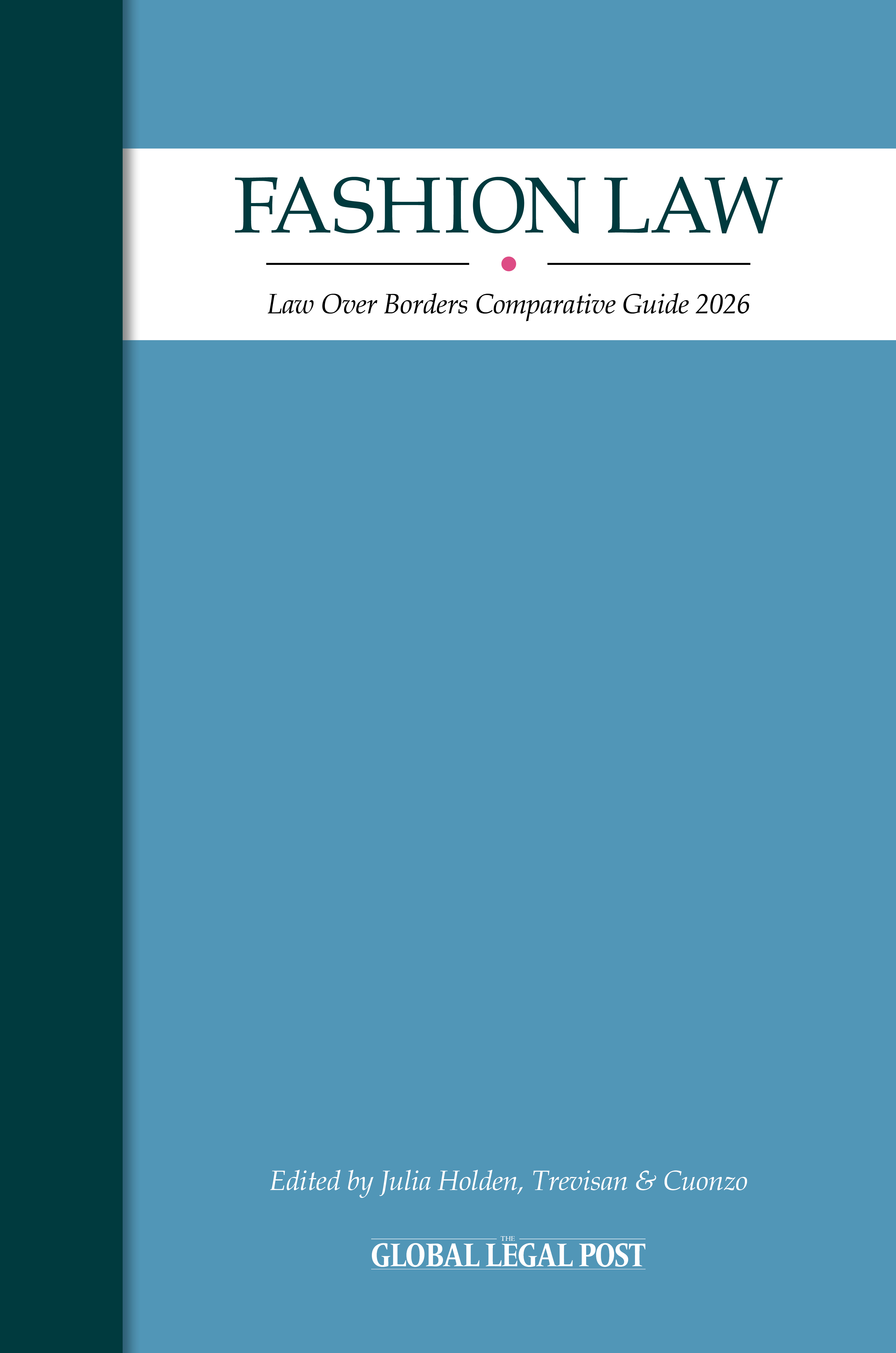 Fashion Law Guide
Chapters in this guide
24

















The Global Legal Post today launches the third edition of its Law Over Borders Comparative Guide to Fashion Law, providing a comprehensive analysis of the legal landscape shaping the global fashion industry.
Edited by Julia Holden, a partner at Milan-based law firm Trevisan & Cuonzo, the guide is written by leading fashion and IP lawyers from across the world and is available online and to download as a PDF from today.
The guide serves as a practical resource for general counsel, brand owners, lawyers and advisers working in the fashion sector and explores how the law governing brand protection, e-commerce and marketing impacts the fashion sector in key jurisdictions. It also explores evolving sustainability requirements.
Each country chapter adopts a Q&A format, allowing readers to easily compare how different jurisdictions address these topics. There are also a series of thematic market insight chapters covering key developments in the fashion law sector.
The guide will be officially launched at an invitation-only roundtable chaired by Holden, which will take place in London next month.
The print version will be available to order later this month and will be made available to delegates at the market-leading Luxury Law Summit London, which takes place at the Institute of Directors on 9 June.
Watch Julia Holden launch the guide
In her introduction, Holden highlights both the global significance of the sector and the complexity of the legal environment in which it operates.
She quotes Coco Chanel, who said: “Fashion is not merely clothing but a pervasive, living force that exists in ideas, surroundings and the zeitgeist”, noting that it is “a dynamic, highly responsive, globalised industry driven by consumers’ constantly evolving tastes and preferences".
Holden points to a range of challenges facing fashion businesses, including sustainability pressures, technological change and economic uncertainty. “The need for fashion businesses to operate with sustainability, adapt to rapidly changing AI technology and address shifting consumer expectations has led to many new operating practices and stringent new legislative compliance requirements in many jurisdictions around the world,” she writes
Contributing firms and jurisdictions include:
Davies Collison Cave Law (Australia)
ASTREA (Belgium)
Mansur Murad Advogados (Brazil)
Berggren (Finland)
Casalonga (France)
Kroher Strobel (Germany)
Souriadakis Tsibris (Greece)
Bird & Bird (Hong Kong, Singapore, Spain)
Remfry & Sagar (India)
Pinsent Masons (Ireland)
Trevisan & Cuonzo (Italy)
GABNÉ.GABNYS Dispute Resolution, Entertainment and Tech Law Boutique (Lithuania)
Costinica & Asociados (Mexico)
Dentons ACAS-Law (Nigeria)
BARLAW – Barrera & Asociados S. Civil de R.L. (Peru)
Petosevic/CWB (Serbia)
CWB (United Arab Emirates)
Stobbs (UK)
Debevoise & Plimpton (US)
The PDF version of the guide is available to download here. Click here to read the guide online.
The Fashion Law guide is one of 15 titles in the Law Over Borders series, which also covers topics including arbitration, artificial intelligence, cryptoassets, data protection, ESG and restructuring and insolvency.
Forthcoming guides include: Class Actions, Merger Control, White Collar Crime, Cartels and many more.
For further information about the guides, email Katie Burrington at [email protected].