

Chapters in this guide
24
















Although Serbia’s fashion industry may be small, it has been growing steadily and has thus become an important part of both the retail and the manufacturing sectors. In recent years, it has generated several hundred million U.S. dollars annually. Within the broader apparel market, its total value exceeds one billion U.S. dollars, reflecting strong and sustained consumer demand.
When it comes to Serbia’s retail landscape, fashion retail is one of its stronger segments. It remains one of the country’s top retail categories, with a solid presence of retail chains across the country.
As for e-commerce, its expansion in Serbia has been considerable, especially during and after COVID-19. Unfortunately, this shift has made things more challenging for physical retail stores. The shift toward digital channels of sale is of particular importance for many Serbian fashion brands and manufacturers — most of which are locally owned — and has also contributed to the overall growth of Serbian exports.
Fashion products in Serbia can be protected by both registered and unregistered IPRs. Although most manufacturers still rely on trade marks for this purpose, with the growth of the fashion industry, more manufacturers are considering other forms of protection such as industrial design, copyright, trade secrets, domain names, and, less commonly, patents.
The following is a summary of the main IPRs relevant to Serbia’s fashion industry.
| IPR | Duration | Time and modalities for grant | Pros and cons in the fashion sector |
| Trade marks | 10 years (renewable indefinitely). | Registration with Serbian IPO (national) or via Madrid system; examination on absolute and relative grounds performed by the IPO; opposition system available. | Pros: Strong brand protection; long-term; ideal for logos, names, symbols. Cons: Registration required; slower; limited protection for product appearance. |
| Design | Up to 25 years (5-year renewals) | Registration required; novelty and individual character. | Pros: Excellent for garments, footwear, accessories; fast and cost effective. Cons: No unregistered design right; short fashion cycles. |
| Trade secrets | Unlimited (as long as secrecy maintained). | No registration; protected through law and contracts. | Pros: Applicable for know-how, suppliers, manufacturing processes. Cons: No exclusivity; difficult enforcement. |
| Domain names | As long as registered and renewed (registered/renewed yearly). | Registration with RNIDS (.rs) for national domains or international registrars. | Pros: Online brand protection; essential for e-commerce. Cons: First come, first served; weak substantive protection. |
| Patents | 20 years | Substantive examination; novelty and inventive step. | Pros: Limited relevance (e.g. smart textiles). Cons: Rarely applicable; costly and slow. |
| Copyright | Life of author + 70 years. | Automatic upon creation; can be deposited to the IPO; The recording serves to exclusively secure evidence about facts significant for the possible legal suit. | Pros: Immediate protection; overlaps with design and branding. Cons: Functional designs often excluded; originality threshold. |
Fashion products often benefit from cumulative protection. For example, a handbag, belt or a buckle may be protected by design law (shape), and trade mark law (logo, position mark). The example below illustrates how different protections can work at the same time:
Trade mark: International Reg No. 201151- CHANEL (designated to Serbia)
Design: CHANEL HANDBAGS and WALLETBAG national design No. 11303
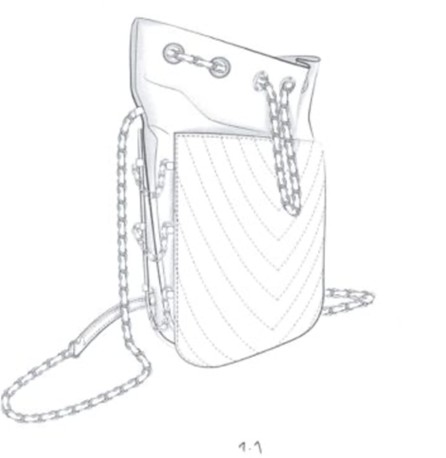
Trade mark rights in Serbia are governed by the Law on Trade Marks (2020), which is largely aligned with EU law. Trade marks must be distinctive and clearly serve to distinguish goods on the market.
Fashion-related trade marks typically include word marks (brand names), figurative marks (logos), combined marks (word + logo), and slogans. Serbia follows a first-to-file system, so trade mark rights are mainly gained through registration, not by use.
Serbian law allows registration of non-traditional trade marks, but their spectrum is still narrow compared to more developed countries. This limitation is caused primarily by the representation requirement, namely that the sign for which protection is sought can be clearly represented in the register, and that requirement itself excludes, for example, smells and motion marks.
Position and three-dimensional marks are increasingly relevant for fashion and footwear products. Still, the protection of 3D marks in fashion is limited because the brand owners often must sacrifice certain aesthetic values of their brands in order to satisfy strict representation requirements.
“Made in” indications like “Made in Serbia” or similar indications do not constitute trade mark rights per se but are regulated under consumer protection law and unfair competition.
Unregistered trade mark rights are not protected in Serbia as such but limited protection may arise for well-known marks under the Paris Convention for the Protection of Industrial Property (1883).
Industrial designs are regulated by the Law on Legal Protection of Industrial Design (2009) and protect the appearance of a product, including lines, contours, shape, texture, colours, and ornamentation.
Design protection commonly covers garments, footwear, bags, accessories, and jewellery. Considering that, unlike a trade mark, an industrial design may tolerate minor differences between products, it can be used as an alternative to trade mark protection, or alongside trade marks and copyright for extra protection. However, Serbia does not recognise unregistered design rights (unlike the EU), which is a significant drawback for the type of products whose design and appearance are changing rapidly, even on an annual basis (if not faster).
In Serbia, copyright protects original fashion creations that are considered works of applied art, like unique clothing designs, textile patterns, prints, sketches, and graphics. The author enjoys protection by the very creation of the work and does not have to go through the registration process as in the case of other IPRs. Copyrights may be deposited in the IPO’s registry which serves only for securing evidence in case of a lawsuit.
The author has both moral and economic rights, including the exclusive right to reproduce, distribute, and share the work with the public.
Copyright is a helpful extra or alternative protection, especially for creative designs of small manufacturers, design studios or startups that don’t have much awareness of IPRs or the resources to invest in their protection. Fashion brands also rely on copyright when, due to faster expansion and market capture, they cannot secure trade mark protection quickly enough in certain markets.
Patent protection in Serbia is governed by the Law on Patents (2011). Under this law, patent protection is available for inventions that are new, inventive, and capable of industrial application, with protection lasting up to 20 years from the filing date. Patent protection in the fashion industry has limited use and scope for obvious reasons and mainly plays a supportive role to other IPRs. It can apply to technical innovations, like new textile materials, functional fabrics, production methods, wearable technology, or sustainable solutions. Moreover, Serbia is not a market where companies from this industry would invest in patent protection for their products.
Fashion production in Serbia is mainly regulated by manufacturing agreements under the Law of Obligations (1978). Intellectual property issues are covered by the Law on Trade Marks (2020), Law on Legal Protection of Industrial Designs (2009), and Law on Copyright and Related Rights (2009).
Licence agreements
Licensing agreements are most often used in cases where the production and marketing of those products should take place locally, by domestic manufacturers. Licensing agreements are generally very comprehensive and are prepared with great care, regulating everything from use of their trade marks, designs, or know-how to territory, duration, exclusivity, quality standards, audit rights, royalties, IP ownership, and termination. Licences can be exclusive or non-exclusive. These agreements are regulated by the Law on Obligations and specific IP laws, depending on the type of IP involved.
Non-disclosure agreements (NDAs)
NDAs are important when sharing designs, patterns, technical details, or business strategies and very often follow, or rather precede, almost all the types of agreements mentioned here. Key clauses define what is confidential, limit the purpose, set how long confidentiality lasts, allow certain disclosures, require return or destruction of materials, and set penalties for breaches. Trade secrets are regulated under the Law on Protection of Trade Secrets (2021), which is not an IP law but is related to IP.
Subcontract agreements with suppliers/in-house manufacturing
Manufacturing and supplier agreements usually cover production standards, quality control provisions, delivery terms, compliance with IP rights, warranties against infringement, exclusivity, who owns tools and moulds, and responsibility for defective or infringing products. IP clauses make sure that designs and moulds stay with the brand owner.
In Serbia, fashion distribution is usually handled by local companies through direct agreements with brands, like distribution, franchise, or licensing contracts, instead of using commercial agents. The market is too small for brands to invest in local offices, and this gives them almost the same control over pricing, brand image, and market position with minimal investment.
Agency agreement
Agency agreements provide agents with statutory rights to commission and potential indemnity upon termination. These rules are generally of limited relevance in fashion distribution, which is usually carried out directly with the brand owner.
Selective distribution online in high-end fashion and trade mark protection
Selective distribution is allowed and regulated through various licence and sublicence agreements The clauses should set out whether distribution relates to retail or wholesale or both, as well as clear boundaries for the contracting parties regarding the choice of further partners in building the distribution network and sales models. Trade mark protection clauses address online trade mark use and brand presentation to prevent unauthorised online sales.
Co-branding and co-marketing
This type of agreement regulates the joint appearance of two or more brands on the market and generally seeks to define issues like brand hierarchy, terms of use of the other party’s brand(s), reputation protection and moral standards. Co-branding and co-marketing are rare in Serbia, with no major partnerships between local and global fashion brands so far.
Franchising and alternative sales model agreements
Around a quarter of all franchises operating in Serbia are in the fashion industry. Reports show that, out of the total number of franchise systems active on the local market, a considerable share comes from fashion, making it one of the strongest and most visible sectors in franchising.
It’s also important to note that many of these brands originate in Serbia, which shows there is strong local potential for further growth in the fashion industry, along with room to further develop and refine the legal framework that supports it.
Franchise agreements cover IP licensing, the sharing of know-how, quality control, fees, exclusivity, and how the agreement can end. Franchising is the main way brands work together in Serbia’s fashion industry. It lets brands grow their retail network with less risk and investment, as local partners handle most of the costs and management.
Employing fashion models
Model agreements and release forms are usually signed by fashion agencies on behalf of models’ and regulate terms of use of the model’s image and name, duration of use and moral rights, subject to models’ consent under Serbian personality and data protection laws.
Social media, influencers and brand ambassadors/celebrities
Contracts with influencers and brand ambassadors include rules about disclosure, content approval, IP ownership, usage rights, morality, exclusivity, and adherence to advertising and consumer protection laws.
This group is now often called “talents”. Agreements state what kind of content will be made, where it will be promoted, and who will create it: the talent, the brand, or someone else. The time period for using the content is usually set for external use, while internal use is often allowed without a time limit. For influencers, the agreements are signed directly with the individuals. Usually, these agreements only determine the amount of compensation for services, without specifying further terms.
Advertising standards, relevant authorities and advertising practice
Fashion advertising in Serbia is regulated by the Law on Advertising (2016) and consumer protection rules. Advertisements (“ads”) must not be misleading, and sponsored content must be clearly marked.
Contracts are also made with media companies (radio, print, outdoor ads, etc.) to set out the details for advertising, such as scope, duration, costs, types of ads, and who owns the materials. A “declaration” is required for all advertising. The Ministry of Trade, in particular the Market Inspectorate enforces the Advertising Law.
Serbia regulates online marketing through a combination of consumer protection laws, electronic communications rules, data privacy standards, and advertising regulations. While Serbia is not an EU Member, its legal framework increasingly aligns with EU directives. Serbian online marketing is mainly governed by the Law on Advertising, which bans misleading and unfair online ads, requires truthful promotion, and sets rules for disclosing sponsored content. The Law on Electronic Commerce (2009) sets rules for business communications online, including transparency, information disclosure, and consumer rights. The Law on Consumer Protection2021) protects consumers from unfair business practices and misleading ads. It also gives rights to refunds, cancellations, and returns in e-commerce. The Law on Personal Data Protection (2018) is mostly in line with the EU General Data Protection Regulation (GDPR). The Law on Trade (2019) treats online stores in Serbia the same as physical shops. Companies can run online shops without special approval, as long as they register their business and follow the rules.
E-commerce is seen as a normal type of trade, so online and offline sellers have the same legal status. Regulatory bodies like the Ministry of Trade, the Market Inspectorate, and the Data Protection Commissioner enforce these rules. Penalties can include fines, orders to stop illegal practices, and removal of online content. Serbia is not required to follow the EU Digital Services Act, Digital Markets Act, or AI Act, but companies working in both Serbia and the EU must follow these rules.
The main consumer protection rules for fashion e-commerce in Serbia are:
- Unfair commercial practices prohibition. Prohibits deceptive advertising and false claims about products.
- Right of withdrawal and returns. Consumers have a statutory cooling-off period (usually 14 days) to return goods purchased online or out of physical stores, with clear pre-contract information required.
- Price transparency and terms disclosure. Mandatory disclosure of final prices (including taxes and shipping), delivery conditions, and payment terms.
- Product safety and labelling. Garments must meet safety and quality standards, with appropriate labels, country of origin, and fibre content disclosed.
- The GDPR and the Law on Personal Data Protection. For protection of the customer’s personal data provided during online purchase.
These rules apply to both physical and online stores.
In Serbia, store layouts may be protected under 3D trade marks and registered design rights while website layout and graphical user interfaces (GUIs) can be protected through copyright.
Unfair competition in Serbia is mainly regulated by the Law on Trade (2019) , Law on Protection of Competition (2009), and Law on Obligations (1878), along with IP laws. These rules apply to fashion businesses, especially in cases of brand imitation, misleading practices, or misuse of confidential information. Although, in practice, trade mark infringement often overlaps with unfair competition, brands pursue unfair competition claims mainly in situations where the Law on Trade Marks does not provide adequate mechanisms for protecting their rights (e.g. unregistered rights) or when broader scope of protection is required.
For the fashion sector, the most relevant provision of the Law on Trade is Article 41(1)(3), which regulates unfair competition “as selling goods with markings, information, or shapes that reasonably create confusion for consumers regarding the origin, quality, or other characteristics of those goods or services”, where lookalike products, copying of trade dress, or misleading use of trade marks and brand elements might happen.
Serbian courts generally interpret unfair competition rules in line with EU legal principles. Remedies include injunctions, damages, destruction of infringing goods, and publication of judgments.
Enforcement is usually through civil courts but can also involve misdemeanour or criminal charges. Serbian courts recognise breaches of NDAs, illegal use or sharing of trade secrets by employees or contractors, and unfair advantage from misusing confidential information.
Overall, Serbian courts provide good protection against unfair competition and trade secret violations, and are becoming more aligned with EU standards. However, court cases in Serbia can take a long time, which may reduce the effectiveness of legal protection.
Serbia does not have specific sustainability or ESG laws for fashion. However, general environmental and consumer protection laws apply, and interest in sustainability is growing, in line with EU standards.
Sustainability and ESG issues in the fashion industry are regulated by general regulations on the subject, namely the Law on Waste Management, Law on Advertising and Law on Consumer Protection. Although regulations and awareness of these issues are increasing, it is still not at a satisfactory level. Fortunately, one of Serbia’s obligations on its path to EU accession is the harmonisation of regulations, so we expect that the EU Green Directive and corresponding EU regulations will eventually find their full application in Serbia in the coming period.
Some manufacturers are increasingly using voluntary eco-labels and certifications to demonstrate compliance with environmental or social standards, but the general impression is that this is done more for marketing reasons than out of concern for the environment.
This is also confirmed by the fact that fashion companies are not under legal pressure to properly manage waste such as unsold inventory or defective products. However, in practice, waste management agreements are typically concluded with operators or companies specialising in recycling or disposal.
In Serbia, fashion goods are subject to the general customs regime under the Customs Law (2018) and related regulations, which govern all import and export of merchandise, including clothing, footwear, and accessories. Clothing does not benefit from special exemptions; instead, fashion products must be declared, properly classified under the customs tariff, and go through standard import/export procedures. Importers must be registered with the Serbian Customs Administration and submit accurate customs declarations detailing goods, value, origin, and related documents. To import fashion goods, a customs declaration must be filed and duties and VAT paid.
If fashion goods break customs, trade, or IP rules — such as infringing trade marks — customs can seize or hold the goods until further action is taken ex-officio or in cooperation with rights holders (upon their request).
The rights holder has a set time to confirm the infringement and initiate a court action if the importer has filed an objection. If the importer does not object and infringement is confirmed the goods can be destroyed through a simplified procedure without going to court. This border enforcement is important for fashion, as clothing, footwear, bags, and accessories are often targeted by counterfeiters. Serbia follows the international exhaustion principle in customs trade mark matters, which might irritate the right holders and distributors over controlling the market and pricing, however it protects the market from monopolies.
Is there a unified fashion law statute in Serbia?
There is no unified or dedicated “fashion law” statute in Serbia. However, legal issues relevant to the fashion industry are governed by general legislation such as intellectual property laws (trade marks, designs, copyright), contract law (Law of Obligations), consumer protection, advertising, e-commerce, and customs regulations. These collectively provide the legal framework for fashion businesses, rather than a single, specific fashion law.
Is Serbia a prospective market for high-end brands?
Serbia’s growing middle class and rising consumer purchasing power is driving demand for premium and luxury goods, especially in cities like Belgrade, Novi Sad and Niš. The expansion of modern retail environments, luxury shopping districts, and international e-commerce increases visibility and accessibility for high-end brands. The expansion is also driven by Serbian fashion influencers, like Tamara Kalinic, who use their blogs to promote high-end brands which are shared among domestic consumers, therefore increasing the demand for fashion goods locally.
What contractual and business challenges might we face when entering the Serbian market, and how can these issues be effectively addressed?
Entering the Serbian market can bring challenges like unclear contract terms (such as IP ownership, quality control, pricing, and ending agreements), risks of counterfeit or parallel imports, and compliance issues with consumer protection, advertising, and online sales. Unfortunately, professionalism and ethical standards are also not at the level that brands would realistically expect in their home countries. These can be managed by using clear, locally adapted contracts, strong IP protection and customs enforcement, careful partner selection, and ensuring adherence to Serbian laws with help from local lawyers.