

Chapters in this guide
24















The fashion industry in Finland is a blend of urban design heritage, innovative craftsmanship, and functional wear tailored to the country’s diverse climate. The Finnish consumer market for textiles and fashion is around EUR 5.5 billion. Esteemed brands such as Marimekko, known for its distinctive prints — including its iconic flower “unikko”, and Luhta, one of Europe’s largest sportswear companies, are major players in the field. Other notable heritage labels include Reima (children’s clothing), Nanso (women’s fashion), Friitala (leather goods), Voglia (clothing and accessories) and Karhu (footwear). Emerging Finnish designers are reshaping the scene with brands like Latimmier, which challenges gender norms, viral sensation VITUNLEIJA, and VAIN, also for upcycled streetwear. KAIKO represents a new generation contributing to social responsibility. Finland’s luxury sector is dedicated to craftsmanship and sustainable practices, with Lovia celebrated for its leather goods made from upcycled materials, and Kaarna Leather for sustainably sourced elk leather. Andiata exemplifies refined womenswear. The Finnish fashion identity also extends into the jewellery sector, with newcomers like ANNELE and long-standing icons such as Kalevala. Suomen Tekstiili & Muoti is the central organisation for textile, clothing, and fashion companies in Finland. The Muotioikeuden yhdistys (Finnish Fashion Law Association) has been supporting legal expertise within the fashion industry since 2014. In 2024, Emilia Hodge (author of this chapter) and Finland’s first ever Docent (Adjunct Professor) of Fashion Law, Heidi Härkönen, published the first Finnish-written book on fashion law, Muotioikeus (Fashion Law, 500 pages), covering legal topics related to the fashion sector with a national and EU-level focus.
| IPR | Duration | Time and modalities for grant | Pros and cons in the fashion sector |
| Trademarks | 10 years / renewable indefinitely for additional 10-year periods. Can also be obtained through establishment. Well-known marks enjoy broader protection.
| The process can take several months. Typically, 4–6 months. The Finnish Patent and Registration Office (PRH) conduct an ex officio examination. Trademark is published for opposition and opposition period lasts 3 months. | Pros: · Grants exclusivity to a mark in Finland and effective to enforce. · More pre-emptive due to national ex officio examination. · Smaller market makes established rights easier and more cost-effective to prove. · Special registry for well-known trademarks. · Rights enforceable in the Finnish Market Court, a specialised IP court. Cons: · National registration harder to obtain due to ex officio examination. · Challenges in proving distinctiveness for fashion items, often requiring evidence. · Requires a representative for non-EU applicants. |
| Design | 5 years / renewable for additional periods of 5 years, up to a maximum total duration of 25 years. Unregistered EU designs: 3 years from initial publication.
| The process can take several months. Typically, around 3–6 months. For the time being, PRH still conducts an ex officio examination to ensure certain criteria, such as novelty and individual character, is met. Then the design is registered and published in the Design Gazette. Opposition period is 2 months. | Pros: · Effective strategic right when well-planned, especially for new design work. · More pre-emptive due to ex officio examination. · Enforceable in the Finnish Market Court, a specialised IP court. Cons: · Limited enforceability against designs that differ from the registered one (e.g. case MAO:259/16, ‘children's boots’). · Low number of national case law. · The novelty requirement can often be an obstacle in practice, and it is often difficult to predict beforehand which items will sell best or become classics. · Not that frequently used. |
| Trade secrets | No fixed duration. Lasts as long as the information remains secret.
| Trade secrets are protected under national law. There is no formal registration process. Information must be secret and commercially valuable. Reasonable measures must be taken to maintain secrecy. | Pros: · Can cover a wide range of information, including unpublished new lines, clothing patterns, manufacturing processes, and sales / marketing information. · Enforced in cases of contract breaches or unauthorised disclosure by employees. · Supported by national case law in the fashion sector (e.g. case KKO 2013:17 “sled suit”). Cons: · Protection is lost if leaked or independently discovered. · No protection against simple reverse engineering. · Requires continuous efforts to maintain confidentiality. |
| Domain names | The duration of a .fi-domain registration is typically 1 year / some registrars may offer multi-year options.
| Overseen by the Finnish Transport and Communications Agency, Traficom, whose administered legislation is followed in the granting of domain names. In principle, assigned on a first-come, first-served basis. It typically takes 1 to a maximum of a few working days to register. | Pros: · Simple and affordable to acquire. · Traficom provides typically effective resolution process for .fi -domain conflicts. · National regulations in place to prevent infringement on existing trademarks and protected names. · .fi -domain may enhance credibility and trust among Finnish consumers. Cons: · Requires regular renewals to maintain ownership, with potential severe consequences for accidental lapses. · Legal conflicts can arise over domain ownership or trademark issues. |
| Patents | 20 years / annual renewal fees must be paid starting from the third year after filing.
| Duration varies, but typically between 3 to 4 years. The application undergoes a substantive examination to assess novelty, inventive step, and industrial applicability. After a patent is granted, third parties have a 9-month period during which they can file an opposition against the patent. | Pros: · Strengthens market position significantly by protecting innovations, such as new textile technologies, inventive compositions, smart garments as well as manufacturing tools and processes. · Typically, good rights to license. · Enforceable in the specialised IP courts. Cons: · Obtaining a patent can take several years and may be expensive. · Requires public disclosure of the invention, which may lead to competitors developing alternative solutions. · Protects specific inventions or processes, but not the overall design or aesthetic aspects of fashion items. |
| Copyright | 70 years from the year that follows the death of the creator.
For photographs not meeting the originality criteria, the protection lasts for 50 years from the year the photograph was taken.
| Automatic upon creation. Any creation which is its author’s intellectual creation reflecting their free and creative choices and can be identifiable with sufficient precision and objectivity.
| Pros: · No need for registration. · Potential for protecting various works such as pictures, designs, garments, sketches, and patterns, safeguarding the many creative aspects of fashion. · Enforceable in the specialised IP court. Cons: · Lack of registration possibility can make enforcement unpredictable in some cases. · Does not protect functional aspects or purely utilitarian features of fashion items that do not reflect the author’s free and creative choices. · Finnish case law lags EU-level developments, with the Finnish Copyright Council criticised of being too strict and not aligned with the newest EU-level advancements. Courts of Law barely ever question the Copyright Council’s statement. · The body of actual case law is relatively small due to parties often preferring the free-of-cost Copyright Council, which issues non-binding statements. |
The following types of marks can be registered in Finland: word marks, figurative marks, figurative marks with a verbal element, three-dimensional marks, three-dimensional marks with a verbal element, colour marks, position marks, pattern marks, holograms, sound marks, motion marks, multimedia marks and other types of marks. Examples of registered trademarks in Finnish national register:
TIFFANY
Tiffany and Company (Reg, no 206886 / Word mark)
Chanel SARL (Reg, no 1358268 / Figurative mark)

ROLEX S.A. (Reg. no 708575 / Figurative mark with a verbal element)
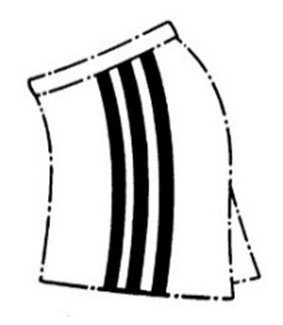
adidas AG (Reg. no 88075 / Three-dimensional mark)
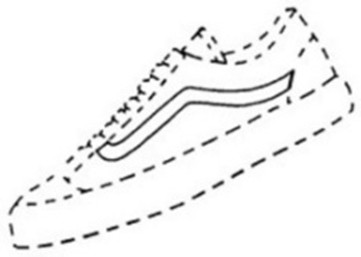
Vans Inc. (Reg. no 279878 / Position mark)
Black and white trademarks filed after 1 May 2019 cover only the black and white versions of the mark. Existing trademark registrations or applications filed before this date continue to cover all colour variations of the mark in question.
The expression “Made in Finland” cannot be registered as a word mark on its own but may be included as part of a complex mark, provided additional requirements are fulfilled. In general, there are options to register trademarks as collective and certification marks, which can be used by multiple parties simultaneously. For instance, it may serve as a guarantee that the goods or services marketed under the mark meet specific quality standards. The use of the expression “Made in Finland”, whether accompanied by additional words or elements, is still subject to regulations, including the Consumer Protection Regulations. The general rule is that its use must not be misleading. Companies often opt for the expression “Designed in Finland” when the goods are designed in Finland but manufactured in other locations.
Finland recognises exclusive rights also for established marks, which are trademarks that have gained significant market recognition and distinctiveness through use. There is no formal registry specifically for established marks. Solid evidence is required to substantiate such rights, and a market survey is often highly recommended.
In Finland, well-known brands receive enhanced protection. The PRH maintains a list of well-known trademarks, serving as a reference for identifying marks with significant recognition and reputation in Finland. This list is not exhaustive or legally binding but provides guidance for assessing the status of a trademark as well-known. Examples of marks included in the list of well-known trademarks:
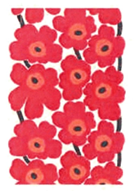
Marimekko Oyj (Reg. no 2007041 / Figurative mark)
H&M
H & M HENNES & MAURITZ AB (Reg. no 2022001 / Word mark)
One example of trademark law used to secure the authenticity of traditional handicrafts is the SÁMI MADE trademark. This mark is licensed to Sámi artisans and Sámi businesses, using traditional materials and techniques. Sámi culture is the unique heritage of the indigenous Sámi people, known for their languages, reindeer herding, and arts in northern Europe.

SAAMI COUNCIL HEADQUARTERS (International; Registration valid in Finland, Reg. no 1623608 / Figurative mark)
Aligned with EU law, Finnish design rights provide a practical means to protect the novel visual appearance of products such as garments, packaging, patterns, and accessories. This protection is particularly valuable in the fast-paced fashion industry, where trends evolve rapidly, and early market entry is crucial. The system is also cost-effective, as multiple designs, such as entire collections, can be filed together, making it accessible to both established brands and emerging designers. Design rights are becoming increasingly significant in the digital realm, extending to virtual garments and accessories used on online platforms and within metaverse environments. As sustainability becomes central to fashion innovation, design rights also help protect eco-conscious product aesthetics, or modular designs. However, the novelty requirement can pose challenges in practice, as it is often difficult to anticipate which designs will resonate with consumers or become enduring classics. When combined with other forms of intellectual property protection, design rights play an essential role in a well-rounded legal strategy for fashion companies operating in or from Finland.
Aligned with EU law, a work must meet two key criteria for copyright protection, known as the two-step test: it must be original and it must be identifiable with sufficient precision and objectivity. In the fashion context, this means that designs, prints, and illustrations may qualify as protected works if they reflect the author’s personal expression. Copyright is particularly valuable for safeguarding the artistic and narrative identity of a brand across multiple formats, including physical, digital, and audiovisual media. While not all garments or styles reach the originality threshold, components such as custom prints, unique illustrations, or conceptual collections often do. When protected under copyright, these works can serve as powerful assets, particularly in preventing unauthorised reproductions or adaptations. For fashion companies, copyright adds an additional layer of legal security, especially when combined strategically with design and trademark protection.
Geographical indications (GIs)
In 2023, the European Parliament approved a regulation on the Protected Geographical Indication (PGI) for handicrafts and industrial products. This indication is a label that producers from a specific region can register to describe the geographical origin of their products. All producers from a particular geographical area have collective rights to protected product — this naturally applies to Finland as well. Since 1 December 2025, producers across the European Union and beyond have been able to apply to register their craft and industrial products as geographical indications (GIs), and the registry is now available.
Moral rights
In Finnish intellectual property law, the right to be named as the author is crucial for ensuring proper attribution and respect for original works. This issue has become increasingly prevalent, particularly due to the widespread sharing and modification of content on social media platforms. In the Supreme Court’s decision, KKO:1992:63, designer Kimmo Virkkunen won a jewellery design competition organised by Kalevala Koru, and the Court ruled that the designer retained the right to be named as the author even after the competition. However, the “good practice” assessed by the court did not require the author’s name to be indicated on each individual copy (piece of jewellery), which the author had also demanded.
In Finland, a variety of contractual arrangements can be used to support the manufacturing, distribution, and advertising of fashion products. Finnish contract law is based on the principles of freedom of contract and good faith, allowing parties to negotiate terms freely while ensuring fairness and compliance with mandatory legal provisions. The main source of contract law is the Finnish Contracts Act, supplemented by general legal principles and case law. Disputes arising from commercial agreements are often resolved through arbitration administered by the Finland Arbitration Institute (FAI) in Helsinki, although parties may also choose to submit disputes to the Market Court or general courts, depending on the nature of the case.
A standard arbitration clause recommended by the Finland Chamber of Commerce is the following:
“[Any dispute, controversy or claim arising out of or relating to this contract, or the breach, termination or validity thereof, shall be finally settled by arbitration in accordance with the Arbitration Rules of the Finland Chamber of Commerce.
(a) The number of arbitrators shall be [one / three].
(b) The seat of arbitration shall be [town and country].
(c) The language of the arbitration shall be [language].].”
Licence agreements
In Finland, there is no specific national law that exclusively regulates all types of licensing agreements. Instead, such agreements are governed by general contract principles found, among others, in the Finnish Contracts Act and the Commercial Code. Additionally, relevant intellectual property legislation applies depending on the subject of the licence. This means that licensing terms are largely flexible. The licence does not have to be recorded with the national registration office database, but doing so is possible.
Non-disclosure agreements (NDAs)
In Finland, there is no specific law governing non-disclosure agreements. An NDA must clearly define what information is considered confidential, who is bound by the obligation, and the duration of the confidentiality. Courts may refuse to enforce overly broad or unreasonable NDAs, especially those that restrict competition. An NDA in the fashion and design industry can protect design concepts, materials and techniques, business strategies, supplier and client information, product launch details, financial information, collaborations and partnerships, and digital assets.
Subcontract agreements with suppliers/in-house manufacturing
Manufacturing and subcontract agreements must comply with Finnish laws and regulations, including labour laws, environmental standards, and safety regulations. Manufacturing fashion items in Finland is less common compared to countries with larger textile industries, due to higher production costs and a smaller manufacturing base. However, Finland is known for its high-quality design and sustainable practices, and some Finnish fashion brands focus on local production to emphasise quality, craftsmanship, and ethical standards.
Agency agreement
In Finland, there is a Law on Commercial Agents that sets mandatory rules which companies, such as fashion brands, must follow when working with agents. These rules protect agents by requiring fair notice periods, limiting post-contract non-compete clauses, and ensuring timely and transparent commission payments. For fashion companies, this means they must provide agents with essential materials (like samples and price lists), act loyally, and allow access to financial records related to commissions. Importantly, companies cannot exclude an agent’s right to compensation after the contract ends. Any agreement that conflicts with the mandatory rules will be considered invalid. The minimum notice period for termination of the agency is at least one month per commenced year of contract duration, up to a maximum of six months if the contract has been in effect for six years or more.
Selective distribution online in high-end fashion and trademark protection
Finnish law, supported by EU regulations and case law, provides mechanisms for luxury fashion brands to preserve their exclusivity and brand image. However, there are competition law risks associated with operating selective distribution systems without clear, objectively justifiable qualitative criteria. If these criteria are not clearly defined or if they restrict price competition or give distributors excessive discretion to limit retail channels, significant competition law risks may arise. This risk is underscored by recent EU developments, as the Commission decided in October 2025 that three fashion companies engaged in resale price maintenance by restricting their online and brick-and-mortar retailers from setting their own retail prices for nearly the entire range of products designed and sold by Gucci, Chloé, and Loewe.
Co-branding and co-marketing
In the realm of co-branding, a written agreement is crucial to protect the interests of all parties involved. Such agreements should clearly define trademark ownership and permitted use, ensuring compliance with Finland’s Trademarks Act and EU trademark regulations. If needed, other forms of IP can be covered. Typical commercial terms in a licence agreement include the scope — territory, exclusivity, field and duration, fees and royalties, marketing obligations and investment, termination, confidentiality, and dispute resolution. Additionally, the agreement must address reputational protection, public communications, and quality control. It is vital to avoid anti-competitive restrictions under Finnish and EU competition laws, while financial terms must comply with Finnish tax law. Marimekko, a leading Finnish design company, exemplifies co-branding through recent collaborations with global brands, like Crocs and Samsung, demonstrating strategic brand expansion to new product categories:
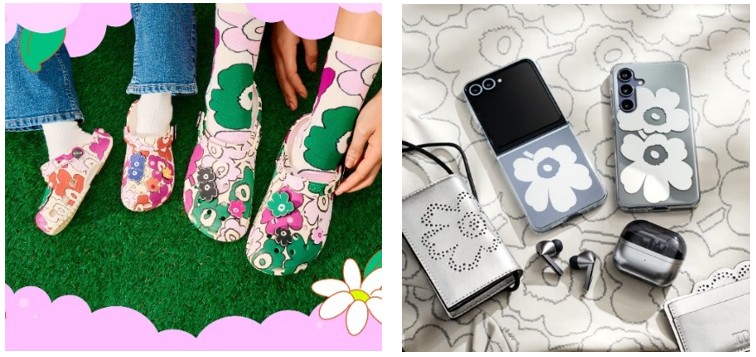
Marimekko X Crocs & Marimekko X Samsung -limited-edition collaboration collections
Franchising and alternative sales model agreements
A franchising model enables businesses to grow by allowing third parties to operate under their brand and business model. Franchising agreements in Finland must clearly define the rights and obligations of both franchisors and franchisees, including brand usage, operational standards, and financial arrangements. Ensuring compliance with Finnish competition law is crucial to avoid anti-competitive practices. In Finland, businesses have opportunities to enhance their market presence through various store arrangements, including corner stores, consignment stores, and pop-up stores. Agreements for these arrangements typically cover terms related to space allocation, operational responsibilities, branding, inventory management, and revenue sharing.
Employing fashion models
In Finland, general employment law rules apply to employing fashion models. Models may or may not be represented. No national collective agreement for models exists. One must obtain explicit consent for using model photos in marketing and ensure compliance with personal data handling obligations.
Social media, influencers and brand ambassadors/celebrities
Social media and influencer marketing in Finland is subject to, for example, Finnish Consumer Protection regulations, which are generally relatively strict. The Finnish Consumer Ombudsman has published Guidelines for Influencer Marketing in Social Media (2019, updated in 2025), which serve as principles for market monitoring. Companies using these marketing methods bear legal liability and risk for all types of commercial marketing activities, including any failure to disclose commercial relationships or provision of misleading content. It is crucial to draft agreements for influencer cooperation to ensure obligations are fulfilled by solid evidence, including providing guidelines to influencers on correctly marking posts.
A key contractual clause to consider in Finland: “[As part of the collaboration, the Influencer agrees to comply with applicable marketing legislation and official guidelines, including the Finnish Competition and Consumer Authority’s (KKV) Guidelines for Influencer Marketing in Social Media (2019, as updated in 2025).]”.
Advertising standards, relevant authorities and advertising practice
In Finland, advertising must be, among others, truthful and non-misleading, with specific rules for, among other, health claims, environmental claims, and advertising to children. The Finnish Competition and Consumer Authority monitor compliance with consumer protection laws. The Council of Ethics in Advertising provides guidelines for ethical practices, promoting responsible advertising that respects societal values. The Data Protection Ombudsman oversees adherence to data protection laws, especially regarding the use of personal data in advertising. Advertisers follow self-regulatory codes, such as those from the International Chamber of Commerce (ICC). Digital advertising must comply with, for example, regulations on cookies and online tracking, ensuring consumer privacy and consent.
In Finland, online marketing is governed by several laws, with the Consumer Protection Act playing a central role. It sets out key rules for marketing practices, including requirements for transparency, fairness, and the prohibition of misleading advertising. Online retailers must comply with extensive disclosure obligations under the Consumer Protection Act, ensuring all necessary information about the goods, seller, price, and delivery terms is clearly visible and accessible to consumers, along with a mandatory 14-day right of withdrawal, and comprehensive terms and conditions as well as data protection considerations.
In addition to national legislation, recent and forthcoming EU regulations, including the Digital Services Act (DSA), Digital Markets Act (DMA) and the AI Act, are reshaping the regulatory landscape for online marketing. Among others, the resent EU Omnibus Directive related to Consumer Rights is implemented in Finland requiring greater transparency in online sales, for example: indication of whether a seller is a professional trader or private individual, disclosure of how search results are ranked (if products appear on a marketplace or multi-brand website) and information about personalised pricing (e.g. based on browsing history or location). Fake reviews or paid reviews not disclosed as such are strictly prohibited.
Physical and online store layouts may be subject to various forms of protection (or none), depending on factors such as originality, creativity, novelty, distinctiveness, and the layout’s recognition. The assessment is conducted on a case-by-case basis. For instance, a store layout can be protected as a trademark if it has acquired distinctiveness and serves as a source identifier, which typically requires evidence. Demonstrating these aspects can be difficult. Store interiors and arrangements can also be protected under EU design law, but design registration requires the design to be new and have individual character. If the layout is very standard, and intellectual property strategy and necessary registrations have not been considered beforehand, enforcing rights on the layout may be challenging. Layout may include individual elements protectable individually.
For example, in Finland, features related to above themes may be observed in Kalevala Koru’s flagship store, including, among others, jewellery displays, artworks and furniture:

Interior design by Yatofu / Picture: Tikkala & Jakob, full references, see: www.yatofu.com/kalevala-flagship
For fashion businesses operating in Finland, it is crucial to understand the Unfair Business Practices Act, which prohibits actions that violate good business practices or use false/misleading expressions likely to affect demand/supply or harm another business. This is complemented by consumer marketing law and competition law. The Finnish Market Court has developed case law in areas such as packaging/trade dress imitation and misleading marketing communications.
It is essential for fashion businesses relying on unregistered brand elements, like packaging, label design, colour scheme, and trade dress, to provide sufficient evidence of their reputation in Finland. Market survey is often needed. In a Market Court case (MAO:198/13, Kenzo perfume), the court ruled that the plaintiff’s packaging was not sufficiently known to the relevant audience, leading to the refusal of the claims. This underscores the importance of establishing a recognised reputation.
While Finland does not have specific legislation solely targeting sustainability in the fashion industry, existing environmental laws (including ones in relation to waste and recycling), EU directives, and voluntary agreements and certifications play a significant role in promoting sustainable practices. The political landscape continues to evolve, with increasing emphasis on circular economy principles and reducing textile waste.
The Finnish Consumer Protection Act includes general rules on marketing, which apply to the use of environmental claims alongside other marketing practices, even though environmental claims themselves are not specifically defined in the national law. EU-level regulations are also applied. In the matter no KKV/428/14.08.01.05/2023 the Finnish Consumer Authority assessed the marketing of Stockmann’s online store, where selected products were sold under the “Responsible Selection” product category. Products could be searched using the keyword “Responsible Selection”, resulting in search results that included products also marked separately with a leaf symbol. It was decided, among others, that the unspecified term “responsible” should be used only rarely, and only when the marketed product is demonstrably more responsible from all perspectives and throughout its entire lifecycle compared to competing products. Regarding the so-called leaf symbol, the Consumer Ombudsman found that it had been used in a broadly misleading way.

Controversial leaf-Symbol Used in Stockmann's Webstore
Fashion companies in Finland can protect their products by submitting an electronic application for action to Finnish Customs, which then monitors shipments for suspected counterfeit goods, especially in high-risk categories like clothing, footwear, and accessories. If infringing items are found, Customs can hold the goods while notifying the rights holder, who can pursue further legal action.
Staying informed about evolving customs and compliance requirements is critical for smooth international trade in fashion. Fashion companies importing or exporting goods in Finland must comply with both national and EU customs regulations. Products arriving from outside the EU are subject to customs duties and value-added tax. Fashion products must also meet EU safety and labelling standards, particularly for children’s clothing, textiles, and their chemical content.
Can a cease-and-desist letter constitute a breach of good business practices?
Yes. The essential aspect is the wording of the cease-and-desist letter. In the case KKO:2005:105 ‘Fiskars’, letters were sent to retailers prohibiting them from continuing to sell the product. Later, in court proceedings, it was determined that the competing product did not infringe on the design rights. The Supreme Court found that the conduct of the design rights holder was inappropriate and that there were reasons to award damages. The court noted that the strict tone of the letters created an impression among the retailers that the infringement of design rights was indisputable, even though the assessment of similarity later proved to be incorrect.
In the case MAO:631/18 ‘Angry Birds - winter boots’, the Market Court applied the above precedent, which concerned whether it is inappropriate in business activities to send a letter to retailers of a competing product, claiming that the product infringes on design rights and prohibiting the infringing activity. However, it was not inappropriate to send a letter to the retailer clearly indicating that it is the sender’s assessment of the infringement.
How do Finland’s national trademark opposition proceedings differ from those at the EU level?
In Finland, when filing an opposition, the opponent must submit the complete substantial argumentation along with the initial filing. This means that all the main arguments and evidence must be presented upfront. Only supplementary documentation and information can be added later during the proceedings. In contrast, the EU system allows for a more flexible approach, where the initial opposition can be filed with basic information, and detailed arguments and evidence can be submitted later. Additionally, the deadline to file the opposition, including substantive argumentation, is strict, with no extensions possible.
What are the key legal considerations for fashion companies in Finland when integrating AI technologies into their design and marketing processes?
Fashion companies in Finland using AI in design and marketing must navigate several legal issues. First, they should assess how AI-generated content fits under existing IP laws and ensure it does not infringe others’ rights, especially given the uncertainty around non-human authorship. Contracts with AI providers should clearly define IP ownership, liability, and data rights. Consumer protection and marketing laws also apply, so companies must be transparent about AI’s role and avoid misleading consumers. A recent case involving GUGGUU, where AI-generated fabric designs confused customers due to odd features like a dog with too many legs, highlights the importance of open disclosure. Ethical AI use is also critical, with attention to fairness, transparency, and accountability. Lastly, companies should monitor new rules like the EU AI Act, which may introduce stricter compliance based on system risk levels.

Gugguu-brand’s AI-generated print that sparked a media frenzy